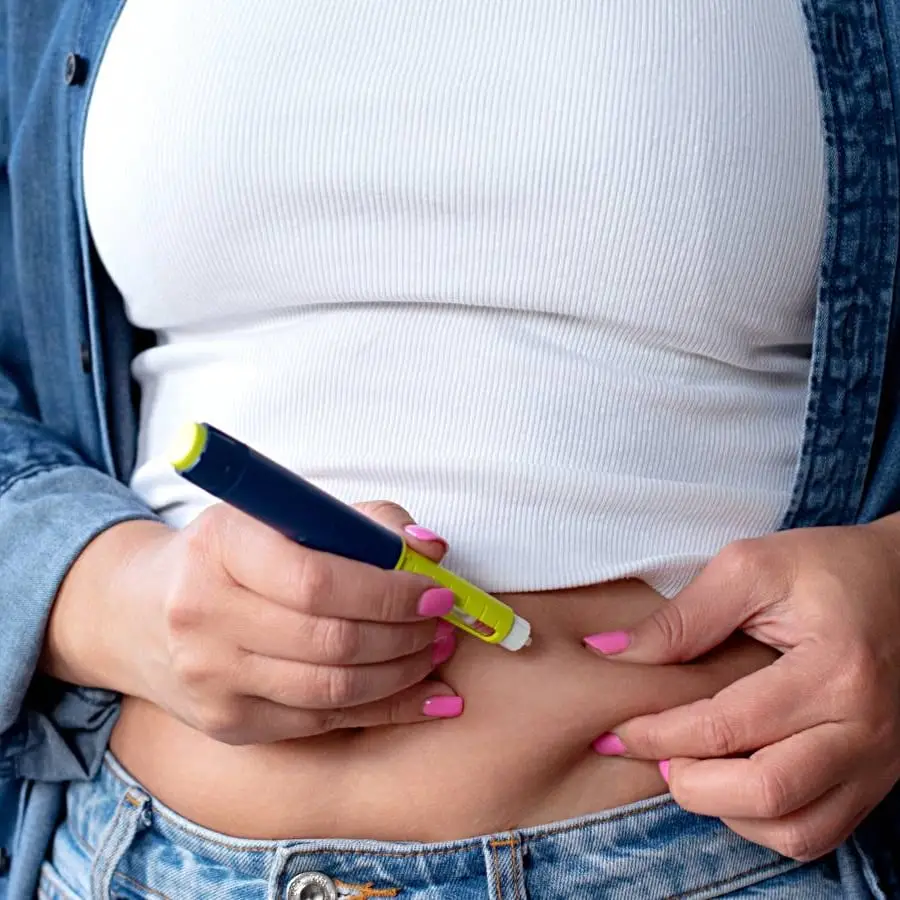
Weight-loss jabs linked to new 'life-changing' side effect that could only impact women


The so-called 'skinny jab' fad doesn't seem to be much of a fad anymore, as GLP-1 usage has apparently quadrupled from 2021 to mid-2026, now reaching 8,819 per 100,000 patients in the USA.
Part of this has come from the likes of President Donald Trump bringing down prices, as well as major celebrities admitting to using the likes of Ozempic, Wegovy, and Mounjaro.
More than this, GLP-1 usage continues to evolve, with a new pill form of Ozempic and Amazon offering same-day delivery.
It's important to highlight the various health concerns, with skinny jabs linked to everything from vision problems to potential liver failure, cosmetic surgery booms to combat 'Ozempic face' and even risk of death.
Advert

Still, champions will promote the benefits of weight loss for those who are classed as obese, as well as the likes of the potential to reverse liver damage and improve heart health. Some have even billed the jabs as a 'cure-all' for a variety of ailments.
Now, there's another unexpected side effect that's said to be targeting women. No, we aren't here to talk about 'Ozempic vagina' again.
During a July 21 episode of the No Appointment Necessary podcast, ITV's Dr. Amir Khan discussed the apparent rise of 'Ozempic babies' as female fertility supposedly soars.
We previously covered how research suggested GLP-1s could improve the quality of a man's sperm, but according to Khan, women need to take extra precautions to ensure they're not greeted by an unexpected bundle of joy.
Speaking to lifestyle journalist Cherry Healey, Khan explained: "There is this thing online called an 'Ozempic baby'...People who have been on these weight loss jabs who have struggled to get pregnant previously are finding that they're getting pregnant."
Reminding us that these medications aren't licensed for pregnancy, Khan warned against them “if you are trying for a baby or you may be pregnant...These are accidental pregnancies that are happening."
Women with insulin resistance and conditions like Polyendocrine Metabolic Ovarian Syndrome (PMOS) need to be the most aware, as these are already connected to affecting periods and ovulation.
Dr. Khan reiterated: "I don't think the jabs themselves are causing the pregnancy, but they're changing the biology enough in these ladies for them to increase the risk of getting pregnant."
He concluded: "If you're trying to get pregnant, you must not take these jabs. I'm not saying they're harmful in pregnancy, but we don't have any evidence to say one way or another."
Replying to a clip shared on Instagram, numerous women shared their tales of 'Ozempic babies', with one specialist fertility dietician stating: "And they also reduce the effectiveness of oral contraceptives due to delayed absorption! So people have got pregnant even when taking the pill!"
One patient claimed: "I am an example of this, fell pregnant (after years of trying and nothing…) after 6 months of being on Mounjaro."
Another chimed in saying: "I got pregnant with our third after struggling for 18 months with our first and second and I was on the pill! My doctor said that they can reduce the effectiveness of the pill as well as myself having PCOS insulin resistance."
While there are many things to take into account before consulting your doctor about going on GLP-1s, Ozempic babies are just one more thing for women, especially, to consider.