
Featured Image Credit: Catherine Falls Commercial / Getty
'Unprecedented' progress has been made towards a life-changing cancer vaccine, as recent human trials have shown incredibly positive results where entire tumors were eradicated in some instances.
The ongoing battle against cancer continues to occupy health experts and scientists, as while significant progress towards a 'cure' and other unconventional forms of treatment have been made in a number of areas, many forms of the often deadly disease remain resistant.
That might not be the case anymore, however, as doctors have developed a new vaccination treatment called amivantamab that has achieved miraculous results in recent tests, indicating that it could be a significant solution going forward.
As reported by The Guardian, these tests were enacted on patients with head and neck cancer, specifically impacting those who have failed to respond to pre-existing forms of treatment.
Advert
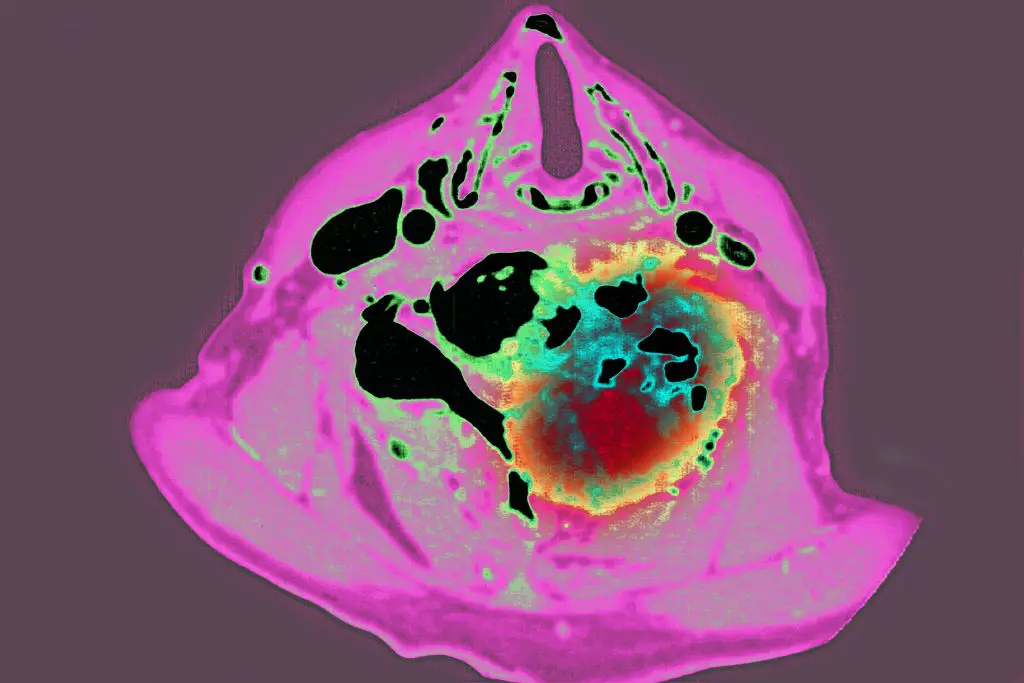
102 patients were included in the trial period in total, with 43 individuals seeing a reduction or complete eradication of their tumors after taking amivantamab. 28 people within that group saw their tumors shrink significantly, whereas the treatment caused the tumors inside 15 individuals to disappear completely.
One important factor to this specific group of head and neck cancer patients too is the fact that none had forms with human papillomavirus (HPV) positive oropharyngeal squamous cell carinoma, which is usually an easier form to treat.
This represents potentially revolutionary progress in the field of cancer treatments, and doctors have understandably responded incredibly positively to the results from the trial.
"These are unprecedentedly strong responses in patients whose disease has become resistent to both chemotherapy and immunotherapy," explained Kevin Harrington, professor in biological cancer therapies at the Institute of Cancer Research, London, adding that the benefit is 'very striking' for "a group of patients for whom treatment options are extremely limited."
Another benefit comes in its vaccination form, as the triple-action jab can be administered far quicker and with greater ease than intravenous drip (IV) procedures typically associated with cancer treatment, making the process far better for both patients and hospitals.
Side effects are also reportedly mild to moderate, with less than one in every ten patients having to stop the treatment due to its impact on their body, pointing towards its potentially widespread use.
Amivantamab is also being tested in 60 clinical trials across a number of different forms of cancer, including lung, colorectal, brain, and gastric forms. It remains to be seen if these will be as successful as the existing treatments, but if so it could provide a pathway to treatment possibilities that previously seemed impossible.