60,000 lives at risk as scientists sound alarm on monumental US volcano


Concern has arisen surrounding one of the most dangerous volcanoes in the United States, causing scientists to issue a warning to 60,000 local residents in Washington that their lives could be at risk.
Only a small fraction of the already select number of potentially active volcanoes around the world are erupting during a particular given year, yet that doesn't stop scientists and those living nearby from remaining cautious that catastrophe is around the corner.
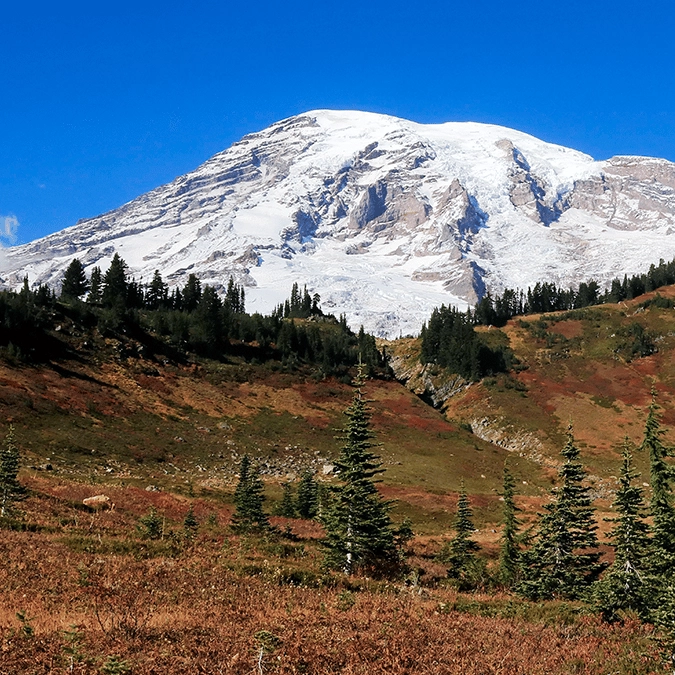
This is unfortunately the case for Mount Rainier – also referred to as Tahoma – as this active stratovolcano in the Pacific Northwest's Cascade Range has an ongoing high probability of eruption that could put as many as 60,000 lives at risk within just a few minutes after it comes alive.
Why is Mount Rainier so dangerous?
As reported by Popular Mechanics, one of the biggest threats posed by a volcano like Mount Rainier is the damage it can cause without even erupting, as this revolves around massive lahars that are generated from the mountain.
Advert
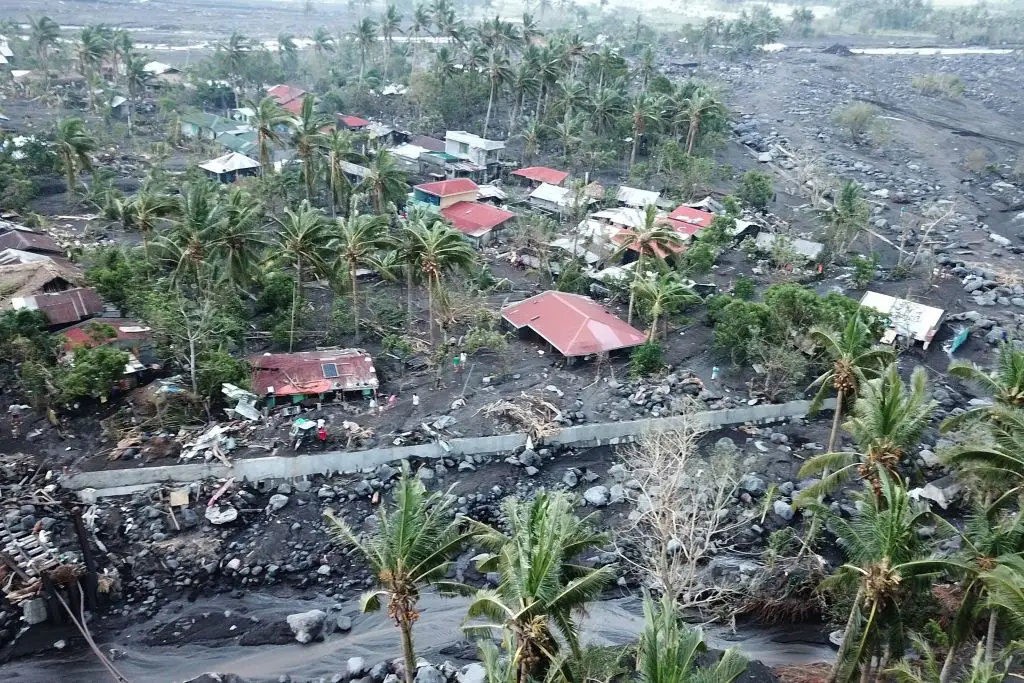
If you're unaware, lahars are violent mudflows that send debris cascading down a volcano's side and through the surrounding areas, and the speed at which this moves can exceed 40 miles per hour (60 kilometers per hour) in the worst case scenarios.
While they are often associated with eruptions, they can occur several years afterwards and can even be sparked by other natural disasters like earthquakes or heavy rainfall.
Scientists consider lahars to be one of the biggest threats associated with volcanoes, as they have the potential to destroy anything and everything in their path, taking it with them to cause even more damage along the way.
What areas would be at risk?
A map from the United States Geological Survey (USGS) shows quite how far reaching the damage caused by a lahar can be if one was to trigger from Mount Rainier, and experts predict that more than 60,000 residents could be impacted within just half an hour.
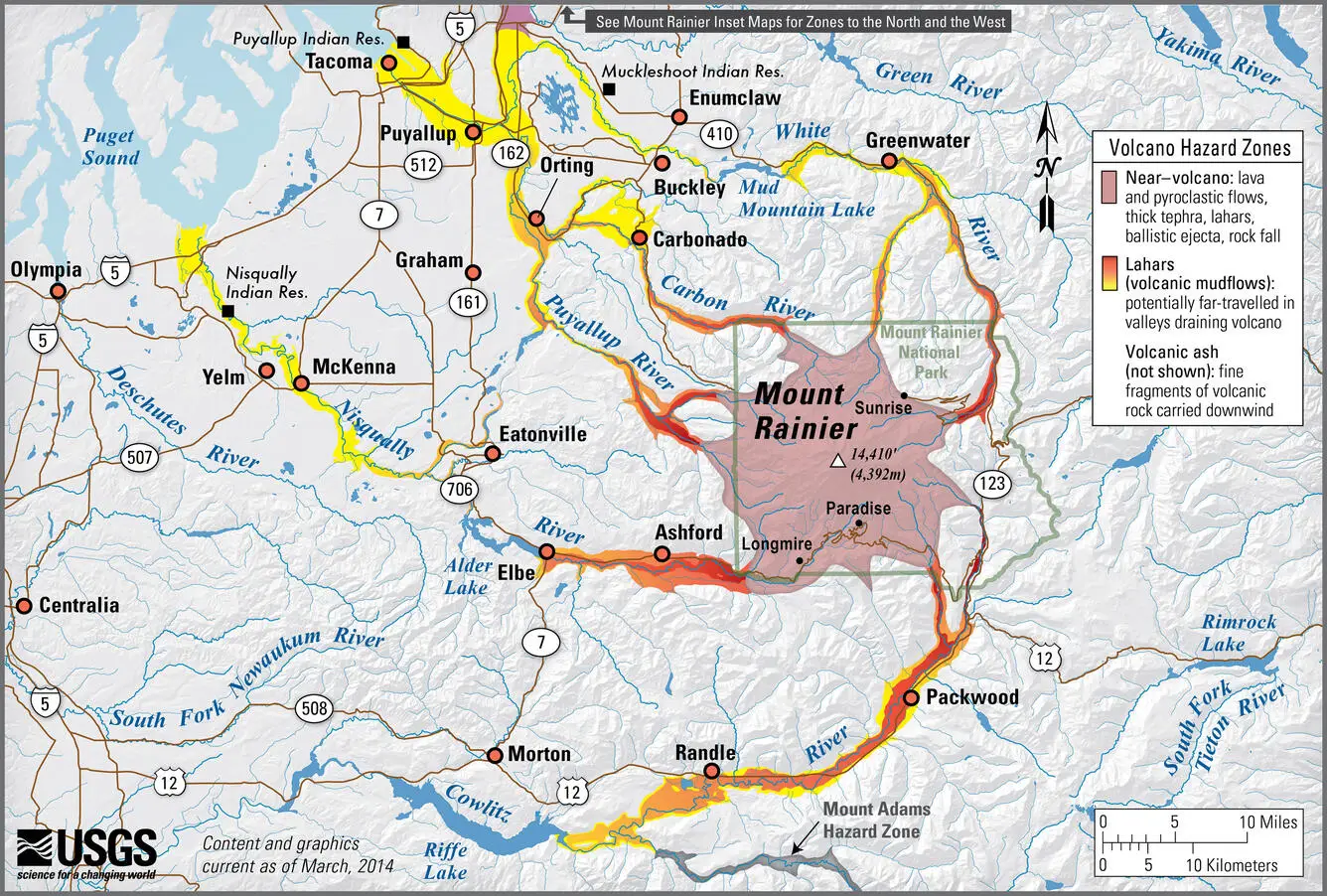
While the lava flow would impact the immediate area surrounding Mount Rainier, mudflow would continue in all directions, stretching as far as Greenwater and Tacoma to the north and northwest, alongside Yelm and Randle to the west and south of the volcano.
Explaining the danger of such an event, former Cascades Volcano Observatory (CVO) geophysicist Andy Lockhart told Popular Mechanics: "[No-notice lahars are] the thing that goes bump in the night. It creeps me out."
Researchers will continue to study these horrific phenomena to better understand them and hopefully be able to predict when they're on their way, yet for the time being they remain elusive and as dangerous as ever.