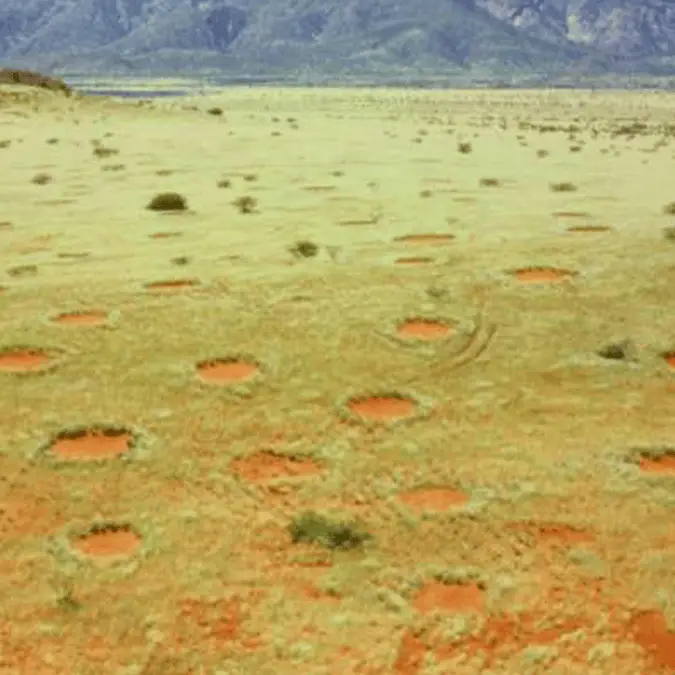
Explanation behind 'God's footprints' left in Namibian desert after decades of mystery


One of nature's strangest patterns has surfaced online and many people aren't buying the science.
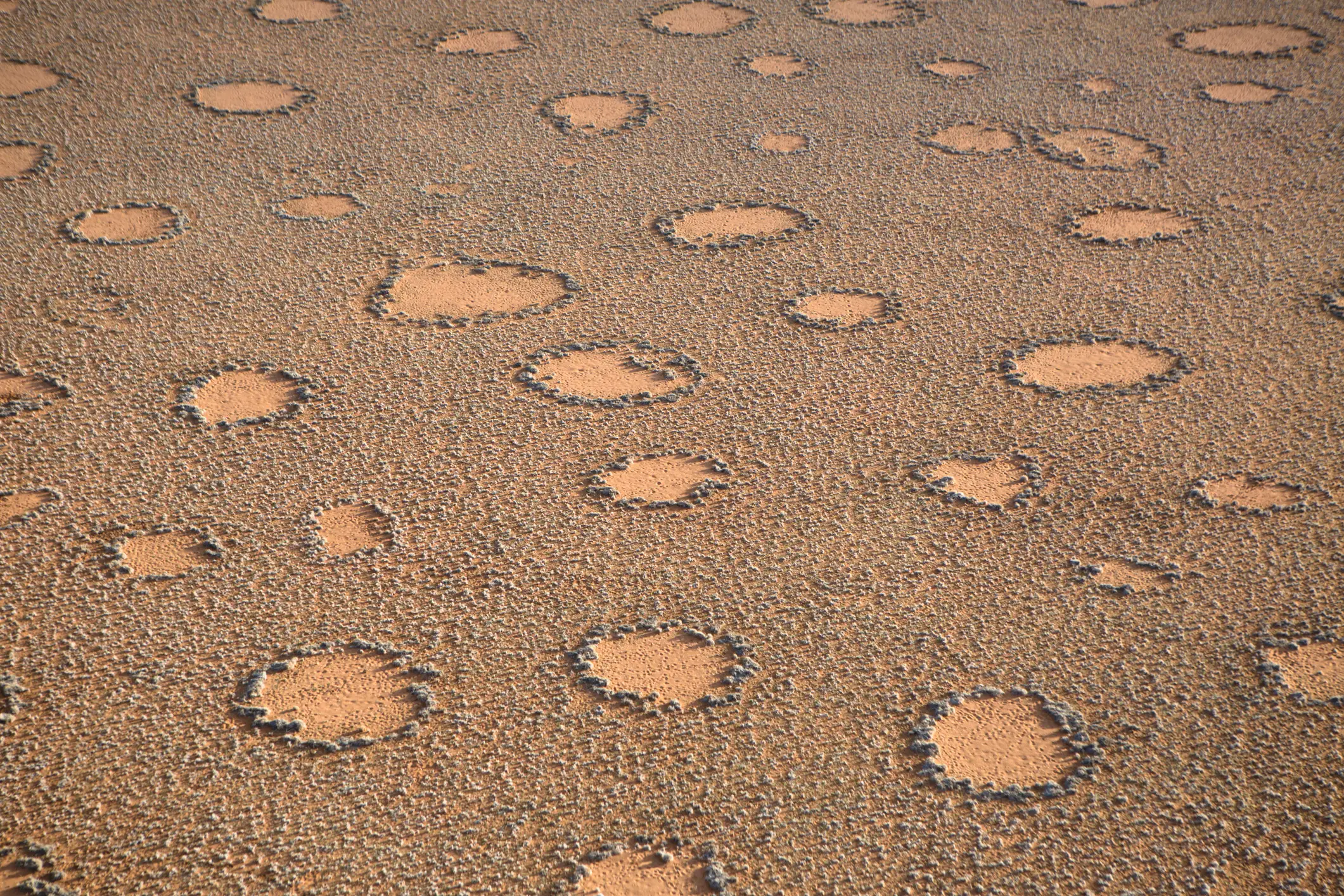
The Namib Desert's 'fairy circles' are bare circular patches scattered across roughly 1,100 miles of Southern African grassland. While the name is a nod to the 'fairy rings' of fungi found in forests, there is actually no fungus and no folklore at work here.
For decades, scientists dumbed it down to two explanations. One theorised it to be sand termites chewing through grass roots, the other pointed to the grasses themselves. Scientists argued back and forth until a recent study offered what may finally be firm evidence.
Advert
The study came from Stephan Getzin, an ecologist at the University of Göttingen who has been examining the circles since 2000 and has published more on them than anyone else. His focus is not just the bare centres but the grasses ringing them, which flourish in one of the driest places on Earth. His team suspected those plants had evolved to squeeze every drop from the little water available.
To test it, they spent three years tracking grass growth in Namibia, installing sensors during the 2020 drought to measure soil moisture around 20 centimetres down.
“In 2021, and this year, in 2022, there was a very good rainfall season, so we could actually really follow how the growth of the new grasses was redistributing the soil water,” Getzin said.
Water inside the circles drained away quickly despite there being no grass to use it, while the plants on the outside stayed strong. Under the fierce desert heat, those established grasses had effectively evolved a vacuum around their roots, pulling moisture towards themselves and starving the new grass trying to sprout inside.
According to Getzin, the circular shape is not random either. It may be the most efficient layout for plants competing over scarce water.
“A circle is the most logical geometric formation which you would create as a plant suffering from lack of water,” Getzin explained.
“If these circles were squares, or low, complex structures, then you would have a lot more individual grasses along the circumference[...] The proportional area is smaller than if you grow in a circle. These grasses end up in a circle because that’s the most logical structure to maximise the water available to each individual plant.”
However, the argument hasn't done much to satisfy users on Reddit who believe there's other forces at play.
"What are they hiding from us?" one user asked.
Others insisted the circles 'occur worldwide' and some posted alien memes in response to the explanations.
The reality, unsurprisingly, has nothing to do with a cover-up, even if it has taken researchers more than 50 years to pin down.
The study called the phenomenon "ecohydrological feedback", where the barren circles act as small reservoirs that keep the edge grasses alive at the expense of those in the middle. It's a form of self-organisation that helps the plants ride out worsening drought, and it shows up in other harsh drylands too.