Radical new theory of consciousness could finally offer explanation of what happens when you die


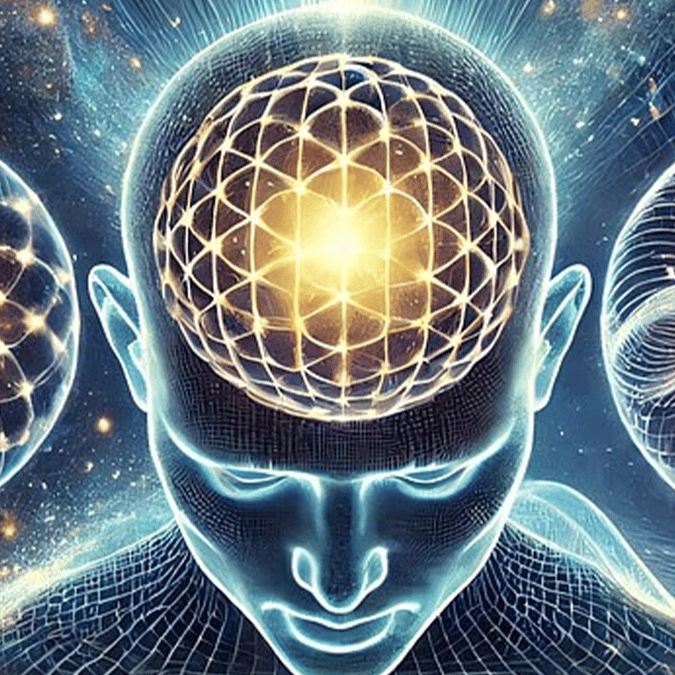
One scientist has proposed a radical and bold new view of human consciousness, and this could have significant ramifications on how we perceive and understand life after death.
Long have people considered the notion of human consciousness – and perhaps sometimes the concept of a 'soul' – as something that lies innately within each person, and it lives with us until we pass away.
A handful of people have shared their unorthodox experiences of a supposed 'life after death' due to the fact they briefly passed away before being resuscitated, yet the mystery of the afterlife remains exactly that, with no clear sign that we'll receive answers any time soon.
However, one physicist believes that she has unlocked the secret of the afterlife and a number of other key questions, as Professor Maria Strømme has offered up an unorthodox perspective on our consciousness.
Advert
As reported by the Daily Mail, the professor of nanotechnology at Uppsala University in Sweden believes that consciousness isn't rooted in each individual person but instead exists as a fundamental field, making up a 'building block' of the universe.
This would mean that our own individual consciousness doesn't end when we die but instead returns to what's known as a background field, something that exists in theories of quantum physics.
"The possibility that consciousness is fundamental has been under-explored, but that is changing rapidly," explains Professor Strømme, adding that "we are reaching a point where asking deeper questions about consciousness is not philosophy on the margins — it is becoming a scientific necessity."
This wouldn't just 'explain' the notion of life after death but could also contribute to understandings of near-death experiences and even telepathy, as our consciousness isn't routed in the individual but instead the collective.
"In the mode, individual consciousness is understood as a localized excitation or configuration within a universal consciousness field — much like a wave on the surface of an ocean," illustrates Professor Strømme.
"A wave has a form that is temporary, but the water that carries it does not vanish when the wave subsides. The fundamental substrate of awareness does not begin or end with the body, just as the ocean does not begin or end with the appearance of a single wave."
This would represent a radical reinterpretation of what makes us human and how our concept of life and death is understood, and as wild as it may seem it's not hard to see where Professor Strømme is coming from.

She even links this to the concept and formation of many of the world's religions, as she explains:
"The texts of the major religions – such as the Bible, the Koran, and the Vedas – often describe an interconnected consciousness. Those who wrote them used metaphorical language to express insights about the nature of reality.
"Early quantum physicists, in turn, arrived at similar ideas using scientific methods. Now it is time for hardcore science – that is, modern natural science – to seriously begin exploring this."
While she does assert that things like telekinesis can be 'tested', her theory is something that will be challenging to prove outright, yet remains a fascinating hypothesis that could change science forever.