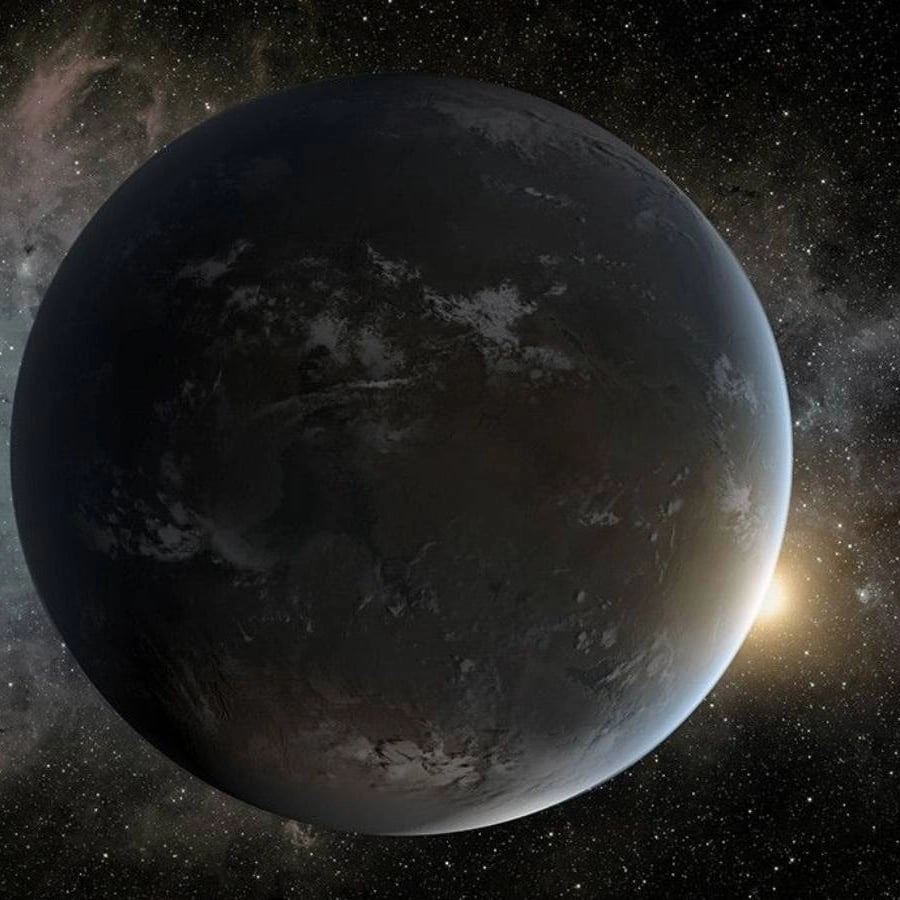
Aliens could be living on new 'super-Earth' as scientists make record-breaking planet discovery


Come on, E.T., where are you? While some remain convinced that aliens already walk among us and the government is hiding their existence, the general consensus is that we're yet to meet any visitors from outer space.
President Donald Trump has recently brought aliens back to the mainstream, promising to release all the U.S. government's files on UFOs, UAPs, and little green dudes coming from space in flying saucers.
Ufologist Dr. Steven Greer suggests that these reveals could usher in a 'new chapter of human civilization', which could also be spurred on by new information regarding LHS 1140 b.
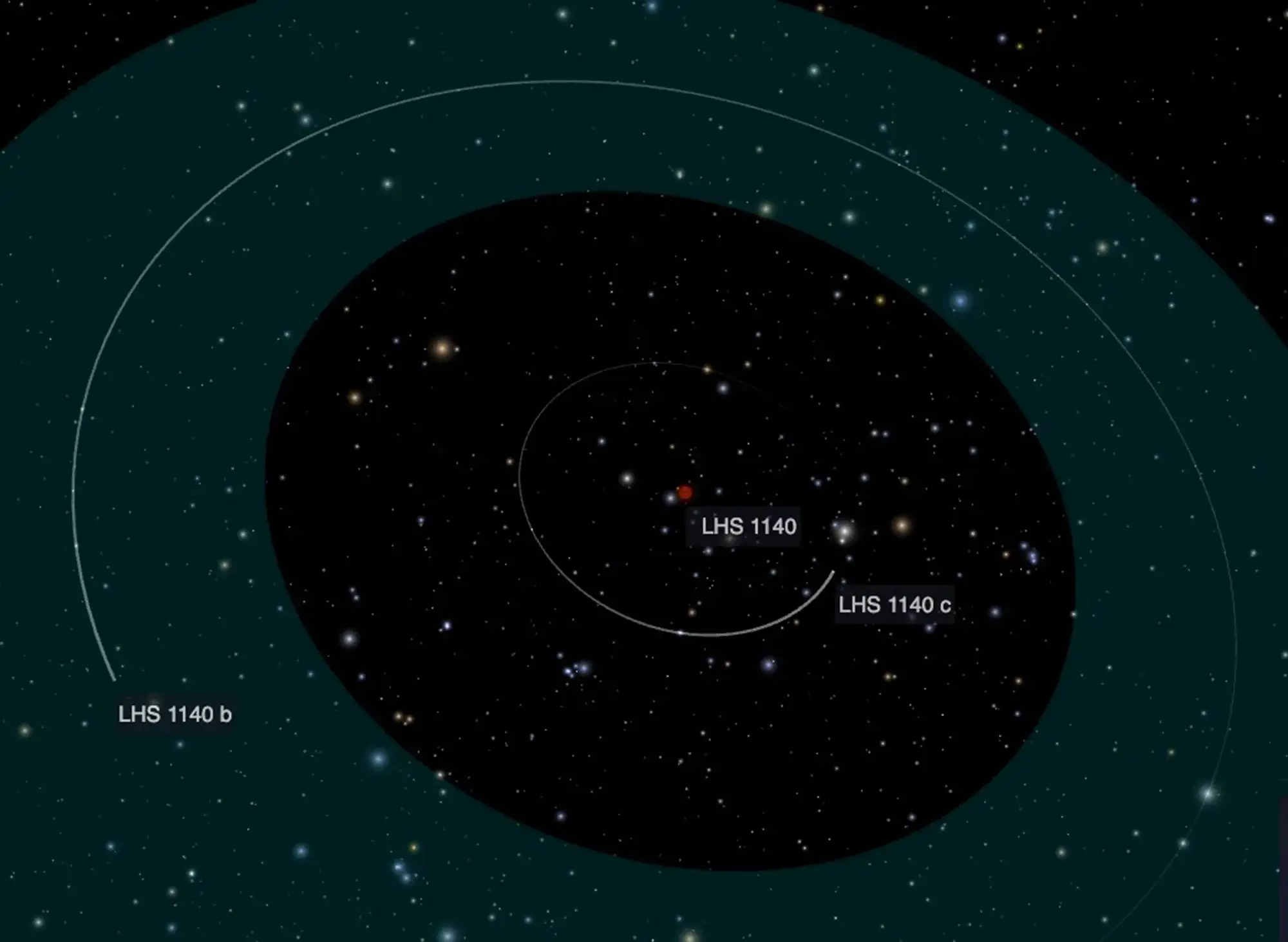
The so-called 'super-Earth' was originally discovered in 2017 by the USA's MEarth Project. LHS 1140 b is a rocky exoplanet that sits some 48 light-years away from us, has a mass 5.6 times that of Earth, and is around 70% larger in terms of radius.
The importance of LHS 1140 b
Advert
Being a big version of Earth is all well and good, but sitting in the so-called 'Goldilocks Zone' that's just far away from its orbiting star that it's thought to be able to support life, LHS 1140 b suddenly becomes a lot more interesting. Even though LHS 1140 b's orbit is 10 times closer to its star than we are to the Sun, the fact that its red dwarf star (called LHS 1140) is a lot smaller and cooler helps its conditions.
The European Southern Observatory says the conditions of this red dwarf star are “particularly favorable,” because it's dim and doesn't emit too much radiation.
If that wasn't enough, a new study has been described as 'a big deal' by Harvard University's Dr Collin Cherubim of Harvard University.
Researchers have found the first-ever atmosphere surrounding an Earth-like planet, and although the detected gas is helium, the team suggests others could be present. Cherubim cheered: "This is the first time anyone has found an atmosphere on a rocky planet in the habitable zone of another star."
Even though atmospheres have previously been discovered on gas giants, LHS 1140 b's latest update confirms speculation that they could exist on the smaller, rocky exoplanets.
But what about the aliens?
Could LHS 1140 b harbour alien life?

As reported by the New York Times, Cherubim has also been pulled into the debate about whether LHS 1140 b could contain life. The planetary scientist reiterated: "At this point, we have absolutely no evidence for life on the planet. But we think all of the really important, essential ingredients are there."
Importantly, LHS 1140 b's existence with an atmosphere has spurred the hunt for others in similar circumstances. Although not involved in the latest research, M.I.T. astrophysicist Sara Seager added: "When there’s one, there’s more in exoplanets. Hopefully this is the start of something new.”
While it's undeniably exciting that LHS 1140 b has an atmosphere, it's only Earth-like because there are some key differences.
The exoplanet orbits its star in less than 25 days, whereas it takes us 365 days to get around the Sun. It always faces its host star in the same way, meaning there's no day-night cycle, and there's the aforementioned helium-rich atmosphere when compared to our own nitrogen-rich one.
Still, Seager led a 2020 study into yeast and E. coli surviving in a helium-only atmosphere, meaning it's not impossible that something is out there on LHS 1140 b.
Shreyas Vissapragada, a planetary scientist at the Carnegie Observatories in Pasadena, concluded: "We really want to know what planets like Earth are like, just to understand our place in the universe a bit better. [It's] a real stepping stone on our way to getting down to characterizing truly Earth-like exoplanets."