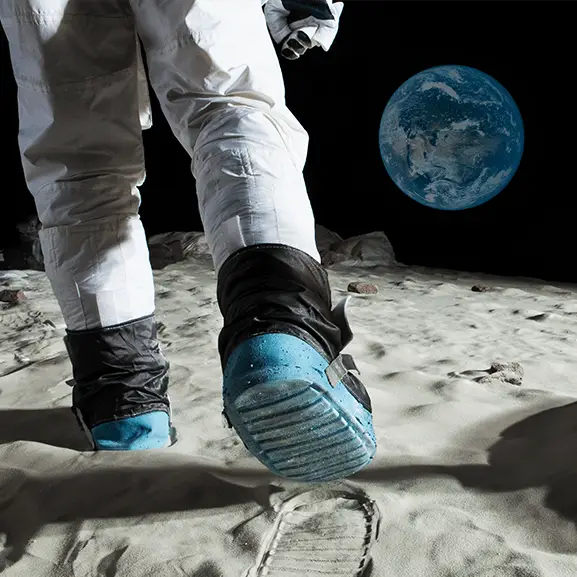
Astronauts break down real reason why no human has been to the moon in 50 years and the reality is depressing


Stepping foot on the Moon is not only one of NASA's greatest achievements, but also one of humankind as a whole - so why haven't we done it in over 50 years?
1969 was the first time man set foot on the Moon's surface as Neil Armstrong and Buzz Aldrin famously stepped and leaped across the Sea of Tranquility.
Five additional crewed landings followed this initial expedition, with the last coming in December 1972 as the Apollo 17 mission broke countless records, including the longest space walk.
Yet in the 50 years that has followed, not a single human being has returned to the Moon's surface, leaving many space enthusiasts to wonder what the hold up is - especially considering the number of active space activities inside and beyond NASA.
Advert
That could soon change, however, as NASA is now planning to return human astronauts to the Moon — with a goal set for 2028 as to when the mission will finally happen.
This is part of the Artemis series of missions that are currently ongoing, with the third (Artemis III) set to be the one that finally sees humans set foot on the Moon again.
Artemis I launched all the way back in November 2022, and saw the Orion spacecraft and NASA's Space Launch System (SLS) tested before humans were allowed to step on board, making sure in particular that the heat shield was effective.
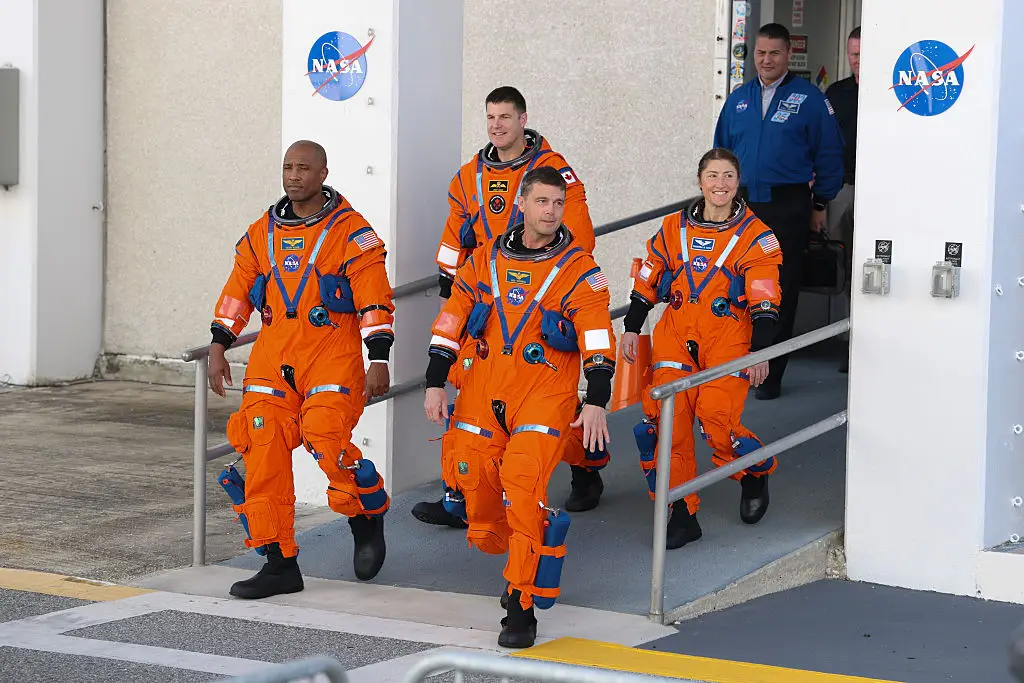
Its follow up, Artemis II, is set to launch no earlier than April 1 at 6:24 p.m. EDT, and this will take a crew of four astronauts on a journey around the Moon, acting as another preliminary test of sorts before the 'real thing' happens in a few years' time.
The reason why this has taken to long is rather depressing, however, as while it might finally be achieved in the coming years, the return of astronauts to the Moon should have been done far earlier.
Former NASA Administrator Jim Bridenstine outlined that "if it wasn't for the political risk, we would be on the moon right now," adding that "in fact, we would probably be on Mars."
The root of the issue then appeared to be both money and time, as any prospective program would have taken far too long and cost too much money.
In his first term as President, Donald Trump requested an additional $1.6 billion in funding in a plan to return astronauts to the Moon by 2024, and it only took until a major u-turn that saw Elon Musk's Mars dream shattered for progress towards the Moon to accelerate.

Progress towards Mars did seem somewhat counterintuitive, however, considering the inability for space agencies to reach the Moon, and you would imagine that achieving the latter would make the former far more realistic in the years following Artemis III.
There remains the issue of distance that holds up dreams of Mars though, as while it's something that NASA is actively preparing for with ongoing test environments, we likely don't have the technology necessary to sustain a journey that would take around six months each way — nor does there appear to be progress made in spacecrafts that would make the trip faster.
As has been shown with President Trump's renewed focus on reaching the Moon again, perhaps all it will take is an extra boost of funding, and we have only history to look back on to see that this definitely plays a major factor in the amount of progress (or lack thereof) being made.