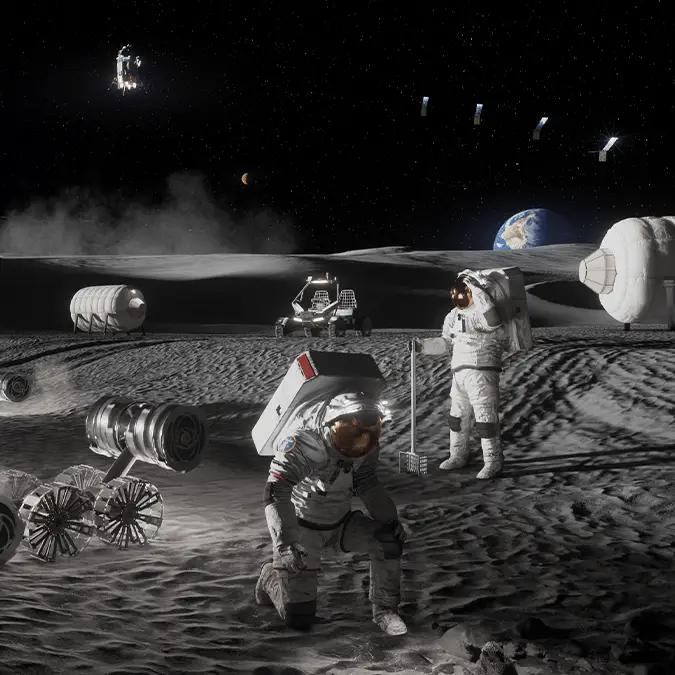
The new space race: Inside NASA’s $20B timeline to build a permanent Moon base by 2030


NASA has just given the public a huge update on the highly anticipated Moon Base project, but they're not the only ones looking to put boots on the Moon.
Before President Donald Trump leaves office in 2029, the US wants to put Americans back on the Moon. Fortunately, the foundations are already in place as the latest Artemis II mission saw four NASA astronauts complete a 10-day journey around the Moon, capturing footage from outer space and setting the stage for future lunar missions.
Now, NASA has revealed exactly how it plans to build on that success.
The New Lunar Roadmap: NASA’s $20 Billion Pivot
Building on the success of last month's Artemis II mission, NASA is now moving from exploration to construction and ultimately, long-term habitation.
To get there, NASA has selected several commercial partners to build the hardware needed for the earliest stages of the programme. Blue Origin, Intuitive Machines, and Astrobotic are among the companies awarded contracts to develop robotic landers, hopping drones and surface vehicles that will pave the way before any human sets foot on the surface again.
Advert
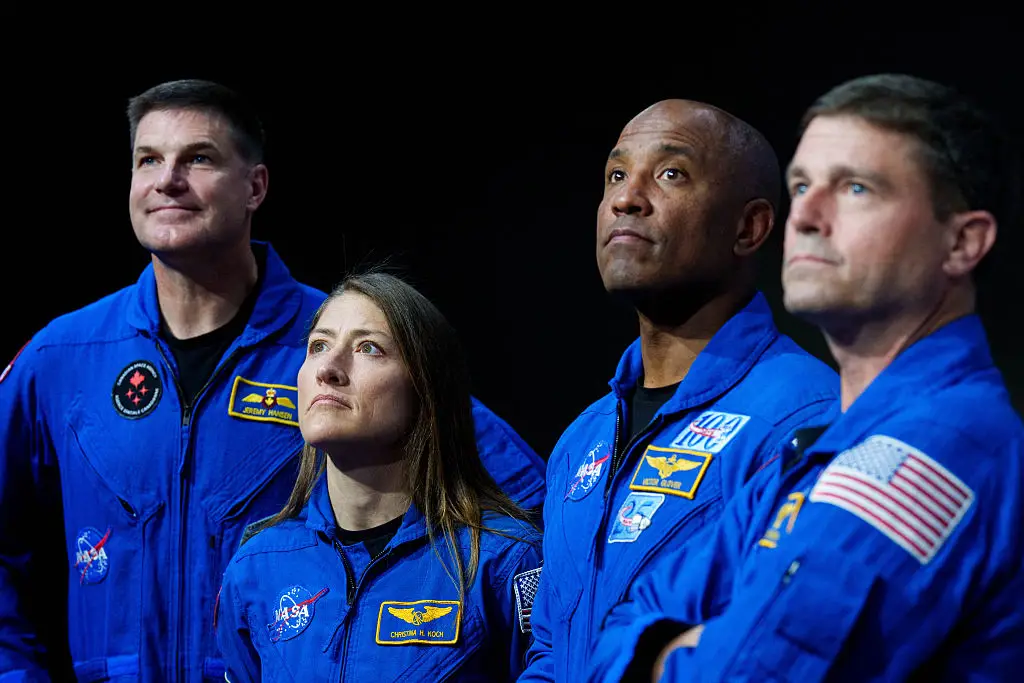
A permanent US presence on the lunar surface would allow for long-term scientific experiments, mining and extraction of valuable resources and a base for future Mars missions.
The base is expected to cost over $20 billion altogether, with the broader Artemis programme projected to reach a whopping $93 billion.
“With the Moon base, Artemis astronauts will stay longer, explore farther and conduct the kinds of science that advances exploration itself, understanding how humans operate off world, how we build infrastructure and how we prepare for Mars,” said Lori Glaze, acting associate administrator of NASA’s Exploration Systems Development Mission Directorate.
The Exact Artemis Mission Timeline
NASA has divided its Ignition Moon Base project into three phases.
The first will focus on robotic exploration, which involves sending landers and drones to map the terrain and test the technology needed for lunar surface operations.
Delivery vehicles carrying communications equipment, high-resolution cameras, and scientific instruments would also be deployed.
It will reportedly include around 25 launches, 21 landings and 400 metric tons of cargo, Carlos García-Galán, Moon Base programme executive, disclosed.
Nasa wants Blue Origin's lunar lander, Endurance, to be able to carry out precise landings and autonomous navigation while Astrobotic's Griffin-1 lander is expected to land at Nobile Crater near the South Pole.
These first missions are critical for building a sustainable base on the Moon before the end of the year and setting the foundations for phase two.
“We are leveraging the NASA playbook from the 1960s, figuring out what works and what doesn’t in this epic science of survival,” NASA Administrator Jared Isaacman told reporters (via BBC).
Phase two involves the assembly of semi-permanent nuclear and solar power facilities for early human habitation. Nuclear fission reactors could be launched as soon as 2030, the Trump administration reported.
The second mission in the programme will deliver the largest commercial payload ever landed on the Moon, with AstroLab's rover among the most significant cargo.
Lunar Outpost's autonomous vehicles will complement that effort, independently mapping the terrain to identify the most viable locations for future base sites.
By 2032, in the final phase, the space agency wants humans to be able to live on the Moon in 'semi-permanent' housing, with ongoing long-range rover travel and infrastructure capable of carrying astronauts for further lunar exploration. For example, the Moon's South Pole contains frozen water that could be used for drinking water or producing oxygen.
However, the 'limiting' problem is transporting humans to the Moon and back safely, Dr Simeon Barber, a Lunar Scientist at the Open University, told BBC News.
Elon Musk's company SpaceX has developed the Starship Human Landing System, but it has faced numerous setbacks and delays.
The 2030 Deadline: The Geopolitical Race with China
Also competing in the space race is China which has its own plans to land humans on the Moon by 2030.
On Monday, China launched its Shenzhou-23 spacecraft, sending an astronaut crew to the country's Tiangong space station, leading some scientists to believe China is ahead of the game.
"It would not surprise me at all if China gets there first," Dr Barber claimed.
However, if the US can make its plans happen, Isaacman believes the US will 'never give up the Moon again.'