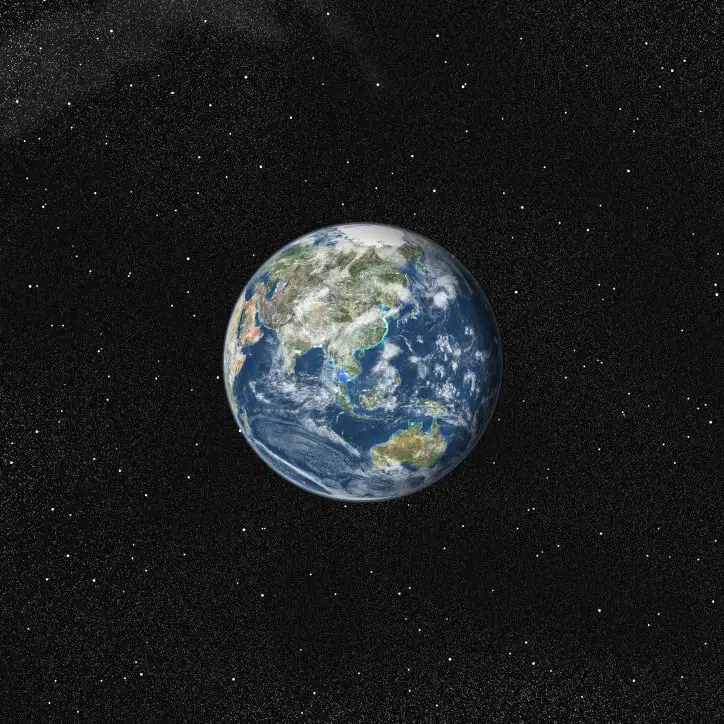
Scientists who predicted AI calculated humanity will reach a breaking point in a matter of weeks


A study published all the way in 1960 indicated that the world is set to end in a matter of weeks, and this group of scientists have already successfully predicted the rise of AI years before it took form.
Originating at the University of Illinois, a team of researchers including Heinz Von Foerster, Patricia M. Mora, and Lawrence W. Amoit shared their findings in the American Association for the Advancement of Science.
Within this research, they suggested that the rapidly growing population – which had continued to expand in first half of the 20th century despite two World Wars – would eventually become unsustainable, focusing on the exact date of Friday, November 13, 2026 as the extinction point.
"At this date human population will approach infinity if it grows as it has grown in the last two millenia," the scientists predicted, although it's unlikely that there will be a particularly cataclysmic event on that date, but instead a culmination of factors that trigger the end of the world.
Researchers suggest the world will end in a few weeks time
While the exact date they settled on was merely a result of exponentially increasing math calculations – with no other evidence suggesting why the world would end in a few weeks otherwise – the research does pose an interesting interpretation of handling population increase, especially relative to technology at the time.
Advert
"Under conditions which come close to being paradise – that is, no environmental hazards, unlimited food supply, and on detrimental interaction between elements – the fate of a biological population as a whole is completely determined at all times by reference to two fundamental properties of an individual element: its fertility and its mortality," the study indicates.
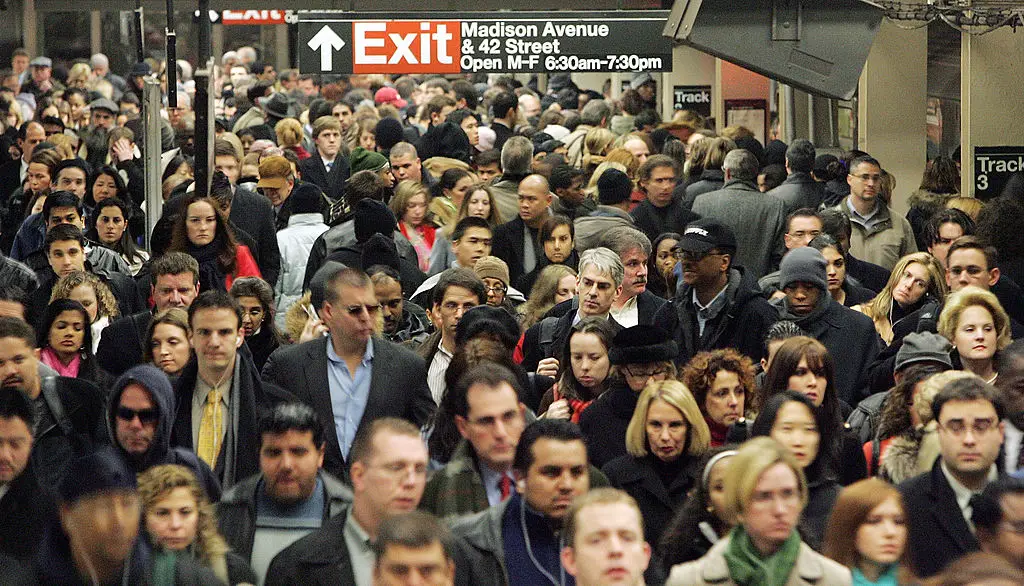
The scientists explain, however, that the situation 'is not that simple' in reality, yet you can still use long-range data for human populations to track how things will continue to grow and presumably reach a point where there is simply too many people.
While many theories surrounding over population point towards shortage issues like starvation – as there's simply not enough food to go around – these scientists indicate that "our great-great-grandchildren will not starve to death. They will be squeezed to death."
Humans, therefore, will "struggle for existence in a finite environment," leading to a natural end point on November 13, which is now just a few weeks away.
Is the global population still increasing unsustainably?
While some across the world argue that overpopulation remains still a serious issue – something that Elon Musk, however, speaks clearly in opposition too – studies have shown that the rate at which our population is growing has slowed down slightly.

As per UNILAD, a new study conducted by scientists at Toho University in Japan in collaboration with NASA researchers tied our natural existence to the lifespan of the Sun, giving us roughly another billion years before our extinction is all-but guaranteed.
It's almost likely that humanity will reach an end point before than though – with the threat of climate change and perhaps even an all-powerful AI looming in the near future – but none of those issues will technically have anything to do with the sheer number of people present on the planet.