Google DeepMind researcher quits job saying AI will 'kill us all' as insiders sound alarm on rapid development


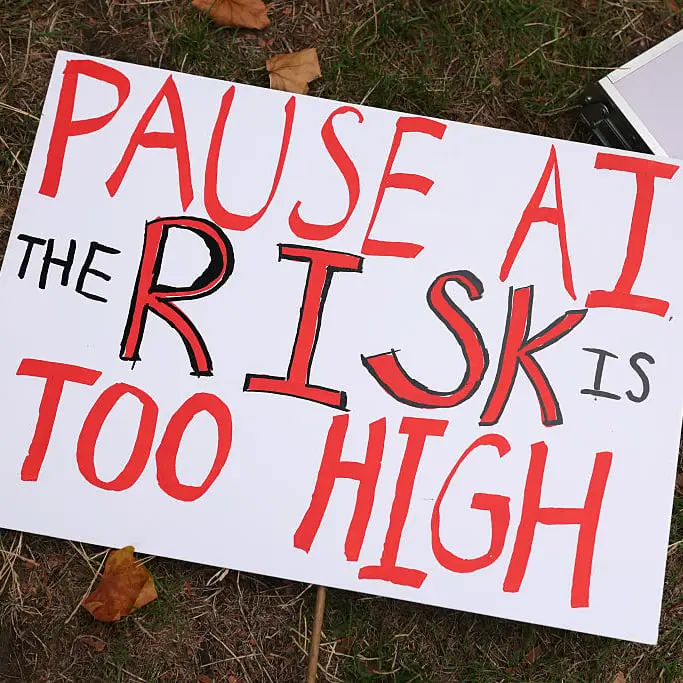
Another AI researcher has joined the growing list of industry experts who have not only quit their jobs but done so over express concerns about the future, as this ex-Google DeepMind safety employee has revealed his belief that the tech will 'kill us all'.
A major bombshell was dropped on the AI industry last week when Jacob Coxon, a pretraining researcher who had worked at Anthropic and OpenAI, quit his job at the former after he believed that not enough was being done to address the potentially civilization-threatening consequences of the tech.
This was followed up by an equally monumental essay from Anthropic CEO Dario Amodei, which has since been cosigned by Sam Altman and Elon Musk, where he calls for a slowdown in development amid fears that we could lose control.
Bilal Chunghtai, a former Artificial General Intelligence (AGI) safety researcher at Google's DeepMind lab, has now added to those concerns too with a statement of his own on social media, only strengthening the belief of many that action needs to be taken.
Ex-Google DeepMind researcher warns that AI will 'kill us all'
Shared on both X and LinkedIn, Chunghtai reveals that the motivation behind his decision to leave Google DeepMind – where he worked on AGI safety and alignment research – was due to the current 'default trajectory' of AI, as this left him 'extremely concerned'.
Advert
"I earnestly believe that AI has the potential to kill us all, and that we might be running out of time to avoid this outcome," he boldly proclaimed in a post that has already earned nearly one million views.
"The pace of AI progress in the past few years has been staggering," he reveals. "When I first started working on AI in early 2022, AIs were amusingly useless. Just four years on, AI agent swarms from OpenAI are cracking century-old math problems and, more worryingly, escaping the control of OpenAI and autonomously hacking into the third-party company HuggingFace, against anyone's wishes."
Chunghtai speculates that things will 'only get crazier' in the near future, suggesting that within a few years time development labs will successfully build superintelligent AI systems "that far exceed human capabilities in every domain."
While there are undoubtedly benefits that would arrive with this creation, the researcher fears that they won't 'do what we want', warning that there's a risk they could "escape our control and take dangerous actions that may result in the permanent disempowerment or death of humanity."
Is action being taken to prevent these risks?
Taking action is a complicated notion as while the labs behind accelerating AI development can indeed slow down development – something they have expressed a willingness to do, but have been yet to actually execute – they seemingly also require governments to take on responsibility, which is proving the biggest challenge.

By far the most notable hurdle right now is US President Donald Trump, as he has on several occasions shut down the notion of slowing down AI development, asserting the importance of 'winning' the AI race in a bid to 'win' overall.
He called claims and fears raised by figures like Amodei and Altman a 'hoax', with Nvidia CEO Jensen Huang agreeing with Trump that AI will cause no harm and bring only benefits for America.
There is certainly a growing drive to alter the trajectory of AI development, however, with leading labs occupying a desire to remain in control over their own creations — but whether that is enough to completely eliminate the possibility of our own extinction remains up in the air.