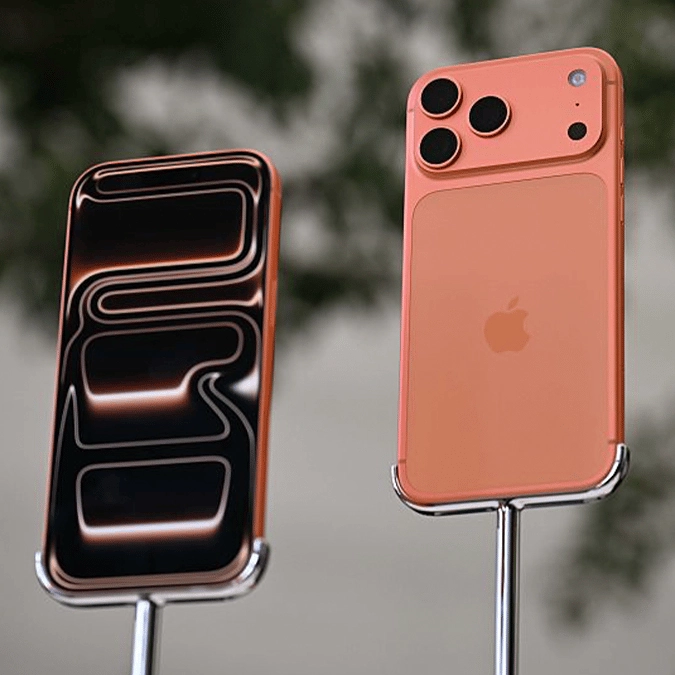
Apple's iPhone 18 set to see most significant change in years according to new leak


A new leak reveals iPhone 18's biggest design change in years.
While plenty of us are still enjoying last year's iPhone Pro models, it won't be long before we're counting down to the next release.
Meanwhile, following the successful launch of the iPhone 17 in Autumn last year, Apple's next budget-friendly model is expected to arrive in spring 2026 with what could be a very welcome upgrade.
Over the years, Apple's iPhone design has evolved quite a bit. We've seen changes to the camera bump, the introduction of the Liquid Glass interface and other refinements.
Advert
But one particular element has largely remained the same, until now.

After debuting in September 2022, the Dynamic Island is the pill-shaped cutout near the top of the display.
It first appeared on the iPhone 14 Pro and allows for multitasking without interrupting your current app, replacing the larger notch that had been a fixture on every Face ID iPhone starting with the iPhone X.
Now, according to a post from X user Ice Universe, a well-known leaker with an accurate track record, the Dynamic Island will be getting a dramatic makeover on the iPhone 18 Pro and iPhone 18 Pro Max.
“The Dynamic Island cutout width on the iPhone 18 Pro and iPhone 18 Pro Max has been reduced from 20.76 mm to 13.49 mm, representing a reduction of approximately 35%,” Ice Universe shared.
Reactions in the comments haven't shown much optimism.
"A downgrade, it doesn’t even make a difference in daily use," one user replied.
"It's still too big and hideous," another admitted.
"I always knew the dynamic island would eventually go smaller. Similar to how the notch went smaller on the 13 pro. But maybe this smaller dynamic island will only be there for one iPhone line up and then next year, there will be a punch hole or under the display. We'll see," a third user claimed.
Meanwhile, a separate Weibo post from a user called Instant Digital (via MacRumors) claims that Chinese supplier BOE is unlikely to develop panels for the iPhone 18. This is due to Apple's reportedly exceptionally high brightness requirements, which means the next-generation smartphone could see a major jump in brightness capabilities.
For context, the iPhone 13 and iPhone 14 offered a maximum brightness of 800 nits, with HDR peaks hitting 1,200 nits. Apple then bumped this up with the iPhone 15, 16, and 17 to 1,000 nits typical brightness and 1,600 nits peak HDR.
The iPhone 17 also saw outdoor peak brightness increase dramatically from 2,000 nits to 3,000 nits so it seems to only get higher.
According to MacRumors, the iPhone 18 is expected to launch in early 2027, with an A20 chip, C2 modem, and a redesigned Camera Control.