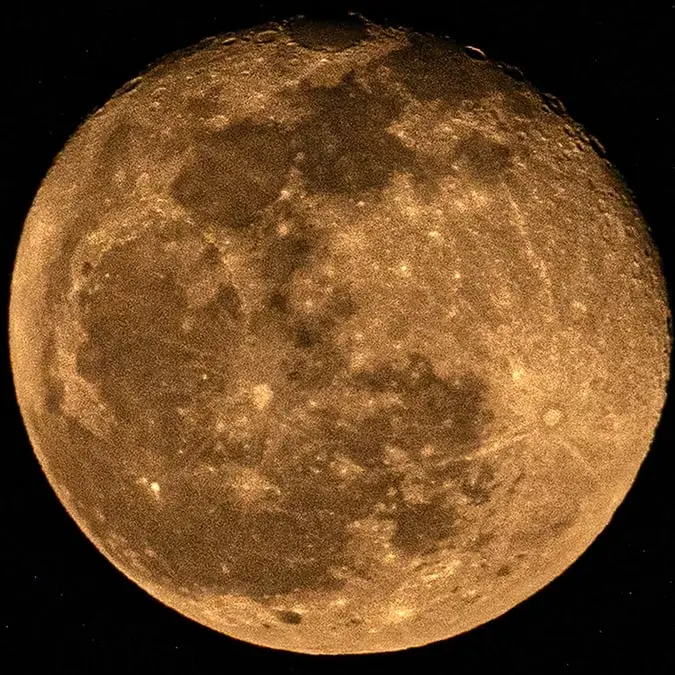
Satellite shows before and after impact of SpaceX's rocket crash on the Moon


Satellite imagery captured by NASA from lunar orbit has revealed dramatic "before and after" views of the Moon's surface after a four-tonne SpaceX rocket stage slammed into the lunar rock at 5,400 mph.
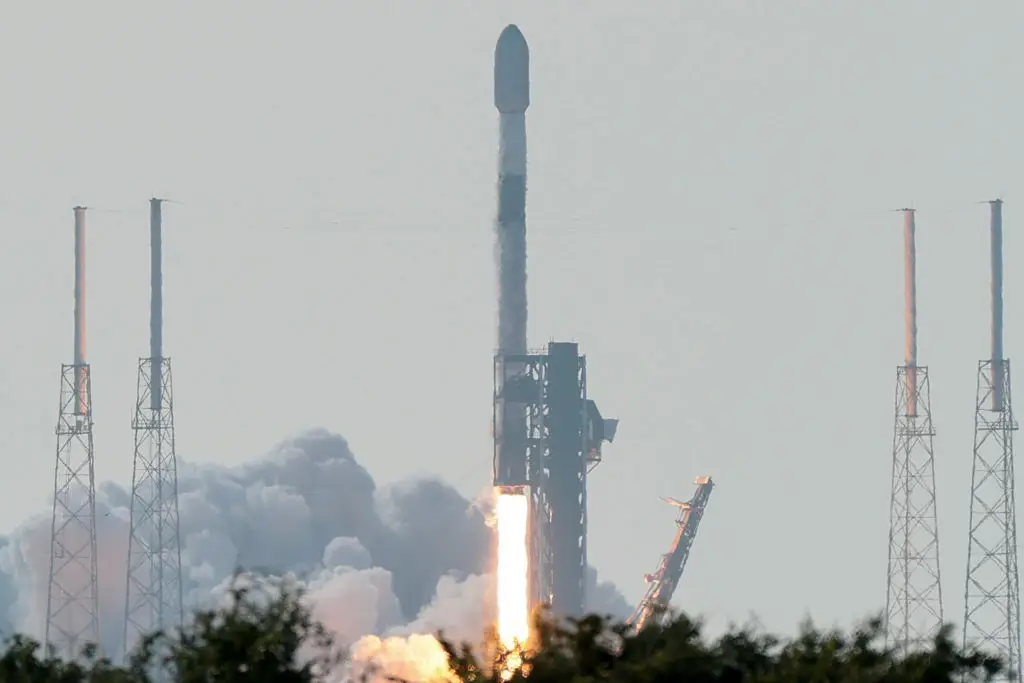
The runaway Falcon 9 upper stage—roughly the height of a five-storey building—inadvertently collided with the Moon on Wednesday, August 5, carving out a fresh crater and launching a plume of dust into space.
Orbital photos show a distinctly darkened scar on the lunar terrain where SpaceX's discarded 4,900kg booster ended its 18-month drift through deep space.
The collision was closely followed by scientists, who claimed that a flash caused by its impact with the lunar rock was visible. It was initially predicted by space tracking expert Bill Gray and, while experts have advised that this particular crash is not dangerous, they have highlighted how it shines a light on the growing threat of Earth’s orbit becoming filled with junk.
Advert
NASA release Moon imagery following SpaceX crash
The satellite imagery has revealed what the region of the Moon looked like before and after the impact was made.
This comes after NASA’s Lunar Reconnaissance Orbiter and the ShadowCam instrument aboard South Korea’s Korea Pathfinder Lunar Orbiter caught imagery of the site before and after the crash.
On the NASA website, it explained how the data collected will be used to ‘help scientists better understand artificial impacts and their exploration implications’.
The space agency went on to state: “Although unplanned in this instance, disposing of upper stages on the lunar surface is a technically accepted and safe method and, in some cases, can be the only practical option for missions in low lunar orbit. Many operators choose controlled impacts because they provide predictable and trackable end of life outcomes.
“NASA is committed to debris mitigation and demonstrating responsible disposal practices that safeguard Earth, its orbital environment, and other planetary bodies while enabling discoveries that deepen our understanding of the solar system and benefit humanity.”
There have been some concerns raised about that this impact could mean for the future of humans living on the Moon, and whether floating debris could become a danger hazard.
In a worst case scenario, the Kessler Syndrome could become reality, where a chain reaction of collisions could be caused that has the potential to destroy essential communications satellites around the planet.
In this case, the situation will then become so volatile that we wouldn’t be able to successfully send up new satellites to replace the broken ones as the debris will smash anything new into a thousand pieces.
This means that the area of space in which they orbit could become unstable, and might even trap us on Earth.