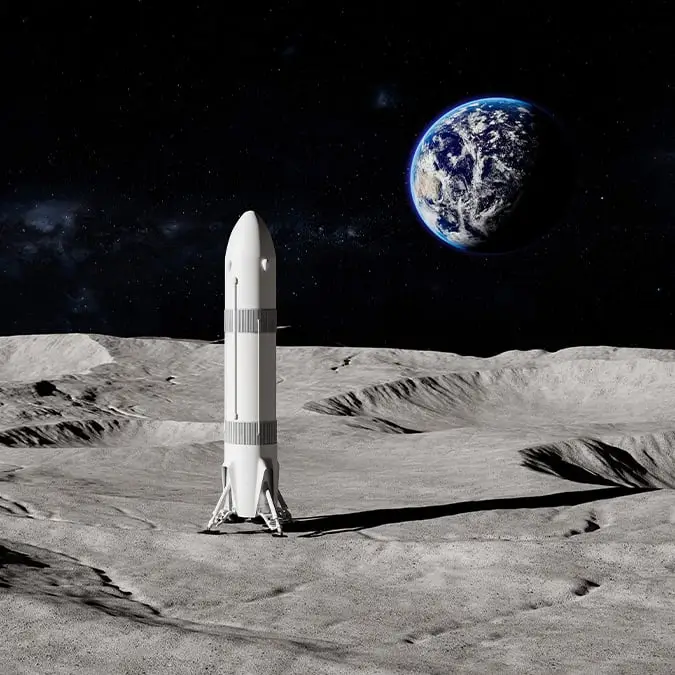
Space expert issues warning on the future of the Moon following SpaceX rocket crash


An out-of control SpaceX rocket left some visible damage on the lunar surface today, after reportedly colliding with the same power as of three tons of TNT.
This comes as experts share their own warning about what the future of the Moon could look like if debris is continuously left in space.
The piece of junk had been floating in space since the Falcon 9 rocket launch back in January 2025, where it has been slowly dragged closer and closer towards the Moon until finally making impact today (August 5).
The rocket part is around the same height as a five-storey building and weighs 4,900kg, and according to the Associated Press, it was never SpaceX’s intention to crash it into the Moon.
Advert

The collision was closely followed by scientists, who have since claimed that a flash caused by its impact with the lunar surface was visible.
It was initially predicted by space tracking expert Bill Gray and, while experts have advised that this particular crash is not dangerous, they have highlighted how it shines a light on the growing threat of Earth’s orbit becoming filled with junk.
Gray said: “Things are getting crowded up there.”
What will happen if humans leave too much debris in space?
There is a worrying theory about what the outcome might be if we continue to dump our scrap in space.
Known as the Kessler Syndrome, it is a scenario that was first thought up in 1978 by two NASA scientists - Donald Kessler and Burton Cour-Palais.
The theory is that, if we keep sending more and more spacecraft into space, then the space around Earth is going to become overcrowded.
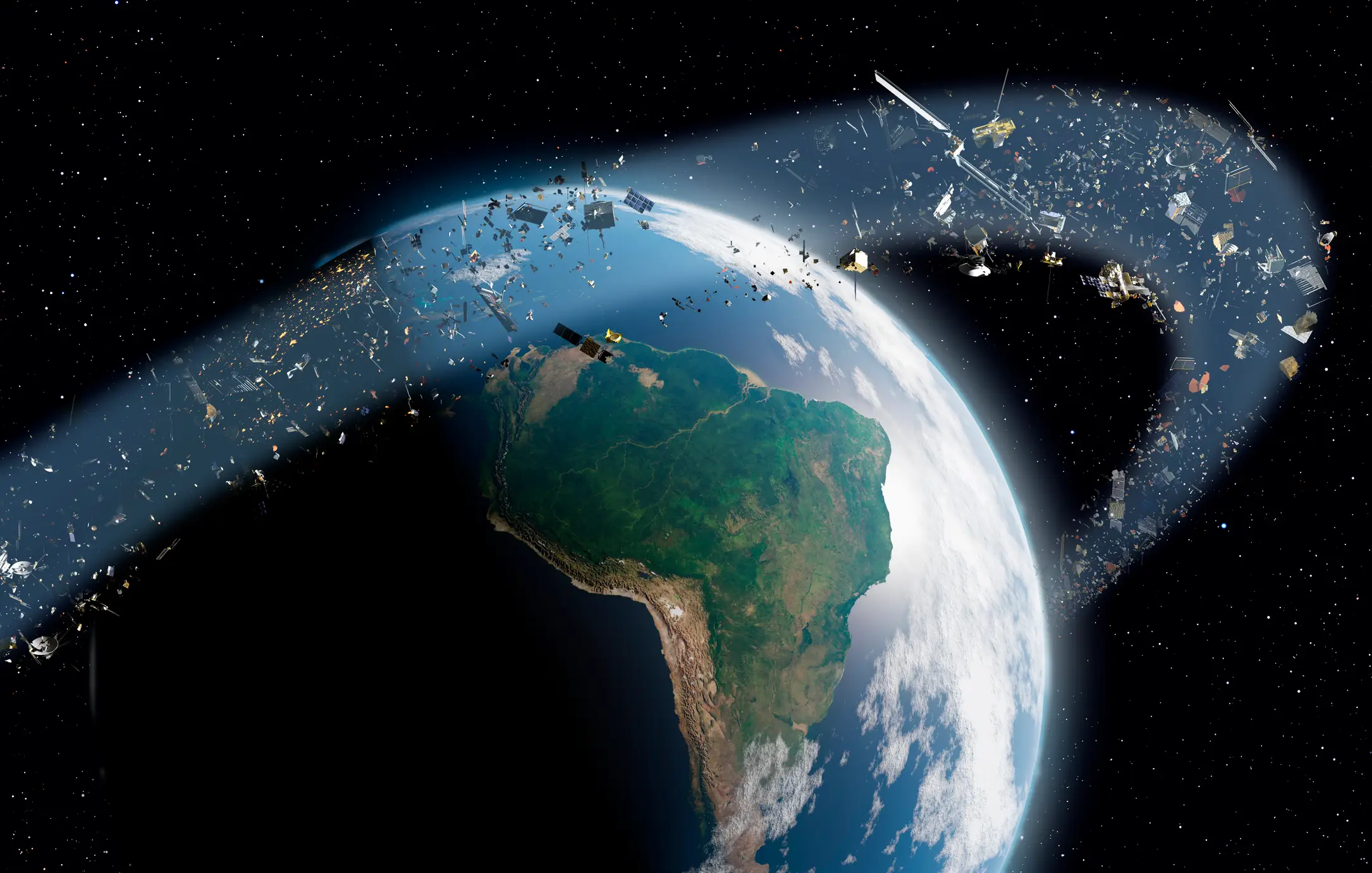
NASA said: “Spent rockets, satellites and other space trash have accumulated in orbit increasing the likelihood of collision with other debris.
“Unfortunately, collisions create more debris creating a runaway chain reaction of collisions and more debris known as the Kessler Syndrome after the man who first proposed the issue, Donald Kessler.”
In the worst case scenario, a chain reaction of collisions could be caused that has the potential to destroy essential communications satellites around the planet.
In this case, the situation will then become so volatile that we can't successfully send up new satellites to replace the broken ones as the debris will smash anything new into a thousand pieces.
This means that the area of space in which they orbit could become unstable, and might even trap us on Earth.