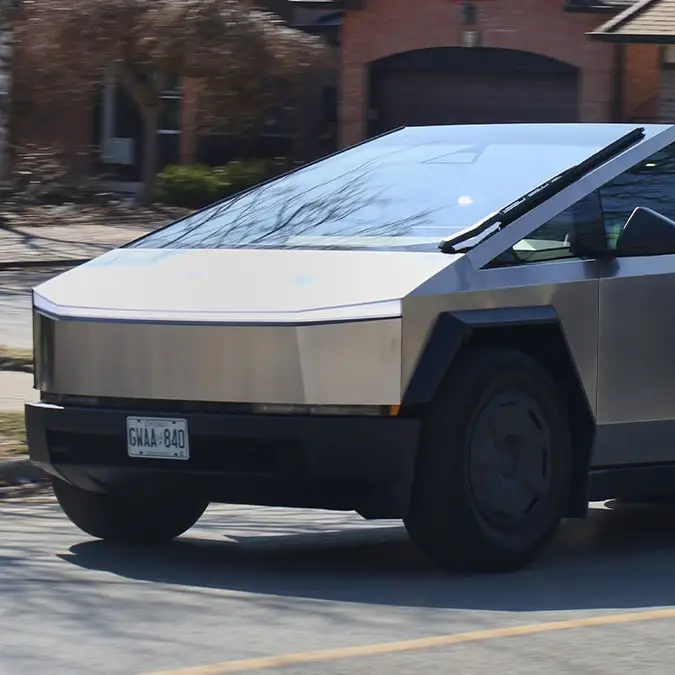
Tesla vehicle recalled 11 times chosen by NASA to save astronauts' lives in case of launchpad emergency


Despite being banned from the roads of Europe and Australia, Cybertrucks could be set to play an important role as NASA’s new rescue vehicle.
While it might be facing problems on Earth, having been recalled a whopping 11 times, it looks like the Tesla vehicle could have a different destiny beyond our planet’s atmosphere.
Well, at least as an on-the-ground emergency vehicle to whisk astronauts away from danger.
This comes after Joel Montalbano, who is the deputy associate administrator at NASA’s Human Spaceflight Mission Directorate, spoke to the media about the possibility of the Cybertruck replacing NASA’s fleet of MRAP vehicles.
Advert

Montalbano appeared at the Johnson Space Center in Houston, Texas, for a meeting about the upcoming SpaceX Crew-13 mission set to launch on September 12.
There, it was confirmed that NASA has now approved SpaceX’s use of Cybertrucks instead of the previously used MRAPs.
According to the Tesla website, the Cybertruck has an ‘ultra-hard stainless-steel exoskeleton that helps to reduce dents, damage and long-term corrosion’ and comes with Armor Glass that can ‘resist the impact of a baseball at 70 mph or class 4 hail. Acoustic glass helps make the cabin as quiet as outer space’.
These could be useful features to assist NASA with launchpad emergencies where astronauts need to be transported quickly.
During the meeting, Montalbano remarked that the space agency would be comfortable with using Cybertrucks due to the fact that they move faster than the MRAP vehicles NASA currently uses and are easier to drive when wearing gloves.
However, NASA hasn’t committed to permanently replacing its MRAP fleet with Elon Musk’s vehicles just yet but time will tell if the agency decides to make the switch.
The crew members of the upcoming mission include NASA astronauts Jessica Watkins and Luke Delaney, Canadian Space Agency’s Joshua Kutryk, and Roscosmos cosmonaut Sergey Teteryatnikov.
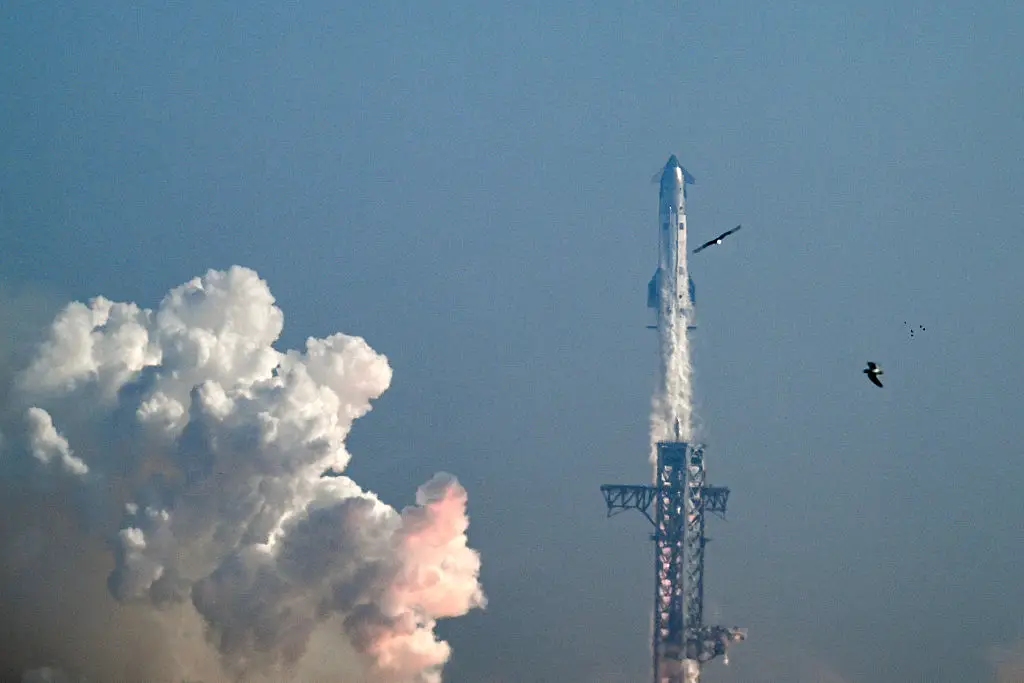
On September 12, the crew will launch aboard a SpaceX Dragon spacecraft on the company’s Falcon 9 rocket from Space Launch Complex 40 at Cape Canaveral Space Force Station in Florida.
Once they reach the International Space Station (ISS), the team will conduct vital experiments, health research, and spacewalks, continuing the work of previous crew missions.
During a previous meeting, Commander Watkins mentioned that she was looking forward to returning to the station and ‘flying on Dragon for a second time’.
She will lead a crew of first-time space flyers when they join the Expedition 75 crew aboard the orbital outpost.