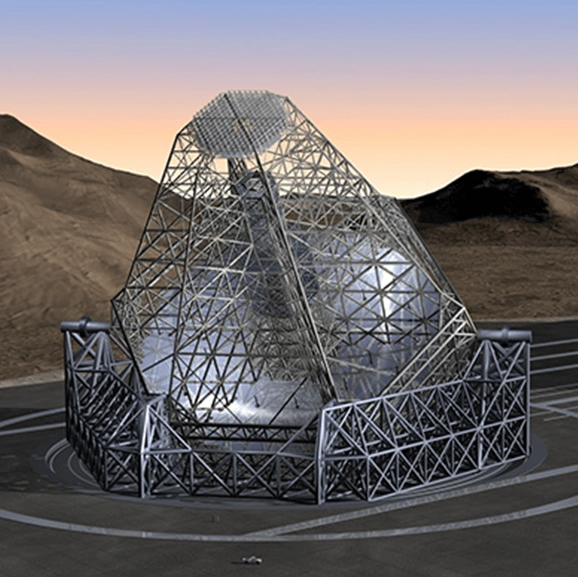
Europe has levelled a mountain to build $1,000,000,000 telescope that will become largest optical telescope on Earth


Europe have built a telescope so large that a mountain had to be levelled just to accommodate it, and it'll end up costing over $1,000,000,000 by the time it's finished.
Telescopes have been a vital part of countless space discoveries over the past few decades, from an asteroid that could give everyone on Earth over $1 billion if captured, to a reservoir of water found 12 billion light-years away.
This seemingly still isn't good enough for many scientists out there though, so an effort has been made to build what will become the largest optical telescope in the world - and it took multiple countries to get it over the line.
Enter the 'Extremely Large Telescope' (ELT), commissioned by the European Southern Observatory (ESO), and it's exactly as you imagine it to be if you simply went off the name.
Advert
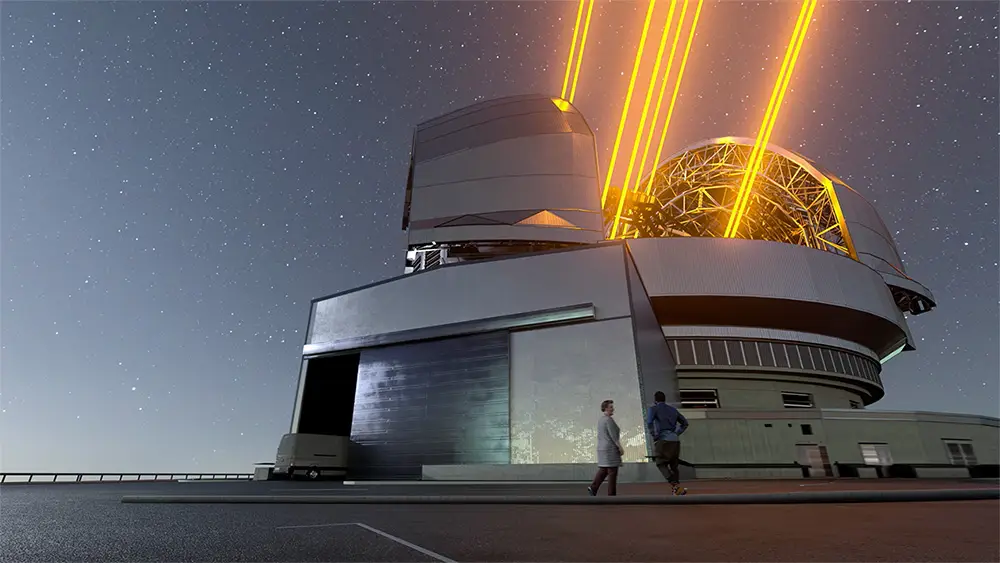
It's almost as tall as Big Ben, coming in at around 80m in height, and weighs over 6,000 tons in total with five mirrors found inside that'll let it take images that are around 15 times sharper than the currently operating NASA Hubble Space Telescope.
The catch is that not only will it end up costing around $1,600,000,000 when it's done, but a mountain has had to be flattened in order to create the perfect location for the telescope.
The Atacama Desert in Chile has been deemed the perfect location for this project, as it's widely considered the driest place on Planet Earth.
As reported by The B1M, ELT's program director Roberto Tamai explained the significant benefits of choosing such a location: "The turbulence and the content of water vapor, the content of wind, rain. Think about constructing such a big telescope in a location where 50% of the time you need to keep the door closed because it's raining."
He's certainly got a point, but it wasn't exactly easy to get the area prepped in the first place.
Beginning in 2014, large holes were drilled into one of the mountains, and explosives were denotated to break up the massive amounts of rock.
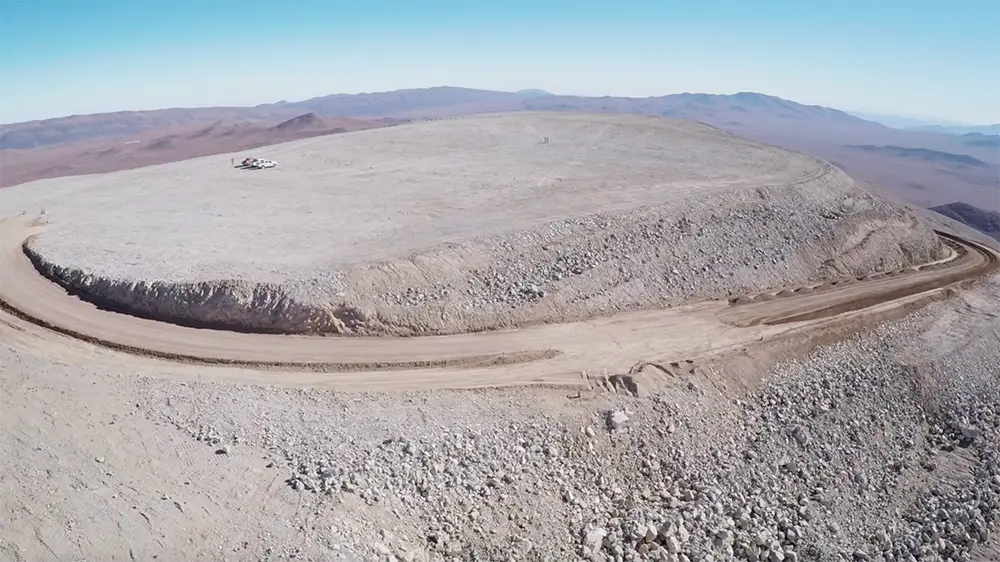
Problems were encountered where the remaining surface was comprised of fractured rock and sand, which makes for difficult foundations.
However, a breakthrough was achieved in 2019 and the structure started to take form, and the Extremely Large Telescope began it's construction journey.
It'll still be a while before the ELT is completely finished, but scientists are already salivating at the significant possibilities that'll be unlocked once everything is wrapped up.
Rocky exoplanets outside of our solar system will be able to be investigated, and many consider these the ones with the highest possibility of extraterrestrial life.