Incredible 12,000,000,000 year old body of water discovered floating in space


Space is vast in its scope, with trillions of stars and billions of galaxies in the observable universe, but one of things you'd least expect to find in the endless expanse is a pool of water.
While some are still stuck thinking that the earth is flat, and budget cuts have prevented NASA from sending another astronaut to the moon, astronomers have been making some incredibly fascinating discoveries in space.
Water is, of course, a natural occurrence for us, forming around 71% of the Earth's surface - but it's existence in outer space is far rarer to find, especially in it's 'natural' form.
Lack of air - and subsequent removal of air pressure - means that liquid typically vaporizes and boils away, leaving most forms of to be gaseous or frozen as ice.
Advert
However, astronomers discovered in 2011 a water reservoir that is the largest ever detected in the universe - the catch is that it's located over 12 billion light-years away.
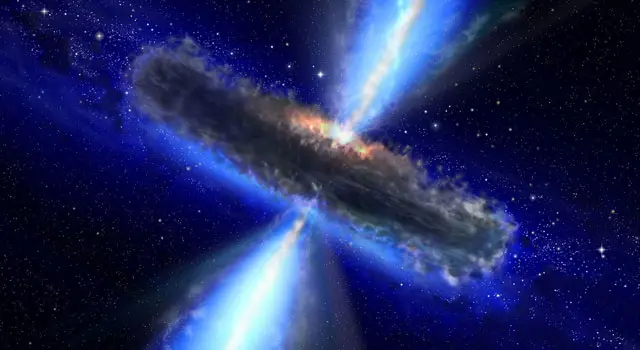
Surrounding a rare and extreme form of supermassive black hole named a quasar, this pool is approximately seventy sextillion five hundred sixty quintillion miles away, as one light-year is around 5.88 trillion miles - don't worry we have no idea how to comprehend that number either!
According to information provided by the astronomy team, which is led by Matt Bradford of JPL at NASA, the discovered pool is equivalent to 140 trillion times all of the water in the Earth's ocean.
It was expected that we'd be able to find and detect water vapor in the early and distant universe, but this is the furthest away that traces have been found, totaling over 4,000 times more than what has previously been found in the Milky Way.
This is due to the fact that water found in the Milky Way takes the form of ice, whereas the vaporous form surrounding the quasar allows it to command a much greater space.
This then reflects the state of the quasar in question, which has been officially named APM 08279+5255 - not quite as catchy as some other intergalactic monikers!
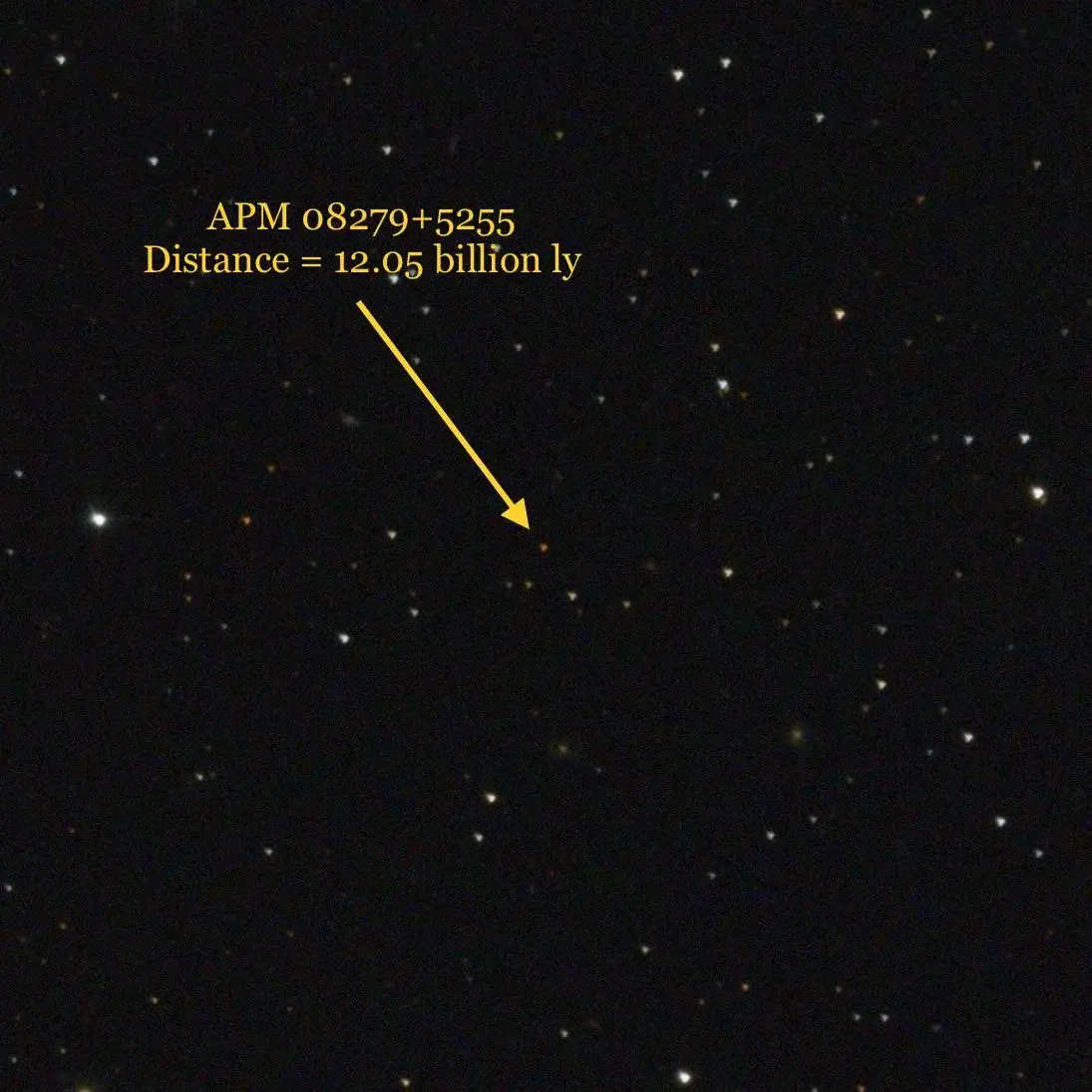
Astrologers have revealed that the sheer size of this water mass indicates that the quasar is bathing it in X-rays and infrared radiation, while also providing a warm and dense environment that is rather unusual in space.
Observations have also determined that the water surrounding the quasar developed when the universe was just 1.6 billion years old, and with estimates that it's around its 14 billionth birthday, it's safe to assume that this reservoir has been here for quite a while.
Bradford has argued that this discovery is "another demonstration that water is pervasive throughout the universe, even at the very earliest times."
While water 'that could harbor life' has seen been discovered beneath the surface of Mars, you do have to wonder how much we've yet to unveil about the wider universe - especially when it comes to aspects like water deposits.