Scientists discover 'iron bar' that could show exactly how Earth will end


With continued fears about whether climate change, artificial intelligence, or disgruntled world leaders with nuclear weapons will bring about the end of the human race, scientists have apparently discovered an 'iron bar' that could show exactly how Earth will end.
While Baba Vanga's predictions for the next 3,000 years offer little hope for humanity, her predicted doomsday date of around 5079 might provide some relief.
However, more alarming reports show that global warming is accelerating beyond our control. It's expected that 70 percent of the population will face extreme weather conditions over the next 20 years.
Now, scientists have unravelled what the end of the world could look like after spotting a mysterious 'iron bar' 2,283 light-years from Earth.
Advert
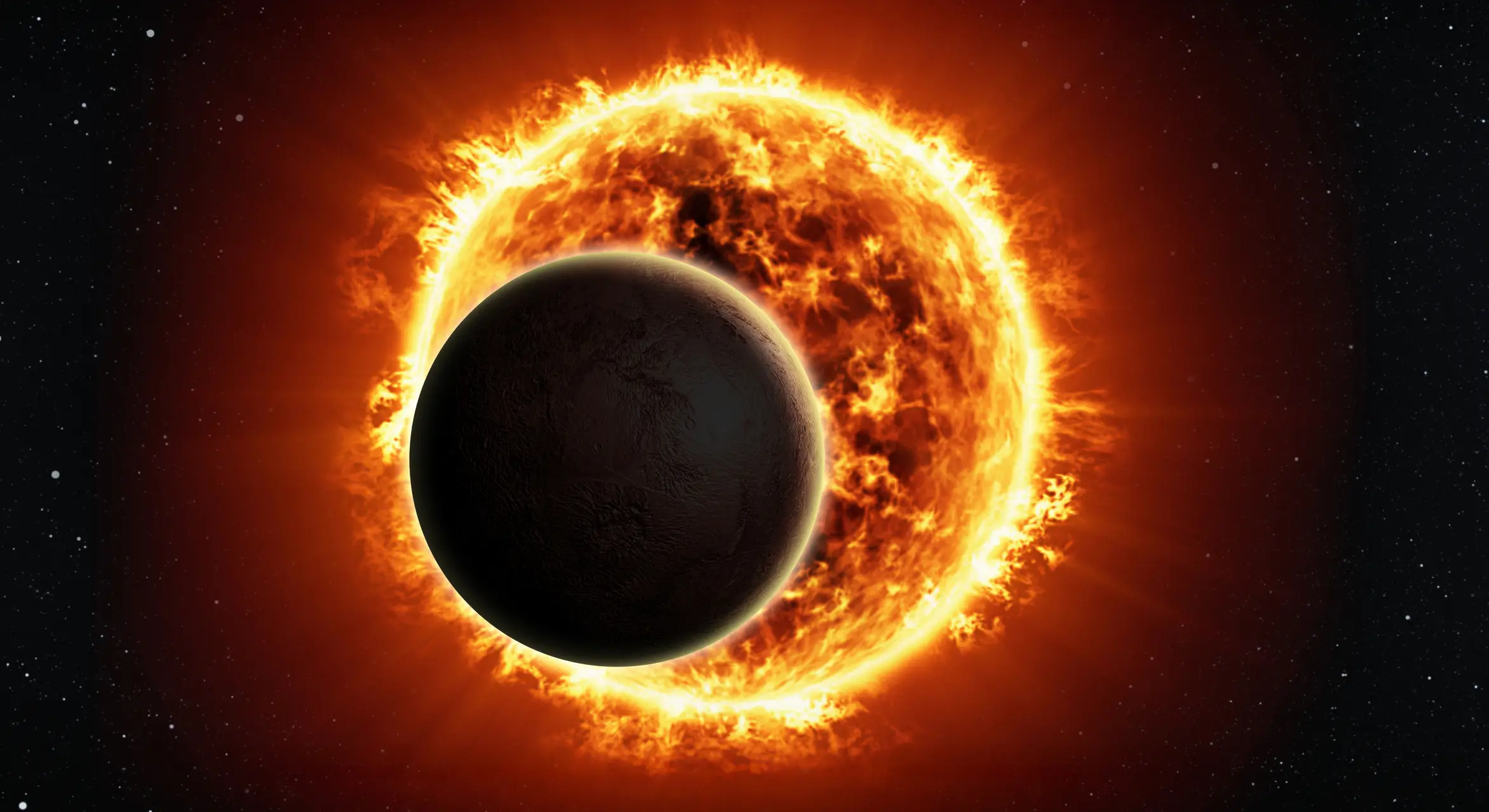
According to the research team (via the Daily Mail), the strip of ionised iron atoms stretching across the Ring Nebula could be the remains of an Earth-like rocky planet that was vaporised by a dying star about 4,000 years ago.
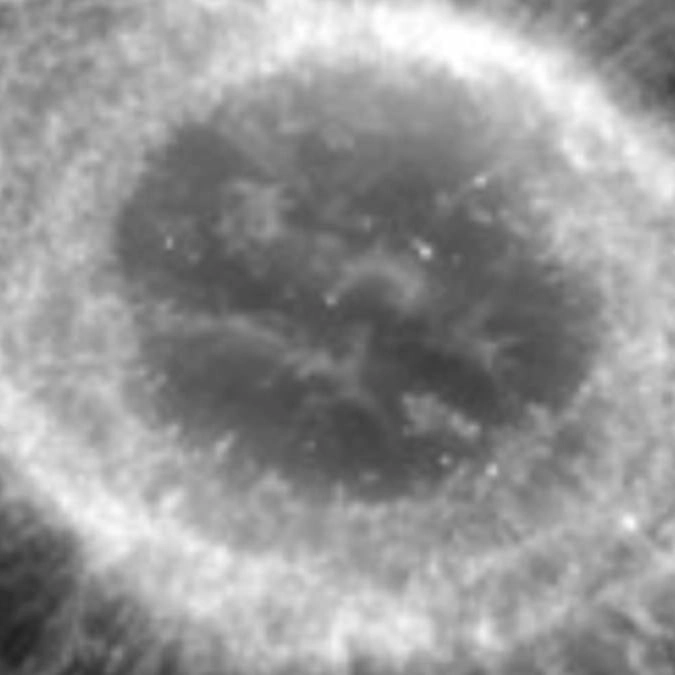
The nebula's main ring comprises 20,000 clumps of dense molecular hydrogen gas, each weighing about the same as Earth's mass.
When stars like our Sun exhaust their nuclear fuel, the outer layers expand to enormous sizes. Without enough gravity to hold the star together, the core transforms into a tiny white dwarf, and the outer layers are shed to form a planetary nebula.
The team examined the Ring Nebula using a new tool called the Large Integral Field Unit (LIFU), mounted on the William Herschel Telescope, to observe light at different wavelengths across the entire nebula.
"By obtaining a spectrum continuously across the whole nebula, we can create images of the nebula at any wavelength and determine its chemical composition at any position," said lead author Dr. Roger Wesson, of Cardiff University and University College London.
"When we processed the data and scrolled through the images, one thing popped out as clear as anything – this previously unknown ‘bar’ of ionised iron atoms, in the middle of the familiar and iconic ring."
While not exactly sure how the strange bar formed, the experts believe it could come down to two scenarios.
Either the bar resulted from some unknown process during the nebula's ejection as the parent star collapsed, or it’s an arc of plasma created by a rocky planet's vaporisation during the star’s earlier expansion.
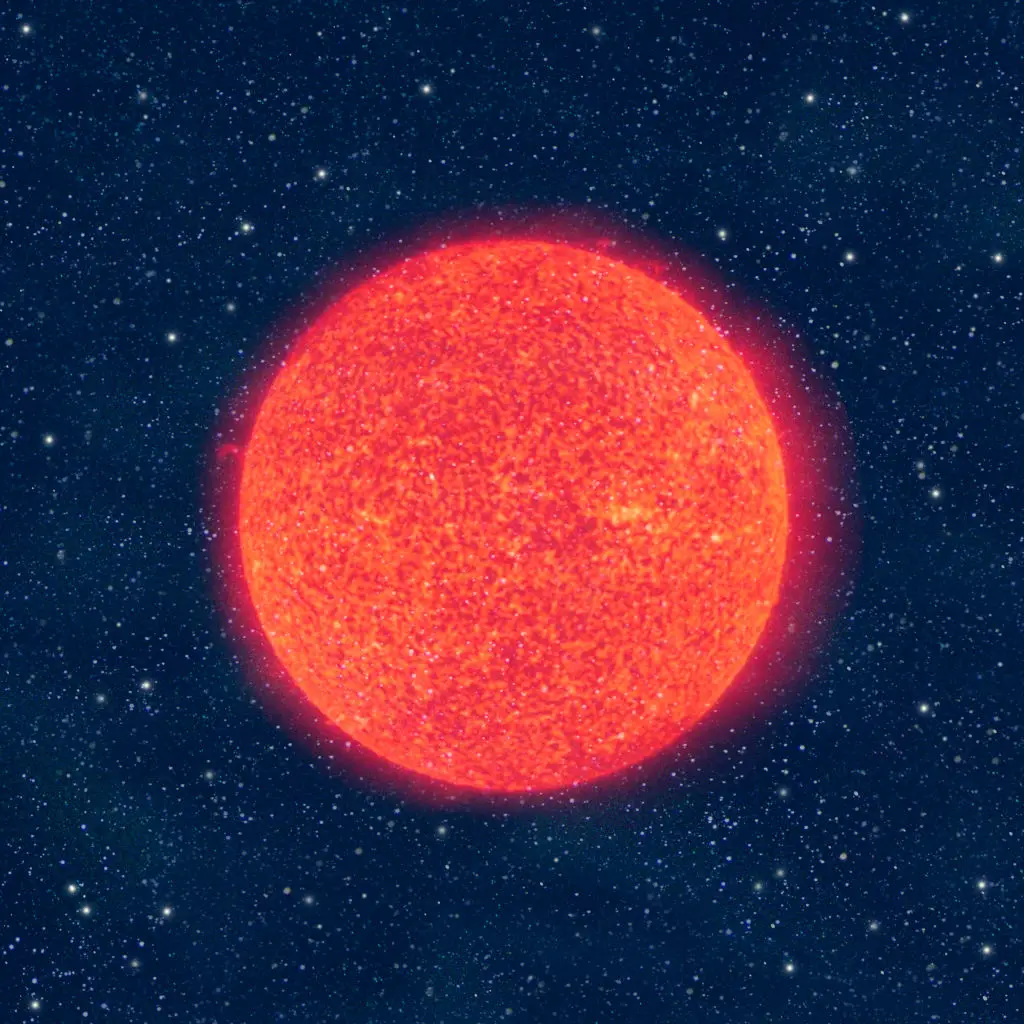
Wesson added: "We know that there are planets around many stars, and if there were planets around the star that formed the Ring Nebula, they would have vaporised when the star became a red giant.
“And the mass of iron in the bar is about what you'd expect from the vaporisation of a planet: if Mercury or Mars were vaporised, that would give a bit less iron than the bar in the Ring, while if Earth or Venus were vaporised, it would give a bit more."
If this theory is correct, this unusual formation could offer a fascinating glimpse into how our planet might look to astronomers billions of years from now.
Like other main-sequence stars, our Sun maintains stability because the inward forces of gravity balance the outward pressure from nuclear fusion reactions in the core. However, when the star depletes its hydrogen fuel, the fusion process fails, and the outer layers collapse inwards.
The pressure from this collapse generates extreme heat that fuses helium atoms into carbon, releasing a surge of energy that kickstarts nuclear fusion in the outer layers. The outer layers then expand and cool into transforming into what is called a Red Giant.
When this happens to our Sun in about five billion years, scientists believe our planet will likely be destroyed. As the Sun expands, Earth will either be vaporised by the intense heat or torn apart and absorbed by powerful gravitational tidal forces.