Scientists reveal the real age of the Earth as they admit they might've got it wrong


Science isn’t just useful for telling the age of trees by counting their rings, as a new study might’ve just figured out the ‘real’ age of Earth through groundbreaking research.
After decades of research into the universe's age and how our little third rock from the Sun came to be, discoveries occasionally slip in and completely reshape our understanding of everything we thought we knew.
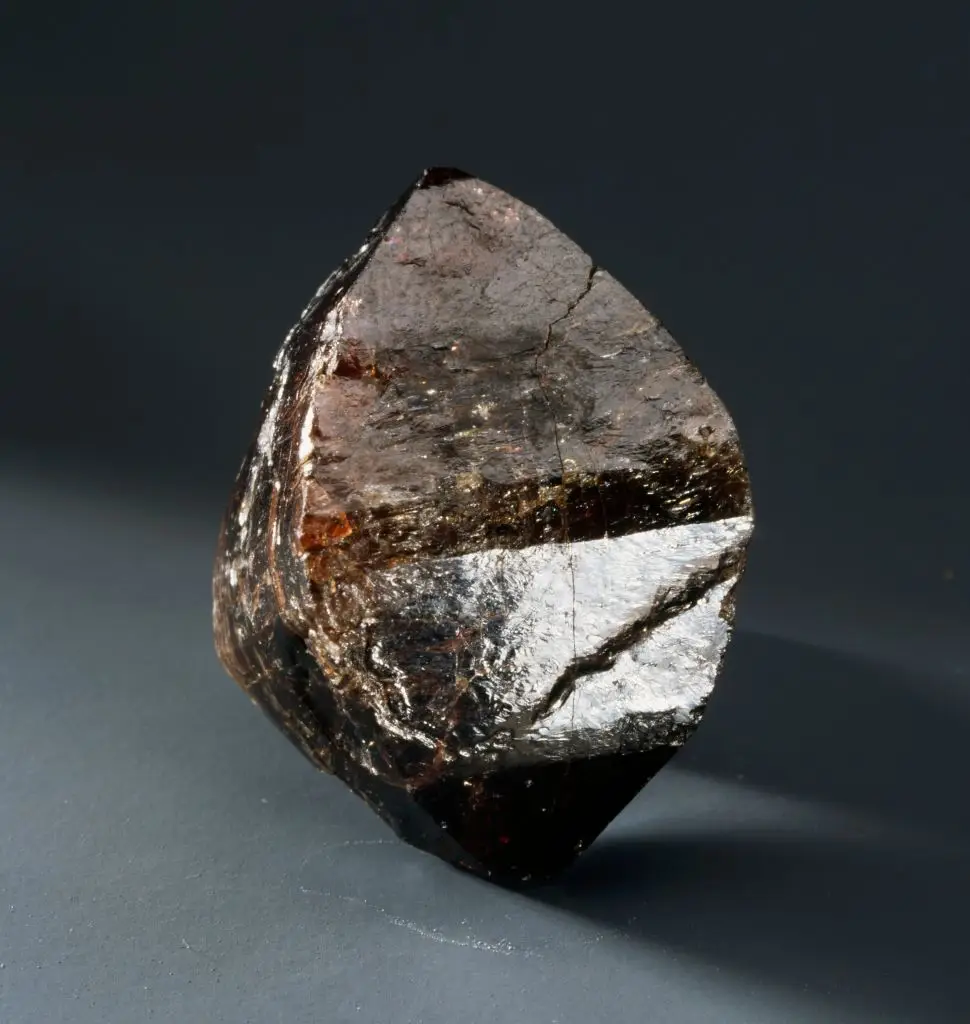
Using radioactive decay analysis, scientists studied how uranium breaks down over time into zircon crystals. The study, published in the American Chemical Society (ACS), found that these zircon crystals are excellent tools for determining the age of our planet.
Advert
According to ILFScience, Uranium-238 is an isotope present in many minerals and undergoes radioactive decay before eventually transforming into stable Lead-206.
“Uranium, which scientists call a parent isotope, radioactively decays to lead by ejecting protons and neutrons from the atom’s nucleus. Once it gets to be lead, the atom is stable and not radioactive anymore,” said geologist and science communicator Rudy Molinek.
Molinek explained to the Tiny Matters podcast: But, importantly, lead doesn’t fit in the zircon’s crystal structure when it first forms, so any lead contained in a zircon crystal would have had to come from that initial uranium breaking down."
He added: "Scientists know how long this radioactive decay takes, so by comparing the amount of uranium to the amount of lead in a zircon crystal, they can figure out exactly how old it is."
Found in ancient rocks, zircon crystals are tiny, durable crystals that contain traces of uranium. When uranium atoms decay into lead, the lead atoms are trapped within the zircon’s crystal structure, which scientists can use as a timeline.

Consequently, the team determined Earth's age to be around 4.54 billion years, which is vastly older than any religious or historical estimates have suggested.
But other previous research supports zircon's importance in understanding Earth's age in an entirely new context.
Lead researcher Professor Chris Kirkland, at Curtin’s Frontier Institute for Geoscience Solutions in the School of Earth and Planetary Sciences, said his work on zircon crystals links Earth’s geological history with the structure of the Milky Way.
“Tiny, durable minerals called zircon crystals provided a unique archive of Earth’s interaction with the galaxy,” Professor Kirkland said, as per Curtin University.
He noted: “Our research reveals that Earth’s geological evolution cannot be understood in isolation from the broader galactic environment.
“It suggests that astrophysical processes on the scale of the Milky Way may have directly influenced the continents beneath our feet and the conditions that made life possible, ushering in a new era of astro-geological science."
Looks like we're going to need a lot more candles for Earth's next birthday cake.