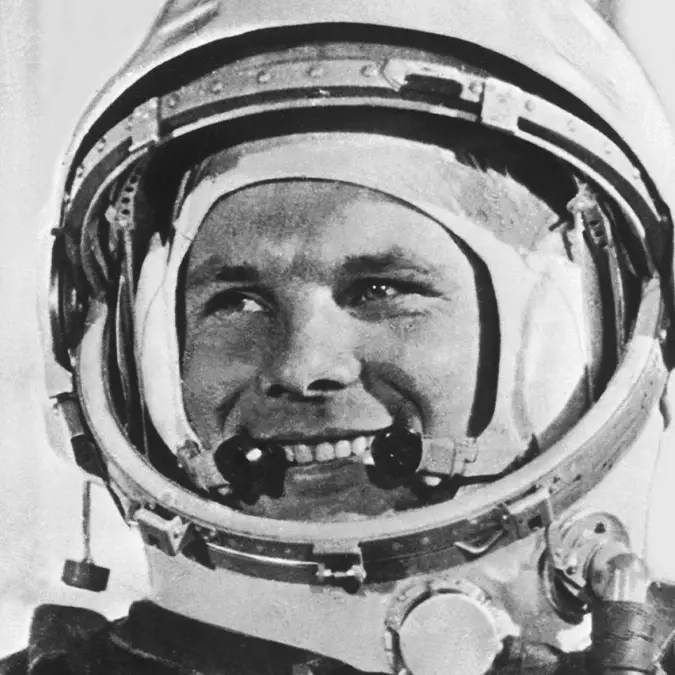
Physicist suggests Yuri Gagarin actually might not have been the first person in space


One physicist has challenged the definition of space in how it relates to the boundaries of Earth, suggesting that Yuri Gagarin – the first man to enter space – might have been beaten to the punch.
While NASA's Neil Armstrong was the first person to step foot on the Moon during the Apollo 11 mission back in 1969, it's widely accepted that Soviet cosmonaut Yuri Gagarin was the first individual to journey into outer space altogether.
Gagarin achieved the monumental feat in 1961 with the launch of the Vostok 1 spacecraft, marking the beginning of the Space Age for some despite the efforts of Sputnik 1 four years earlier.
Following the separation of the spacecraft's core from the rocket that launched it into space, Gagarin orbited our planet for 108 minutes before returning back to Earth after landing in Kazakhstan.
Advert
Gagarin not only became a national hero following the staggering feat, but he was also catapulted into worldwide celebrity status and many aspiring to become astronauts today still look up to what he achieved over six decades ago.
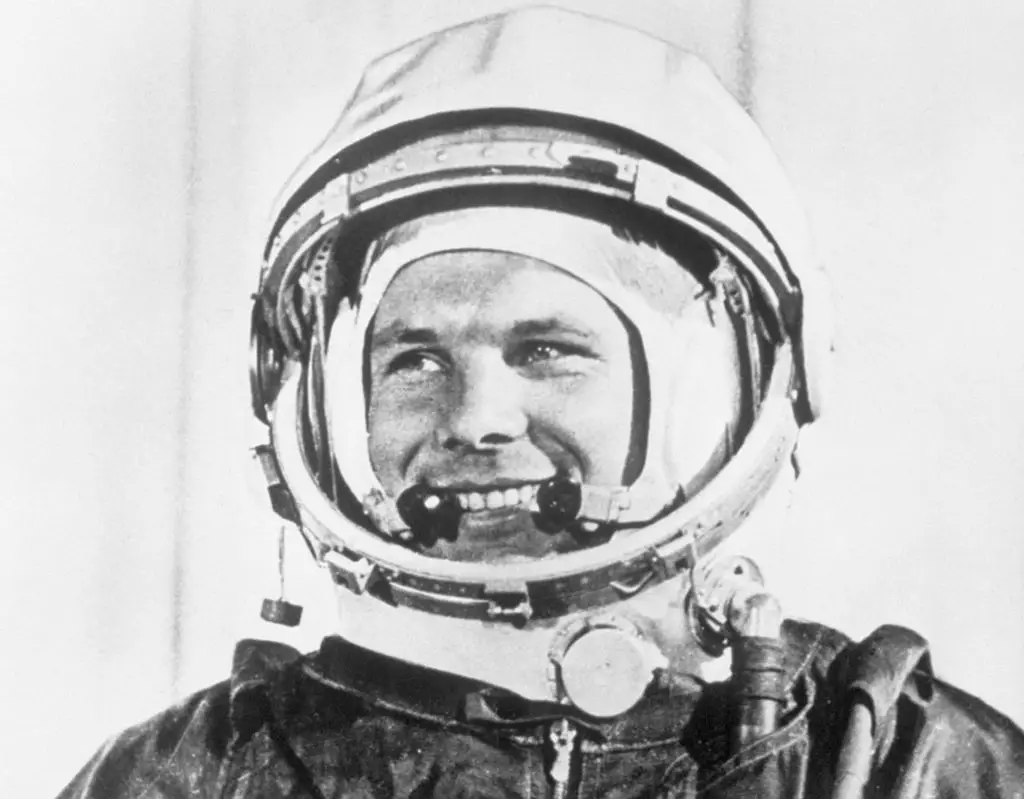
That notion has now been challenged however, as one expert in space history has proposed that Gagarin's iconic feat was actually achieved potentially 30 years prior to the Vostok 1 launch, hinging on the definition of space as the answer to this conundrum.
Proposing his theory in New Scientist, Dr Vladimir Brijak, an Associate Professor at Durham University, suggests that space actually starts at a lower point than most people consider.
Conventionally the 'lower limit' of Earth's atmosphere is known as the Kármán line and it occurs at 100 kilometers above Earth, although the US government and its military institutions define this to be at the 80 kilometer mark.
It's typically agreed upon that space starts when the atmosphere becomes too thin to support traditional airflight, although Brijack suggests that it could instead be the point where the atmosphere becomes too thin to refract sunlight, turning the sky from blue to black.

High-altitude balloonists were close to this point in the 1930s, with the US Explorer II reaching 22.1 kilometers above the Earth, but that still wasn't high enough to observe the change entirely, noting the sky to "be called blua very dark blue."
However, Malcolm Ross and Lee Lewis' Strato-Lab I balloon flight in 1956 might just have achieved Gagarin's feat half a decade before he did, as they went 23.2 kilometers into the air and noted that "this was the first time the sky overhead was seen as black."
Not everyone will be on board with this definition or reclassification, of course, but it serves as a vital interrogation into what we define as space considering how gray that boundary remains still for scientists.
It's not to take away from Gagarin's achievement, as there's still a significant gap between the efforts of high-altitude balloons and spacecraft, but it provides a new perspective into the matter.