
Millions of people will gain internet access for the first time in new space deal


A new deal means that internet connectivity across an entire continent - without any black spots - could now be possible.
This comes after Deutsche Telekom announced it is partnering with Elon Musk’s Starlink to bring connection to the even the most remote parts of Europe.
This means that satellite-based coverage will now be added to the mobile company’s network to cover remote areas where mobile tower signals don’t reach. In those spots, connection will be beamed in from space.
Abdu Mudesir, who is a board member for Product and Technology at Deutsche Telekom, said: “We provide our customers with the best mobile network. And we continue to invest heavily in expanding our infrastructure.
Advert
“At the same time, there are regions where expansion is especially complex due to topographical conditions or official constraints. We want to ensure reliable connectivity for our customers in those areas as well. That is why we are strategically complementing our network with satellite-to-mobile connectivity. For us, it is clear - connectivity creates security and trust. And we deliver. Everywhere.”
VP of Starlink Sales Stephanie Bednarek added: “We’re so pleased to bring reliable satellite-to-mobile connectivity to millions of people across 10 countries in partnership with Deutsche Telekom.
“This agreement will be the first-of-its-kind in Europe to launch Starlink’s V2 next-generation technology that will expand on data, voice and messaging by providing broadband directly to mobile phones.”
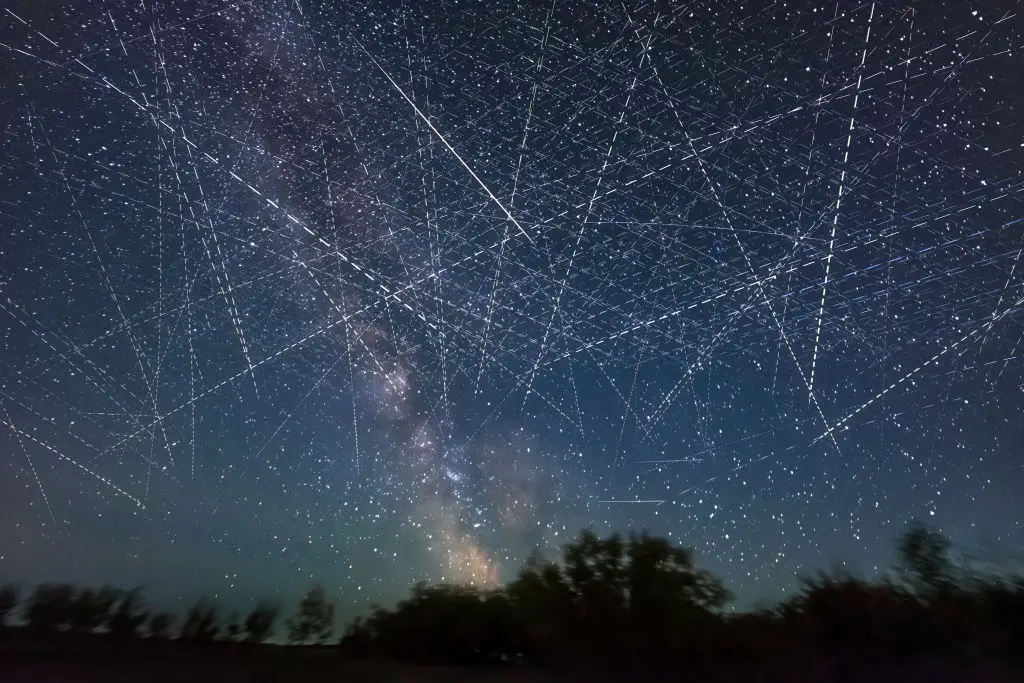
Meanwhile, SpaceX is expanding its Starlink satellite network far beyond what it initially planned for.
Originally, the tech firm was hoping to launch a constellation of around 12,000 satellites but is now seeking approval for about 19,000 satellites.
Starlink unveiled more of its plans at this year’s Mobile World Congress (MWC) in Barcelona, Spain, where the firm’s SVP Mike Nichols took to the stage for a keynote speech.
He said: “In 2024, we began launching our direct-to-cell constellation, which, as of today, we’re calling Starlink Mobile.
“The goal of Starlink Mobile is to connect to regular, unmodified cell phones everywhere in the world.”
Nichols went on to talk about the gaps in connectivity that the Earth faces by relying on mobile towers, with 90% of our planet’s surface being uncovered by terrestrial mobile connectivity.
He continued: “Starlink Mobile fills in those gaps. After 18 months, we fully deployed the first generation Starlink mobile constellation, consisting of 650 satellites, and we are now operating across five continents.”
SpaceX has also discussed the possibility of adapting the technology for internet connection on the Moon as the focus shifts towards lunar colonization.