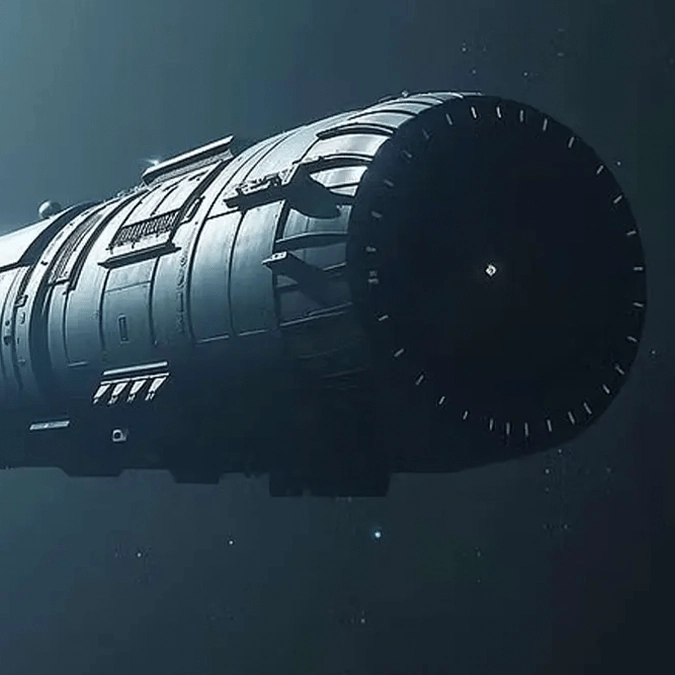
Star Trek comes to life in starship that carries 2,400 humans who will never see Earth


In the words of Patrick Stewart’s Jean-Luc Picard, “Make it so.” As the human race continues to explore the cosmos and looks set to put man back on the Moon for the first time since 1972, some people are looking even further ahead.
While it’s true that Elon Musk has seemingly walked back his plans to populate Mars by 2030, new designs have shown off a 36-mile starship where its inhabitants are expected to land on some far-off world.
Trips to space are becoming more frequent, although there’s a big reason we haven’t set foot on the Moon in the past 54 years.
Ignoring this, Daily Galaxy reports how Chrysalis is looking far beyond the Moon with a starship that will carry 2,400 people who’ll live without ever seeing Earth.
Advert
The idea is that Chrysalis will make the 40 trillion-kilometer trip to Alpha Centauri, taking 400 years to reach the star system closest to our own.
Some 1,000 intrepid earthlings will make the journey, and populating along the way, it’s hoped that 2,400 will reach Alpha Centauri.
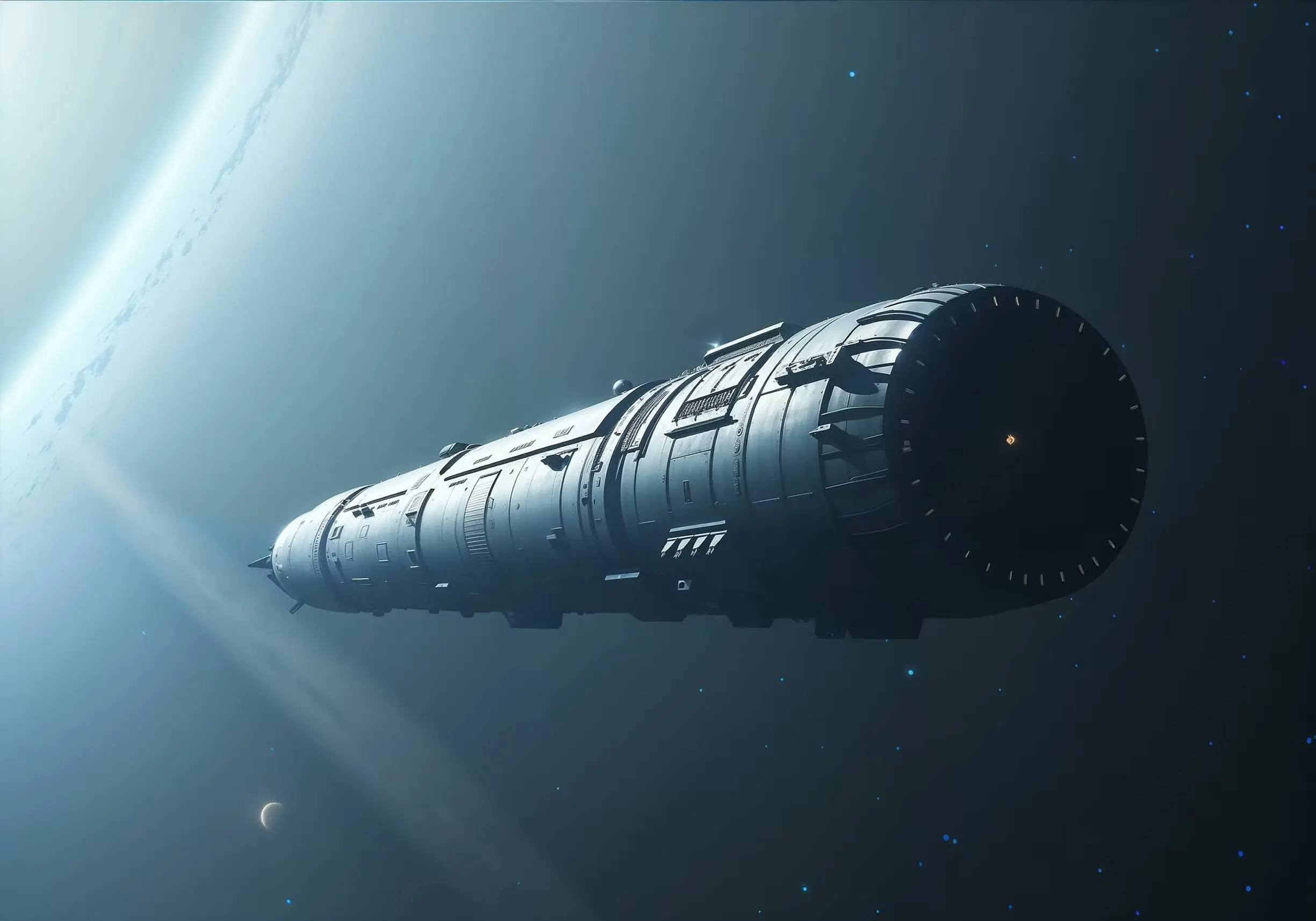
Needing to provide its own gravity, food, and water, the award-winning project suggests that 16 generations will have to undergo the voyage.
More than just the madcap musings of a Star Trek writer, Chrysalis won Project Hyperion’s 2025 competition, judging how the human race could enhance interstellar travel.
The designs included everything from renderings of interior landscapes, budgets for agricultural modules, and even calculations for how we’d achieve artificial gravity.
Going full Silo/Fallout, there are also governance models for how we’re supposed to navigate societal collapse during 400 years of soaring through the stars.
Instead of just assuming that the likes of closed-loop life support and long-duration propulsion will simply become available for us, it actually delves into the technicalities of how these might work.
Those behind the project go as far as calling out where current research falls short, making this a very different kind of entry.
Artificial gravity is a major sticking point for many, although Chrysalis explains that to avoid human disorientation when rotation rates exceed two revolutions per minute, habitats have to be exceptionally large.
This leads to Chrysalis’ 58-kilometer structure that includes ‘nested cylinders’ rotating in opposite directions.
It’s supposed to create a centrifugal force that’s equivalent to 0.9 times the gravity here on Earth. The habitat module is located toward the forward end and tapered to hopefully minimize collision risk with the various bits of interstellar debris.
The starship could theoretically be constructed in as little as 20 years, but that’s not the biggest problem. Societies would be required to live in the isolation of Antarctica for between 70 and 80 years to prove they can cope with travel of this kind.
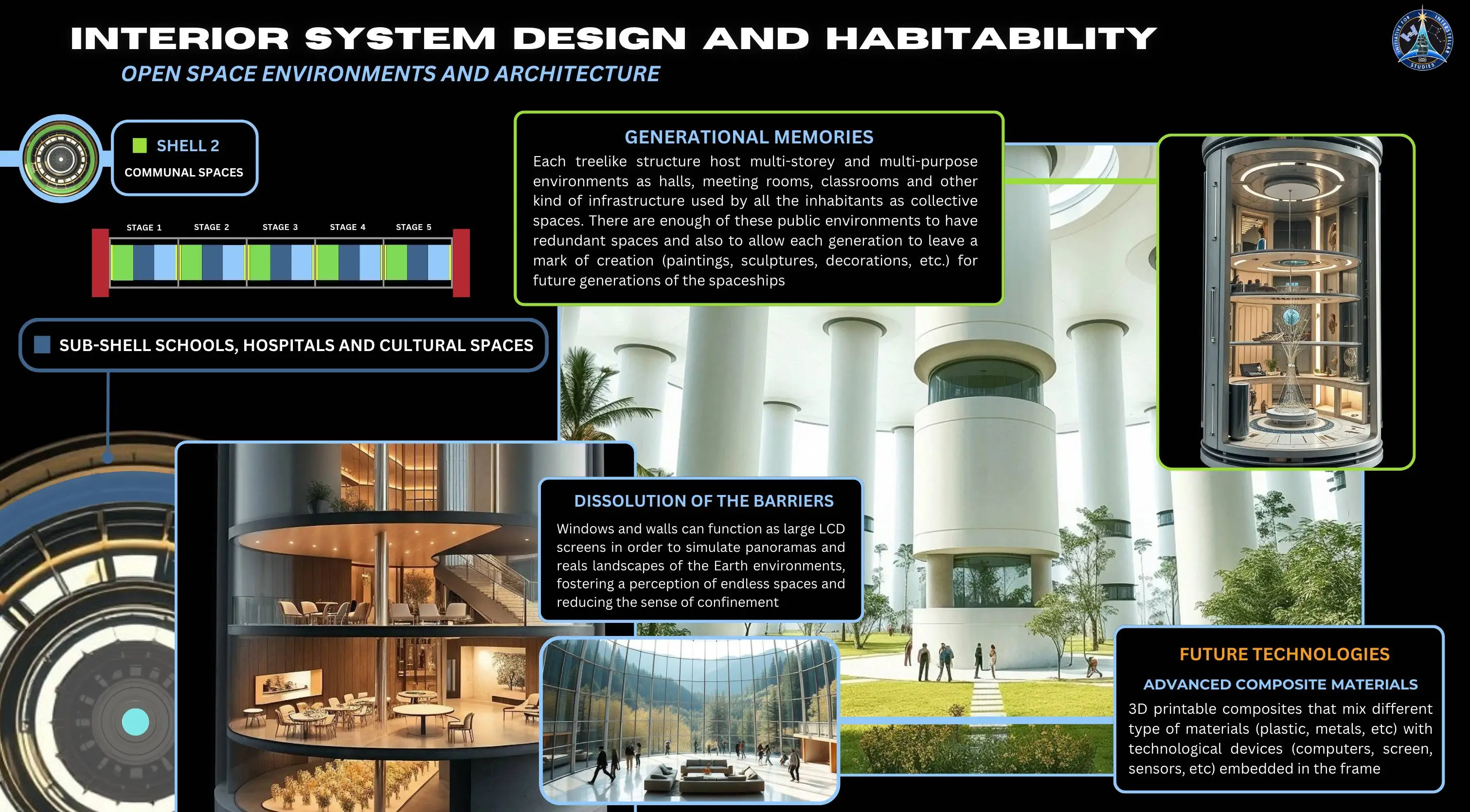
Still, with parks, schools, and hospitals on board, those who grow up on Chrysalis wouldn’t know any different.
It’s hoped that when it reaches Alpha Centauri, it will then shuttle the human race to the Proxima Centauri b exoplanet that’s said to be the size of Earth and could have the right conditions for us to continue the human race.
If you’re intrigued, we suggest you watch the movie Passengers.