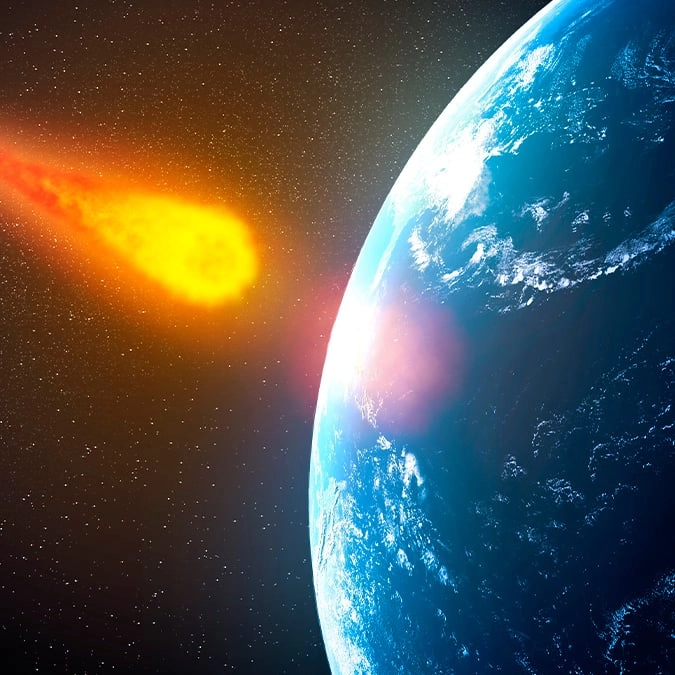
China plans to crash a spacecraft into an asteroid to protect Earth from cataclysmic event


China has revealed its plans to crash a spacecraft into an asteroid within the next four years in order to protect Earth from a potentially cataclysmic event.
This comes after NASA was able to alter the path of another space rock in an experiment to test planetary defense.
By intentionally crashing a spacecraft into the asteroid in September 2022, the space agency was able to shorten its orbital period around the Sun by 32 minutes, as well as altering the rock’s shape.
The success of NASA’s Double Asteroid Redirection Test (DART) has helped to ‘advance theoretical asteroid deflection models’ and enabled researchers to better understand how and when a kinetic impactor spacecraft could be used to deflect an Earth-bound asteroid.
Advert
Now, a team of researchers in China plan to expand on this by taking on a similar mission.
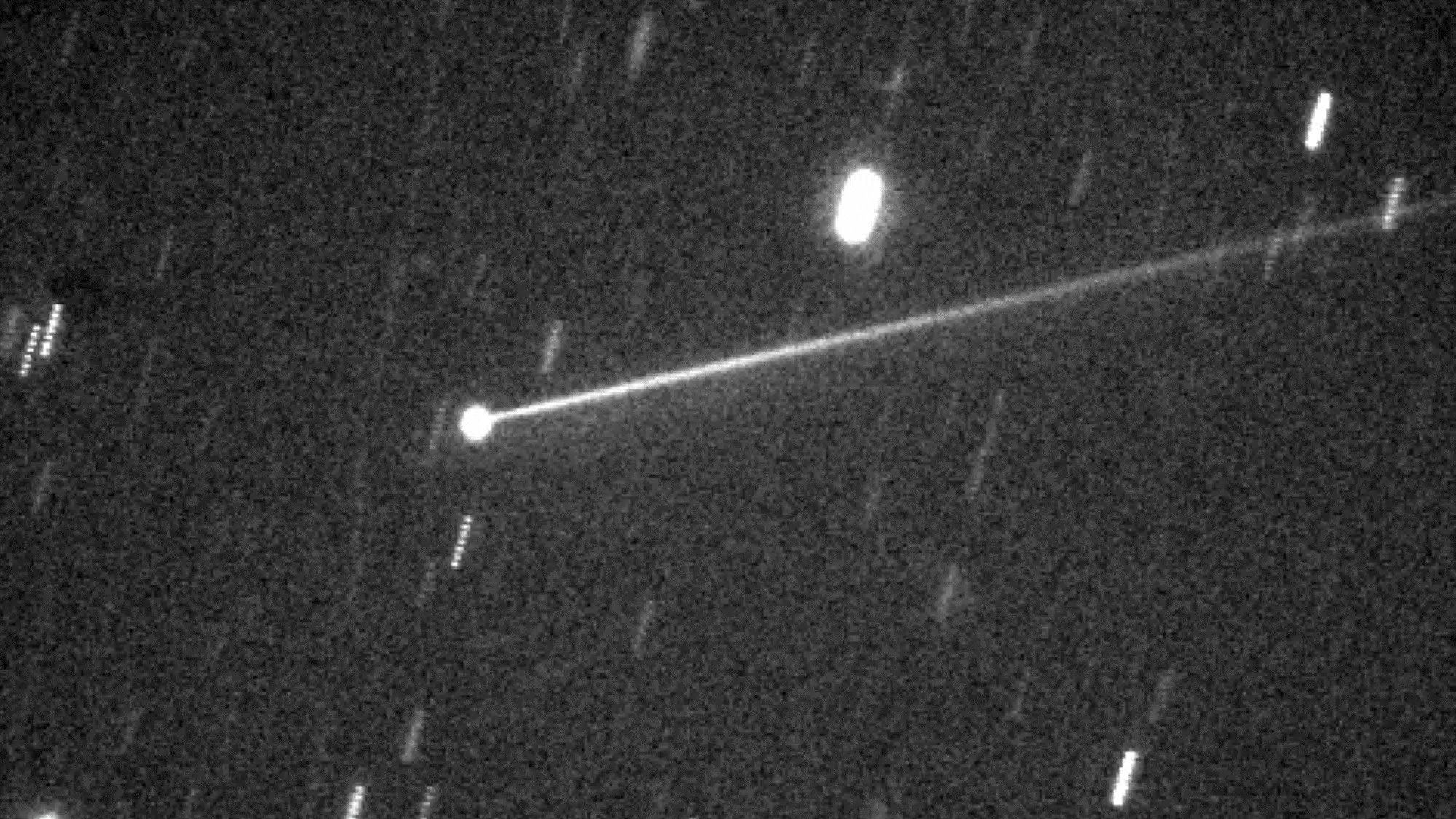
The group intends to crash a spacecraft into a nearby asteroid known as 2015 XF261, which orbits around the Sun once every 359.7 days and is expected to get close to Earth in 2030.
This will put it into a good position for the China National Space Administration (CNSA) to test out its own asteroid diversion capabilities.
The team have published a paper which is currently under review by Journal of Deep Space Exploration.
In the study, the team explained: “Dart was the first to demonstrate asteroid deflection by kinetic impact in space but it did not directly change an asteroid’s orbit around the Sun relative to Earth, making it different from a real planetary defence scenario.”
The team intends to hit the space rock a whopping 26 times over the speed of sound, with hopes the impact will be strong enough to shift it off course.
The asteroid will then be monitored in the following years to study how the collision changes its route.
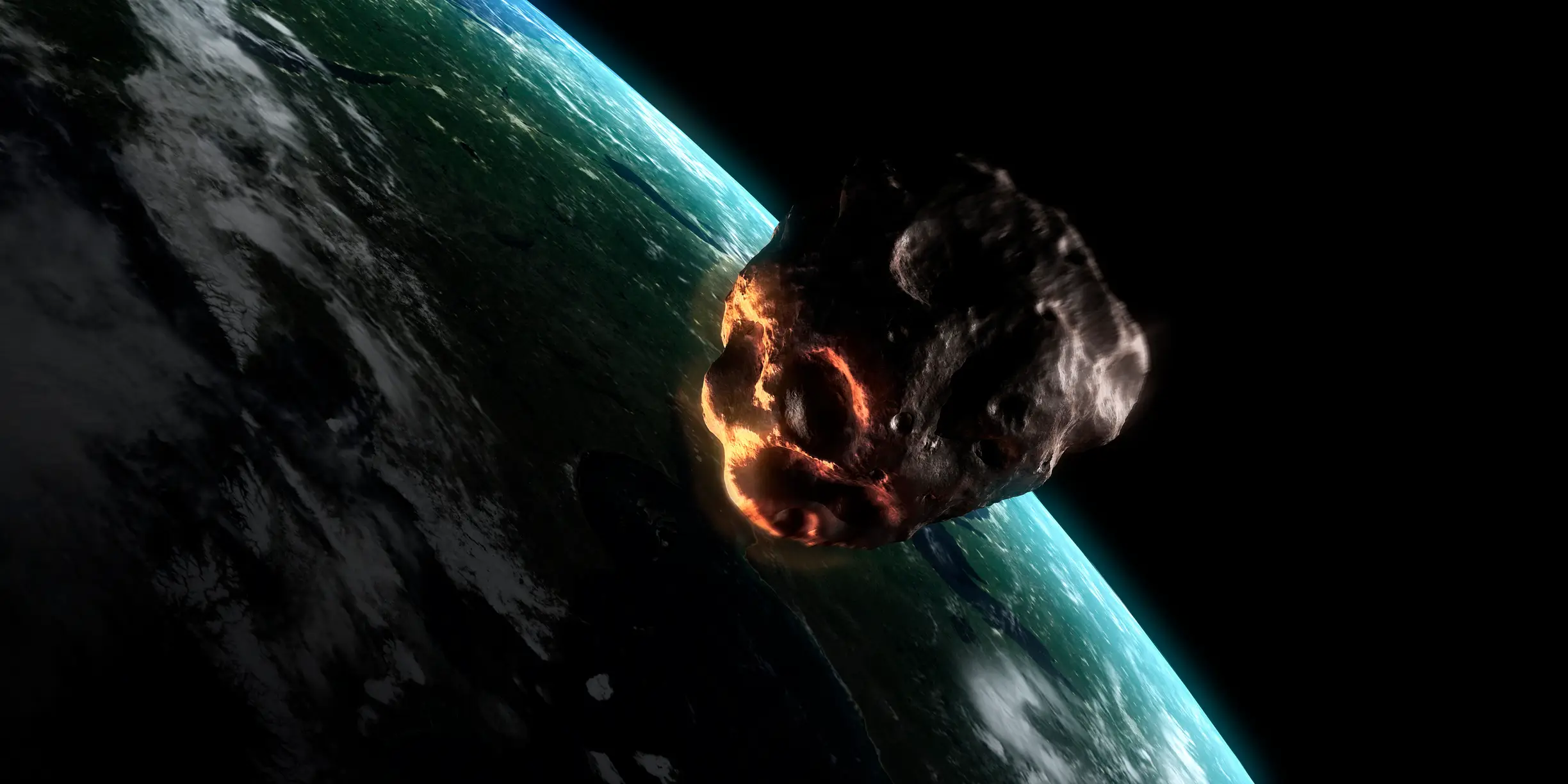
It is hoped that this method can be used in the event of a potential emergency if Earth is ever threatened by an oncoming asteroid, and could even protect our planet from a cataclysmic event.
Many people have taken to social media to share their own reactions to the news, with one user writing on Reddit: “What’s the chance that this goes bad and makes the target actually more likely to come our way?”
Another said: “It's wild to think we are finally getting to the point where we can actually nudge asteroids around instead of just watching them fly past.”
And a third added: “Glad at least one country seems to be actively planning for potential future scenarios beyond a 4year scope.”