Drinking this type of water could increase risk of disease suffered by 1,000,000 Americans


We're supposed to be more conscious than ever about what we're putting into our bodies, but in a world of carcinogens, microplastics, and emissions, it feels like the human race is fighting a losing battle.
The Secretary of Health and Human Services, Robert F. Kennedy Jr. is on his mission to 'Make America Healthy Again', but even that's not easy as he's come under fire for the newly revamped food guidelines.
While it's a lot more complicated than you'd think when it comes ot looking after your health, we all know that water is (supposed) to be good for you. As well as proving successful in weight loss and improving focus, H2O is good at flushing out toxins. Still, in the aftermath of biohacker Bryan Johnson claiming that drinking from glass bottles is worse than plastic, there's another water warning that might have you thinking twice.
One study suggests that drinking certain types of water could massively increase your risk of getting Parkinson's disease.
Advert
As research into trying to reverse Parkinson's continues, the American Academy of Neurology reports that those who live close to particular groundwater sites are more at risk of contracting Parkinson's disease. Researchers in New York and Arizona looked at 12,000 people with Parkinson's and one million without, with all of them living near groundwater sampling sites.
Those closer to groundwater sites established in the last 75 years were 11% more likely to be diagnosed with the disease than those from older sources.
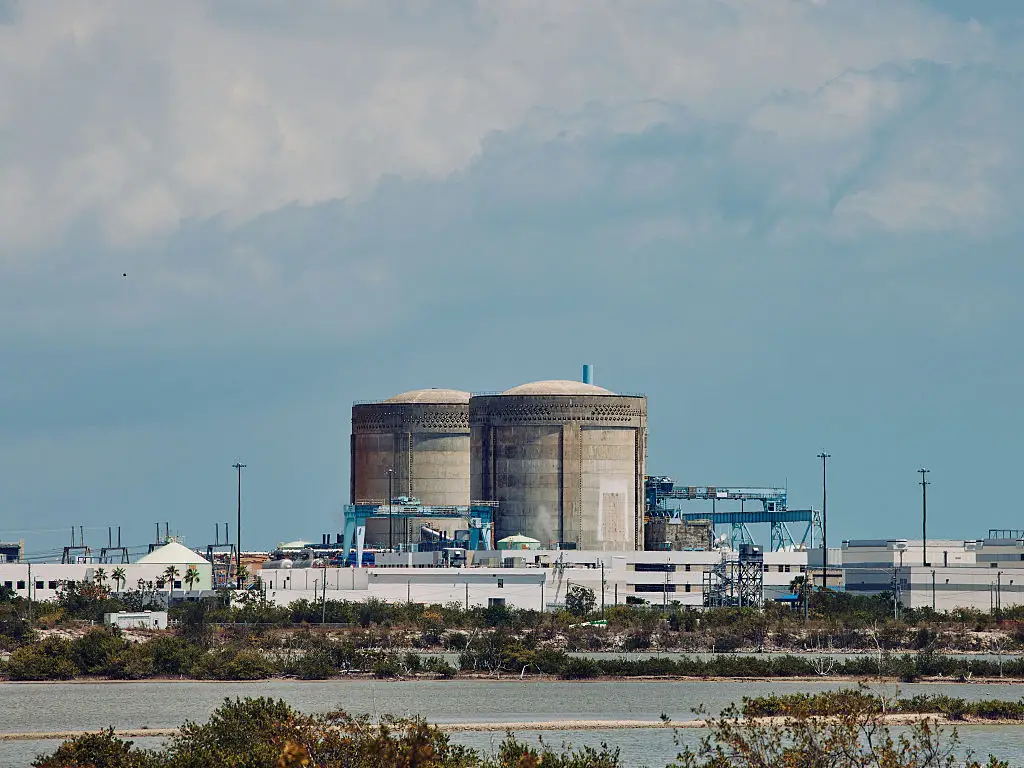
Researchers discovered that residents who got their water from carbonate aquifers, which transmit groundwater through layers of soluble rock, were up to 62% more likely to develop the progressive neurological disorder.
It's theorized that older groundwater has fewer pollutants from the likes of heavy metals and pesticides because it comes from deeper sources.
Around half of the US drinking water is said to come from groundwater sources, with aquifers being the most common, as they serve 145 million Americans. Older, glacial aquifers tend to promote natural filtration through sand and gravel.
The findings are due to be presented at the April 2026 American Academy of Neurology's 78th Annual Meeting, although it's noted that newer groundwater isn't proven to cause Parkinson's.
Discussing the study, author Brittany Krzyzanowski explained: "One way to examine our exposure to modern pollution is through our drinking water."
"Newer groundwater, created by precipitation that has fallen within the past 70 to 75 years, has been exposed to more pollutants. Older groundwater typically contains fewer contaminants because it is generally deeper and better shielded from surface contaminants."

Krzyzanowski reiterated that groundwater age and location are "a potential environmental risk factor of Parkinson’s disease."
The study states that out of the 12,000 suffering from Parkinson's, 3,463 got their drinking water from carbonate aquifers, 515 from glacial aquifers, and 8,329 from others. In terms of the one million without, 300,264 sourced their water from carbonate aquifers, 62,917 from glacial aquifers, and 860,993 from other aquifers.
Krzyzanowski concluded: "We speculate that the apparent protective effect of older groundwater is seen mainly in carbonate aquifers because these systems can show a clearer contrast between newer and older water.
"In these aquifers, newly recharged groundwater is more vulnerable to surface contamination, while older groundwater can remain cleaner if it is separated from recent inputs by a confining layer.
'In contrast, glacial aquifers tend to slow groundwater movement and naturally filter contaminants as water travels underground. As a result, differences in contamination between newer and older groundwater in these aquifers may be smaller and therefore harder to detect."