
Bryan Johnson reveals girlfriend diagnosed with 'gnarly disease' that usually takes women years to confirm


Bryan Johnson has revealed shocking news that his girlfriend, Kate Tolo, has been officially diagnosed with endometriosis — yet the pair managed to discover the disease in just over a month, far shorter than the years it takes through traditional medical methods.
Johnson himself only recently discovered his own health complications, revealing to social media how his own testing failed to pick up on an autoimmune disease that causes his stomach to effectively 'eat itself'.
Tolo, like Johnson, is a biohacker subscribing to the goal of living for as long as possible – taking on an extreme skincare routine as part of that process – yet she joins roughly 190 million women across the world in suffering from endometriosis.
The disease itself is a nightmare for most women who find themselves unlucky enough to fall within the roughly 10 to 15% that are exposed to it at some point in their lives, yet Johnson's methods did manage to find one silver lining as the process of uncovering the diagnosis was unbelievably quick comparatively.
Advert

Revealing the process on X, Johnson explained that the process was completed without any form of surgery and was conducted across three modalities: imaging, blood, and AI.
This encompassed a non-invasive process that came to a conclusion in just 42 days – roughly 57 times faster than the traditional diagnosis period for average women of 2,410 days, or 6.6 years.
"Over the past 6 weeks, we've sprinted to confirm or deny Kate's suspected endometriosis," Johnson revealed, noting that "endo is notoriously challenging to diagnose."
Unfortunately this reality was made clear through the use of two common scientific methods, as Johnson conducted an MRI and a transvaginal ultrasound which both suggested that Tolo did not have endometriosis.
"This is why diagnosis has traditionally happened via surgery. There has been no other way than to open her up and look inside," Johnson noted, yet he might have found a revolutionary diagnosis technique.
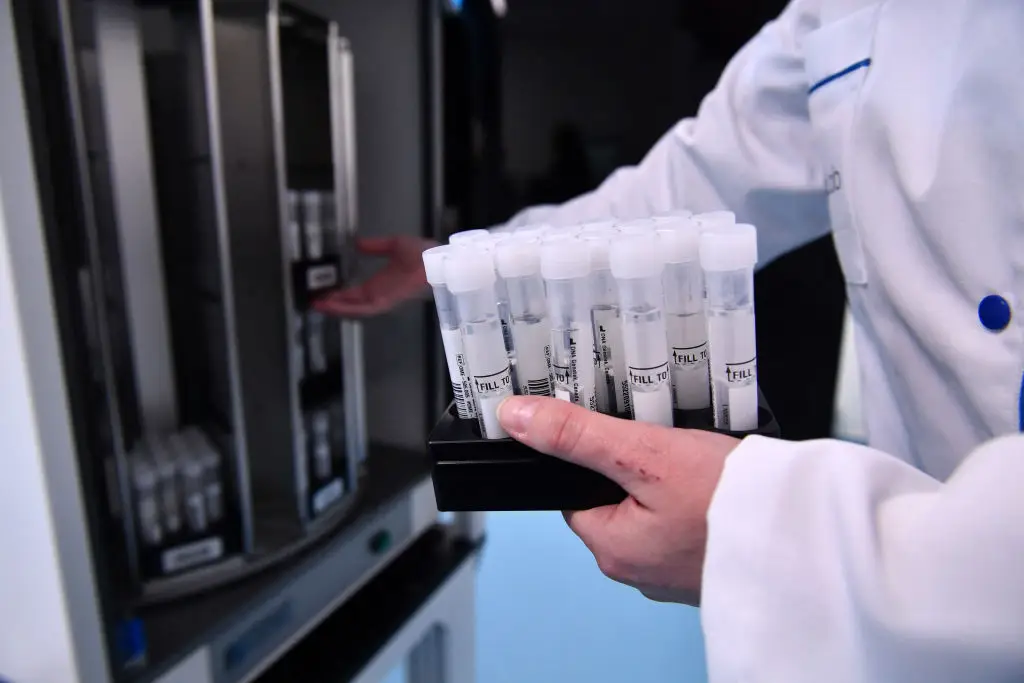
After scouring the world for various treatments and methods of diagnosis, Johnson then conducted four different tests, including an endo-specific ultrasound, an endo blood test, an AI MRI scan, and a saliva test, with the results confirming that she did indeed have the disease.
This wasn't the only result to emerge from the new tests, however, as it also diagnosed Tolo with PMOS and adenomyosis, which impact 30-40% of women — many of whom struggle to achieve a diagnosis of their own.
It doesn't seem like these methods are perfect as of right now, with the blood test, for example, still indicating that around 2.5% of women without endometriosis still test positive, but it could prove to be life-changing as the methods evolve and grow more reliable, providing a much quicker route to diagnosis and treatment than before.