
The one skill billionaire says will protect your career from AI takeover


There is seemingly no escaping the impact that artificial intelligence will have on the world of employment, but one billionaire believes that there is still one skill that the average person can pick up to future proof their careers.
As AI is predominantly a technological and software-based solution, it makes sense that experts and leading figures are incredibly recommending people focus on physical and vocational skills as a means of keeping their jobs going forward.
It's something that Palantir CEO Alex Karp has expressed, and while Bill Gates believes that professional sports will eventually be the only real job left solely for humans, in the short to medium term it's probably not a bad idea to try your hand at one of the few things that AI can't quite master yet.
Why should you focus on physical work?
Speaking to Steven Bartlett on the Diary of a CEO podcast, billionaire investor Jeremy Grantham outlined his fears surrounding the future of AI, focusing in particular on the growing potential for the 'bubble' to burst, and the impact this will have predominantly on American stocks.

Advert
He does concede, however, that people will still have to take some action to protect themselves in the job market and make their skills as attractive and sustainable as possible, and this could prove to be vital advice for young people especially as they choose with path to go down.
Outlining his advice, Grantham had one simple tip: "Be an engineer. Do something really useful that will come in handy if things start to unravel."
He indicates that civilization will start to 'unravel' in the event of an AI bubble burst, almost to a greater extent than we are already seeing with the rapid evolution of the tech, and heading towards manual labor could be your way of avoiding the impact of that.
Adding to his argument, Grantham indicates that his "second son is practicing growing various crops and has a small farm. He's trying to get to know how you would deal with chickens, how you would deal with pigs, how you would deal with mushrooms."
Will AI eventually replace manual labor too?
While it's easy to understand why AI might struggle to penetrate the world of 'blue-collar' work compared to the desk-oriented white-collar industries, it's not out of the realm of possibility that it will encroach and eliminate roles at some point in the future.
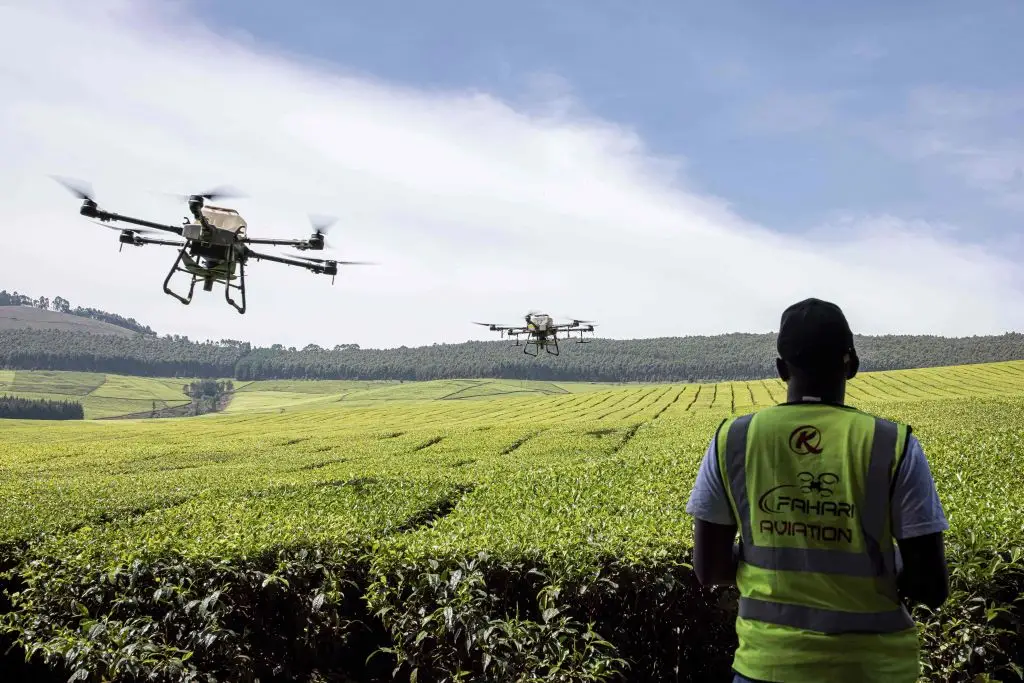
Part of the issue right now is the expertise that aligns itself with physical precision required for many trade-oriented jobs, and that's something that AI can't replicate with the accuracy required, making humans simply far better at completing these jobs.
Additionally, it would be somewhat challenging for autonomous robots or forms of technology to be applied to more rural areas like farms, for example, but we've already seen technology pair with industry for more than the last century and it would make sense for AI to follow in those footsteps once again.