
Tinder responds after launching 'extremely violating' new AI feature


Dating is hard enough as it is in 2026, but as we swipe and tap through a quagmire of potential dream dates and nightmare nos, Tinder has come under fire for a new AI feature that's been branded 'extremely violating'.
For those who grew up on MTV's Catfish, we were taught to be cautious about the online dating scene. While that could range from people adding an extra inch to their height to telling fibs about their education, more extreme cases include outright lying about their career, where they're based, or even who they are. There are plenty of people out there who aren't just using pictures from 10 years ago, but might be using a completely different person's snaps to lure us in. If not, many out there have still been found guilty of picking their best angles.
Now, Tinder has been accused of again violating our privacy by using AI to digitally enhance profiles.
What is Tinder's new AI feature?
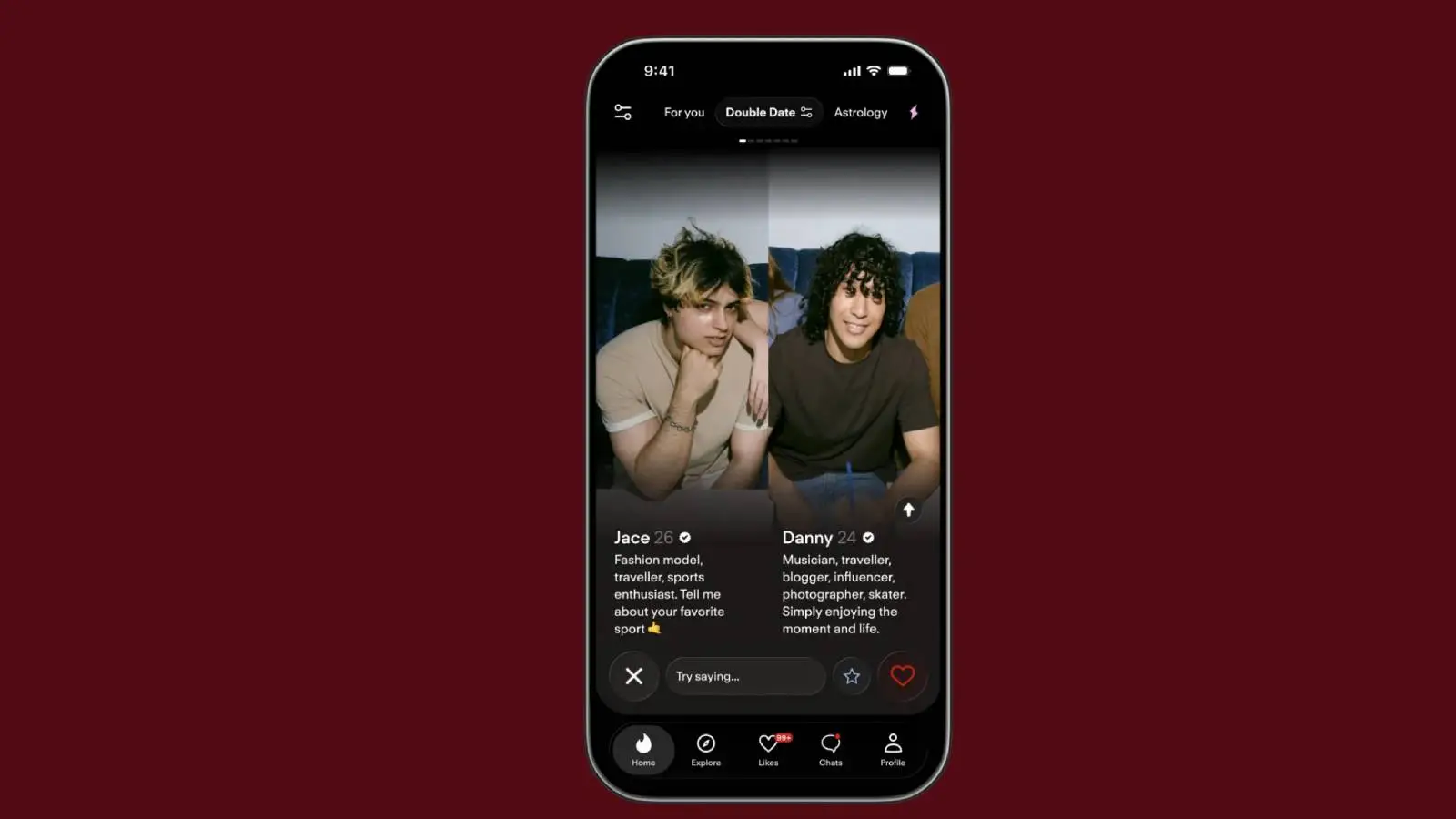
As reported by NewsNation, Tinder was giving U.S. users unwanted AI makeovers via its short-lived Photo Enhance feature. The Tinder site explains how this AI-powered tool can be used to "sharpen blurry images, adjust brightness and exposure, and improve clarity, while keeping your photo authentic to you."
Advert
Users would reportedly be notified when an image had been 'enhanced', being able to pick between the new version or the original.
While Tinder reiterated that Photo Enhance is supposed to improve image quality without changing how you look, removing people, or changing the likes of facial features and skin tone, there seems to have been a few issues.
NewsNation says several users have complained about 'over-enhancement', with one even claiming his skin tone was lightened by the dating app.
Speaking to Jesse Weber Live, former Tinder user Jenny Rubin maintains that Photo Enhance completely changed her appearance. Slamming the tool, she added: "It was extremely violating. It felt pretty uncanny, to be honest. Those are not my teeth. That’s not what my mouth looks like."
When Rubin returned to Tinder after about a month away, she says she was hit for a notification that Photo Enhance had altered one of her photographs: "I think at first, when I saw that they had enhanced the photo without me opting in, and it was just something that had been turned on for me, I was like, ‘Well, let me see what this is about.’ But after seeing the photo, I was extremely put off by the feature.”
As well as screenshotting the results and deleting the app, Rubin made a TikTok about her experience and was soon inundated by others saying the same thing had happened to them.
She’s adamant that Tinder activated the feature without her opting in, and although she thinks AI can be used in fields like medicine, it has no place on a dating app: “They [Tinder] could be using a feature to call out folks who are using falsified images but instead, they’re using it to catfish our own photos for us."
Tinder responds to Photo Enhance backlash
This backlash comes as Tinder tries to clamp down on a surge in bot and AI accounts, partnering with a biometric startup called World. Co-founded by OpenAI's Sam Altman, World (formerly Wordcoin) offers a 'Real Human' verification badge via 'proof of humanity' eye scans.
Either way, it appears Tinder is listening to your concerns, and in a statement to Mashable, a company spokesperson confirmed Photo Enhance has now been paused in the USA. Although it was only in a testing phase, they reiterated: "The feature is in a test phase in limited markets and is available to a subset of profiles that had a detectable technical issue on the first photo, and more than 90 percent of people who receive an enhanced photo keep it."
The popular dating company also suggests that less than 0.5% of enhanced photos were flagged as not looking like a user, although "not all of that feedback reflects a change as visible as what's been reported."