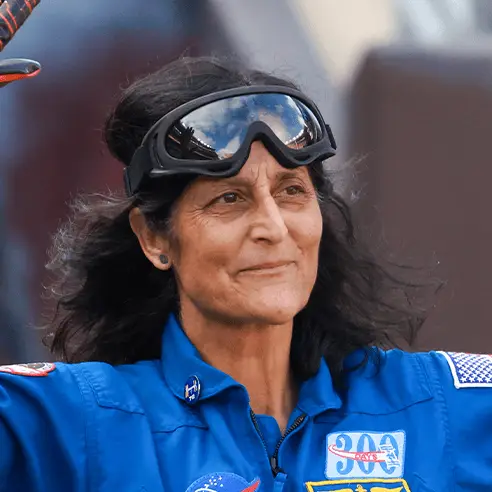
NASA Astronaut Suni Williams reveals what realisation she came to looking down at the Earth after 608 days in orbit


How many of us grew up hoping to be astronauts, only to watch that slowly fade away as we resigned ourselves to life behind a desk?
As the space tourism industry continues to take off, it appears that anyone (with enough cash) will soon be able to soar to the stars.
After all, if Katy Perry can call herself an astronaut, why can't the rest of us?
Bobbing around above the Kármán line for a couple of minutes is all well and good, but that's nothing compared to the years that NASA astronauts put into training ahead of missions to the International Space Station.
Advert
As we saw with the recent alarm surrounding one crew having to be sent home, things going wrong in space mean it isn't a simple case of a quick visit to the ER. Someone who knows the dangers of space a little too well is Suni Williams, who, alongside Butch Wilmore, spent 286 days ‘marooned' aboard the ISS.
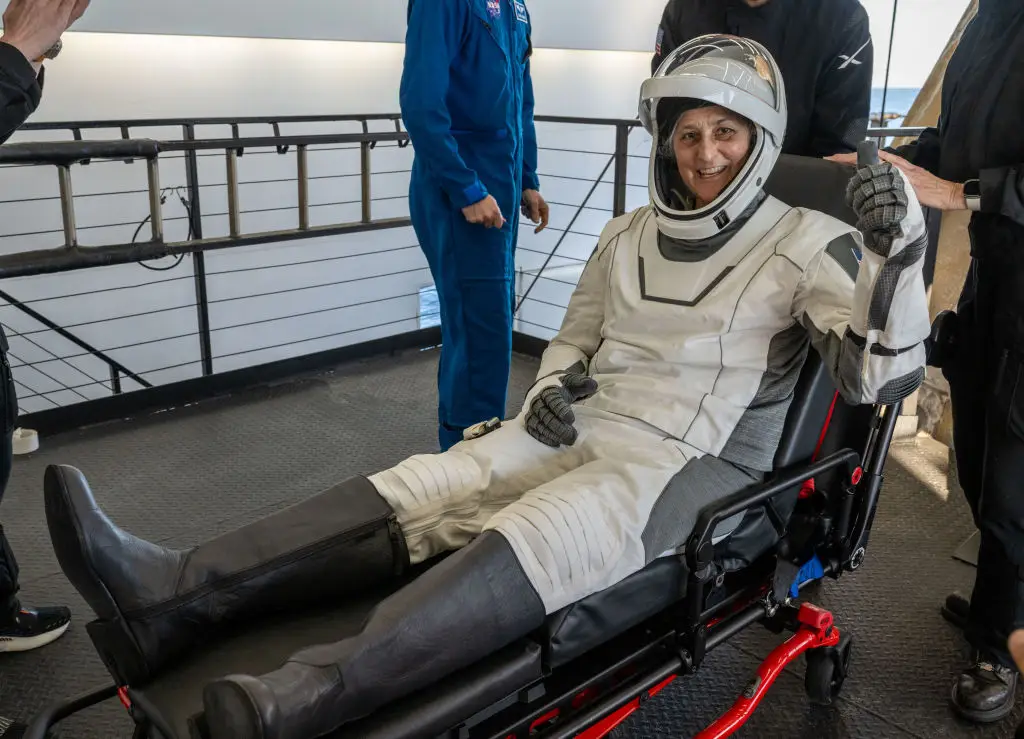
While Williams already said it was unlikely she'd return to the stars after her eight-day mission turned into an unexpected nine-month stay, she's now officially hung up her helmet and retired.
Still, after accumulating a jaw-dropping 608 days and 19 minutes in space, we could learn a thing or two from Williams.
Looking back at a 2013 interview with the National Science Center in India (via The Hindu), Williams humbled us all by explaining how a trip to space helped her see things from a different point of view. Long before Williams had landed the record for the second-longest time in space for a NASA astronaut (still surpassed by Peggy Whitson), Williams admitted: "Looking down at the Earth, we could not see borders or people with different nationalities.
"It was then that realization dawned on us that all of us are a group of human beings and citizens of the universe."
Given the current political strife with superpowers like the USA, Russia, and China amping up fears that World War III is just around the corner, Williams' words definitely make you stop and think.
Although Williams is calling it a day on her adventures to the cosmos, she's excited to see what the next generation of astronauts brings to the table. After all, NASA and SpaceX's Artemis III mission is hoping to put mankind back on the Moon for the first time since 1973 in 2027, while Elon Musk is looking even further afield to set his sights on Mars.
Even back in 2013, Williams was looking at her eventual retirement as she discussed the future of space travel: "I wish I was 20 years younger and started my career all over again. I am envious of them."
Jumping forward to 2026, Williams' retirement speech has seen her gush about how it was an 'incredible honor' to work for NASA, adding: "Anyone who knows me knows that space is my absolute favorite place to be."
Thanking NASA and the people she worked with for 27 wonderful years, Williams continued: "The International Space Station, the people, the engineering, and the science are truly awe-inspiring and have made the next steps of exploration to the Moon and Mars possible.
"I hope the foundation we set has made these bold steps a little easier."
As for her musings that we're all citizens of the same Earth who should be working together, it's a shame that leaders of these warring factions can't head up into space to witness it for themselves.