NASA reveals what will really happen when the world ends


If you ever wondered what the world's end looks like then you might want to pay attention to a new revelation from NASA, as the space agency has revealed images of a space event that appears to be almost identical to our planet's future fate.
While more pressing concerns like climate change and global warfare threaten the immediate future of our planet, it's an inevitability that the world will effectively end alongside the wider solar system in around five billion years.
This involves the Sun collapsing, expanding rapidly to the point at which it completely consumes Earth and all other nearby planets, leaving a mere collection of gas and dust in its wake before new planets emerge to replace the existing selection.
While this is destined to occur billions of years into the future, we might just have got a glimpse into what it will look like thanks to jaw-dropping new images captured by NASA's James Webb Space Telescope.
Advert
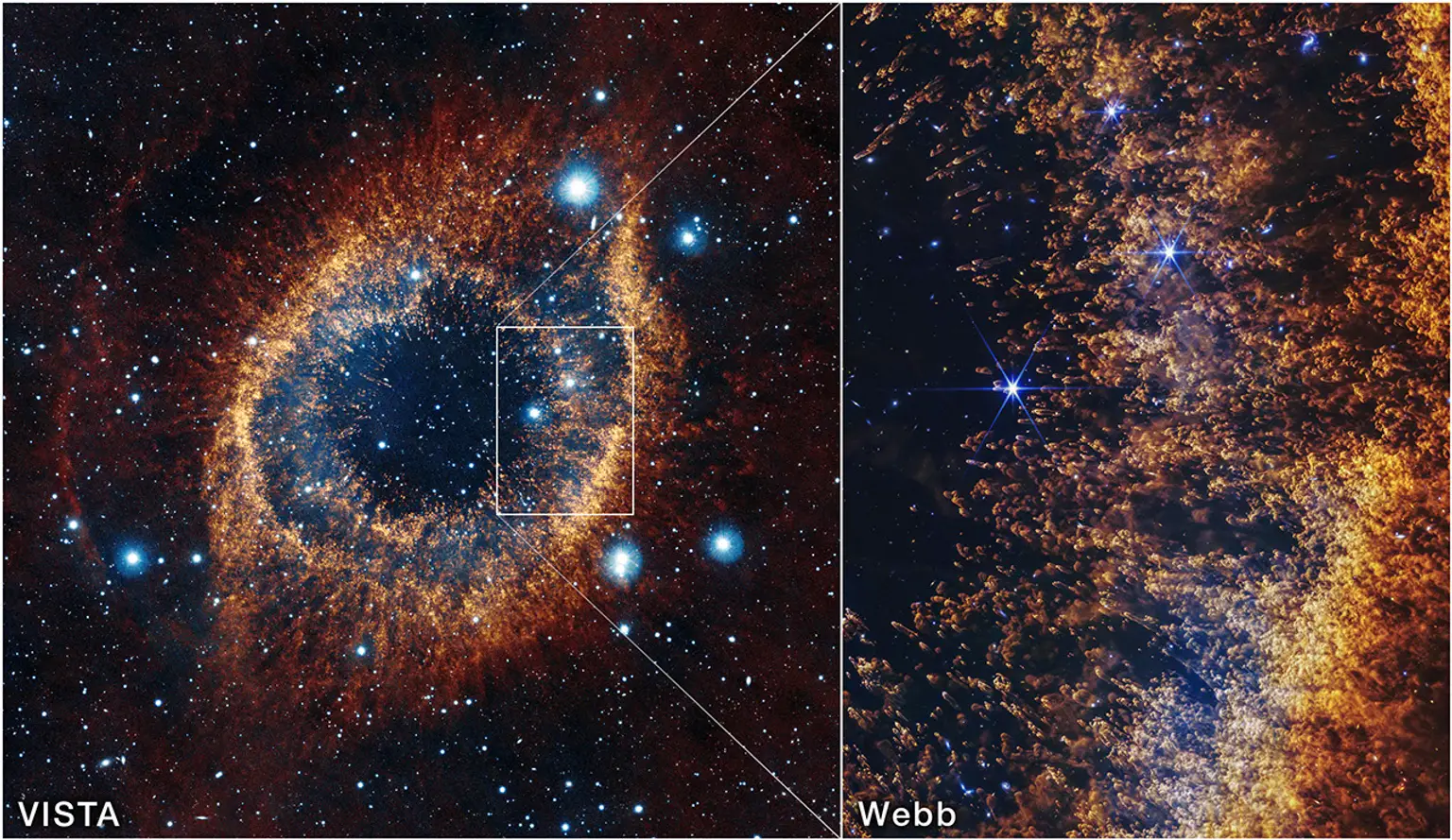
As reported by the Daily Mail, these images have been captured of the Helix Nebula, which is situated around 650 light-years away from Earth and is currently undergoing a similar process that awaits our solar system.
According to the space agency, the image represents a portion of the overall Helix Nebula, and "highlights comet-like knots, fierce stellar winds, and layers of gas shed off by a dying star interacting with its surrounding environment."
It also displays "the start transition between the hottest gas to the coolest gas as the shell expands out from the central white dwarf."
The resulting photograph is simply mesmerising as the wispy oranges contrast with bright lights and the darkness that the emptiness of space inhabits, although it's perhaps just as frightening as it is fascinating.
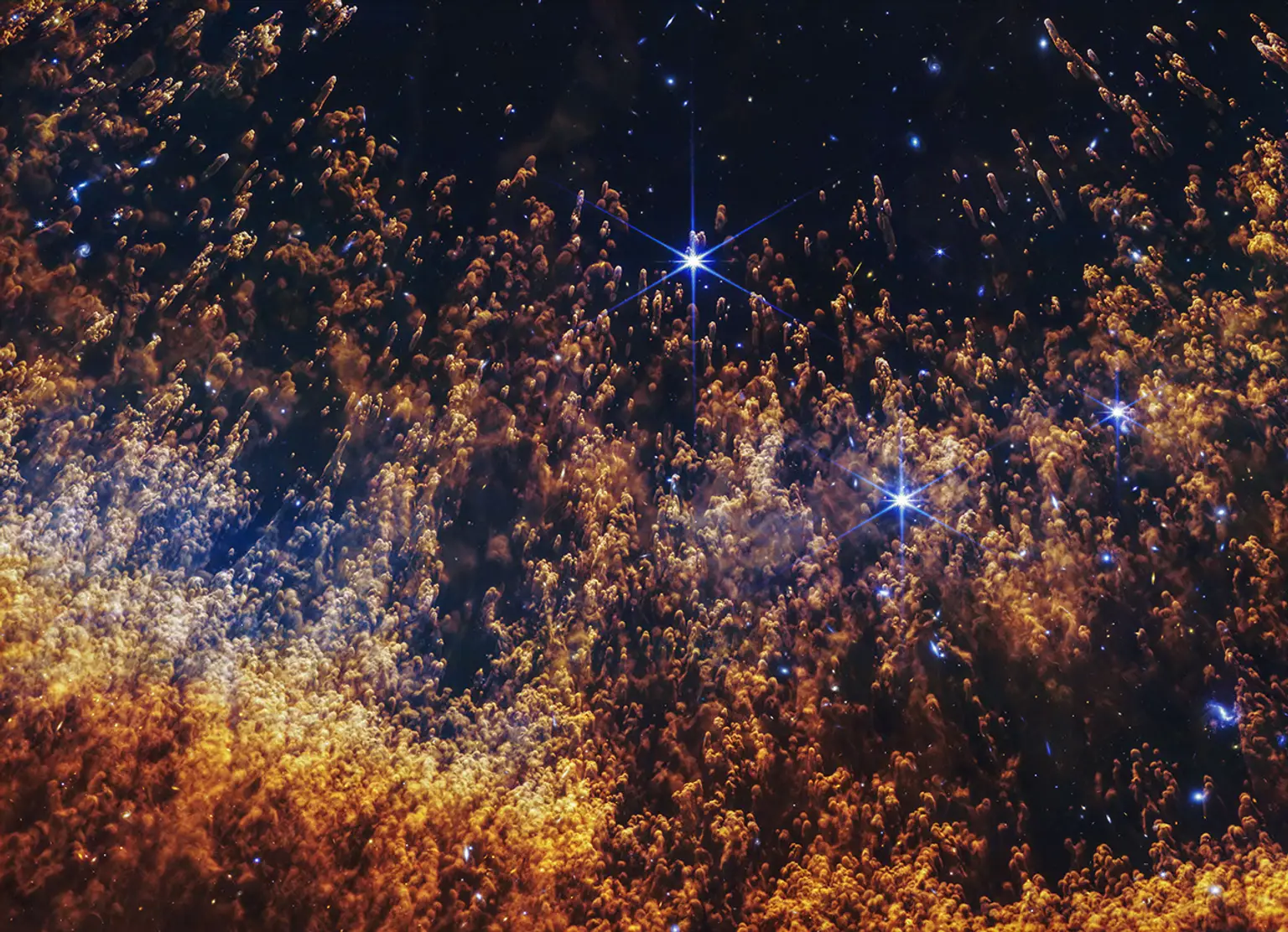
Within the wider image, the blue light shows the hottest areas where gases directly interact with the ultraviolet light emanating from the white dwarf out of frame, and beyond that the yellow strands show the process of hydrogen atoms forming into molecules.
Finally, the red areas furthest away from the center indicate the point where the matter is at its coolest, with gas beginning to thin and dust starting to form.
It's not necessarily all bad, as while the objects inside the Helix Nebula have been destroyed and a similar fate awaits our planet, it prompts the creation of new worlds that could even hold the potential for even more complex life forms than our own — although we certainly won't be around to see them take form.