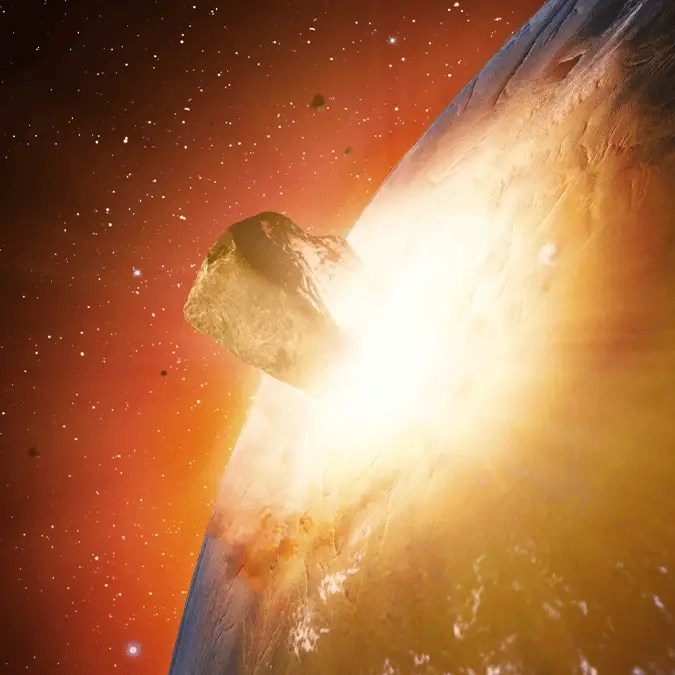
NASA give update on chances of asteroid 'as powerful as 100 nuclear bombs' hitting Earth


There was a brief moment when everyone genuinely considered the possibility of an asteroid crashing into our planet, but thankfully NASA has reconfirmed that there's effectively no chance of this happening, using it as a learning opportunity for the future too.
The chances might have been small in comparison – with experts estimating that, for a short period of time, there was around a 3.1% possibility – yet that was already too large for scientists to rule out completely, with space agencies weighing up various emergency missions.
One potential solution would have seen a rocket fired directly at the asteroid to divert its path, but this wasn't actually necessary in the end as continued calculations downplayed previous fears of a potential collision.
It was in February that new data collected by NASA offered clarification on the projected path of 2024 YR4, the asteroid projected to strike Earth, reducing the chances of this happening to 0.0017%, giving it a rank of zero on the Torino impact hazard scale, as per the Independent.
What can we learn from the 2024 YR4 panic?
While that panic might have passed now, with there being virtually zero likelihood of the asteroid hitting our planet unless something dramatically changes between now and 2032, scientists still believe that we can use this opportunity to learn something about our response to potential space catastrophes.
Advert
Speaking to Space.com, Richard Binzel, professor of planetary science at the Massachusetts Institute of Technology (MIT), illustrated:
"As 2024 YR4 fades away from the news cycle, I think there is an overall context that is the most important takeaway news. An object the size of YR4 passes harmlessly through the Earth-Moon neighborhood as frequently as a few times per year."
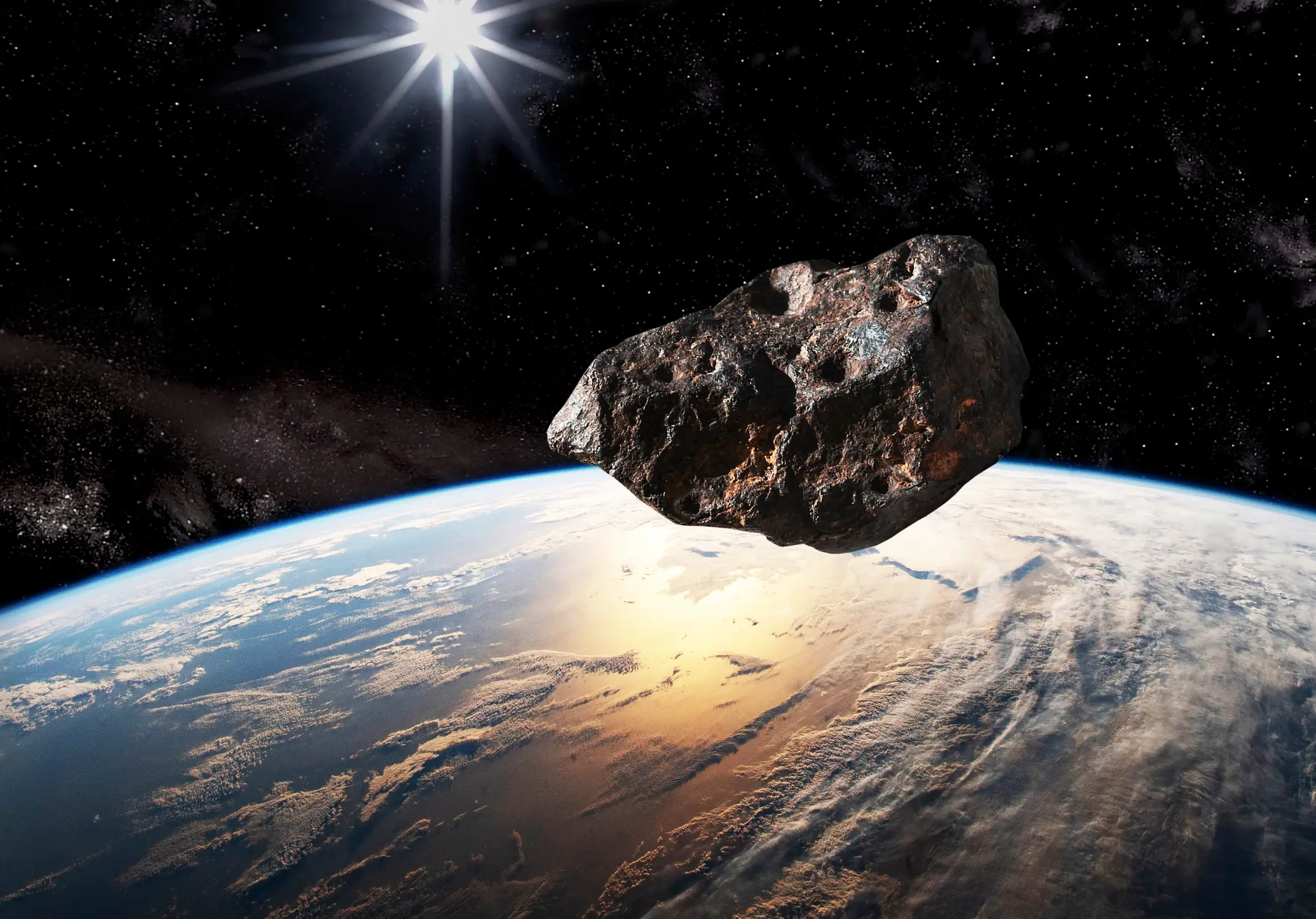
It's not necessarily a rare occurrence that something of this scale has a close call with our planet then, only that the lack of information gained by scientists gave the impression that this particular asteroid was more dangerous than it actually turned out to be.
"The YR4 episode is just the beginning for astronomers gaining the capability to see these objects before they come calling through our neck of the woods," Binzel continued.
One famous physicist believes that space agencies and governments should still take proactive action in case a threat like this actually crops up for real, building the necessary protective and preventative measures so they're there when we need them, as you never know how much time you'll actually have in a moment of chaos.
What would happen if the asteroid actually hit Earth?
It has been speculated that 2024 YR4 would have the equivalent power of 100 nuclear bombs if it were to strike the Earth, and using tools like Neal.Fun's asteroid launcher you can simulate the impact of this particular piece of space rock and see the devastation in action.
Based on a diameter of around 200 ft and a speed of roughly 50,000 miles per hour – both on the upper end of the scale for this asteroid – hitting the center of Manhattan in New York City would not only create the largest airbust in recorded history with a 232 decibel shock wave, but would result in a 1,090,995 estimated deaths as a result of the shock wave and wind blast.
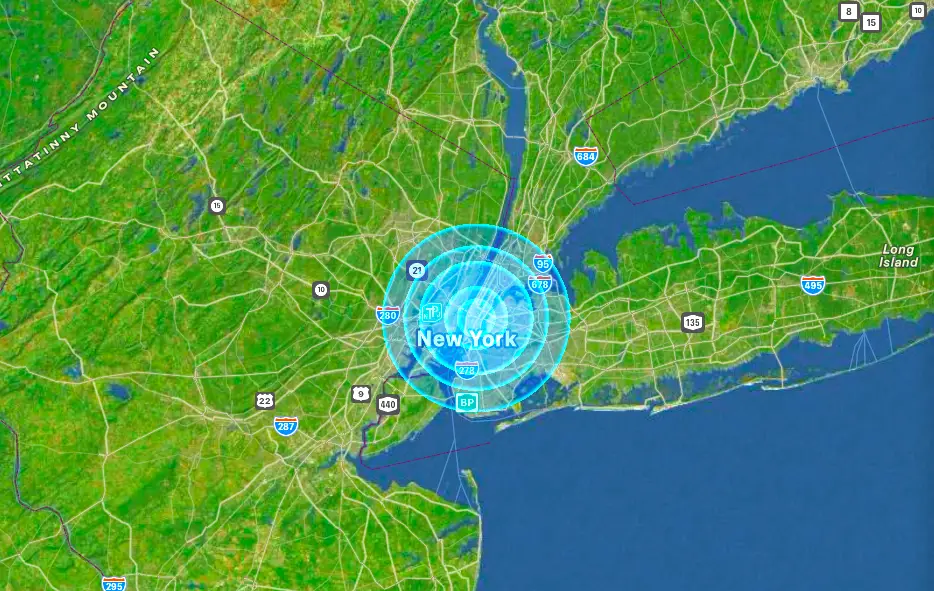
Anyone within a radius of 3.6 miles would receive significant lung damage if they weren't already killed by the impact, and those within 4.7 miles would see their ear drums ruptured.
Buildings within 8.1 miles and homes within 11 miles would also collapse, with peak wind speeds reaching 62,561 miles per hour, with the immediate 2.4-mile-radius experiencing gusts faster than storms on Jupiter.
The actual impact wouldn't stretch that far geographically, however, with it largely affectly just New York City and its immediate surrounding area, making this more of a 'city-killer' that a world-ending threat.