
Fears that Tom Cruise's Digger comes to life as Manhattan-sized iceberg breaks free in world-first event


In a bizarre case of life imitating art, it's hard not to compare the events of Alejandro G. Iñárritu's Digger to recent events where a Manhattan-sized iceberg broke free from the Petermann Ice Shelf in northern Greenland.
Making a splash since its first trailer, where Tom Cruise firmly steps into the creep zone as an aging oil magnate called Digger Rockwell, Digger has continued to cause a stir. They say that no press is bad press, but with Digger shaping up to be Cruise's biggest box office flop, and potentially losing Warner Bros. Pictures up to $200 million, many are unsure who the satirical comedy film is for.
More than this, Digger has been slammed as 'woke', as it's accused of promoting a climate change agenda.
While it's more nuanced than that, Iñárritu has admitted that there's a message about climate change in there when he told The New York Times: "This film is a disaster movie, but the disaster is us."
What's going on with the Petermann Ice Shelf?
Advert
One of Digger's plot points is how Cruise's titular character ignores methane beneath the Greenland ice sheet, and when an explosion dislodges an iceberg the size of Washington, D.C., it threatens to destroy Europe. There's a later plot about an even bigger iceberg and trying to blow it up while sending radioactive chunks flying, and while that's nothing like what's going on with the Petermann Ice Shelf, there are some similarities.
According to BBC Wildlife Magazine, a Mattan-sized iceberg broke free from the rest of the shelf on August 4, causing the glacier’s largest loss of floating ice since 2012 and its biggest calving event since 2020.
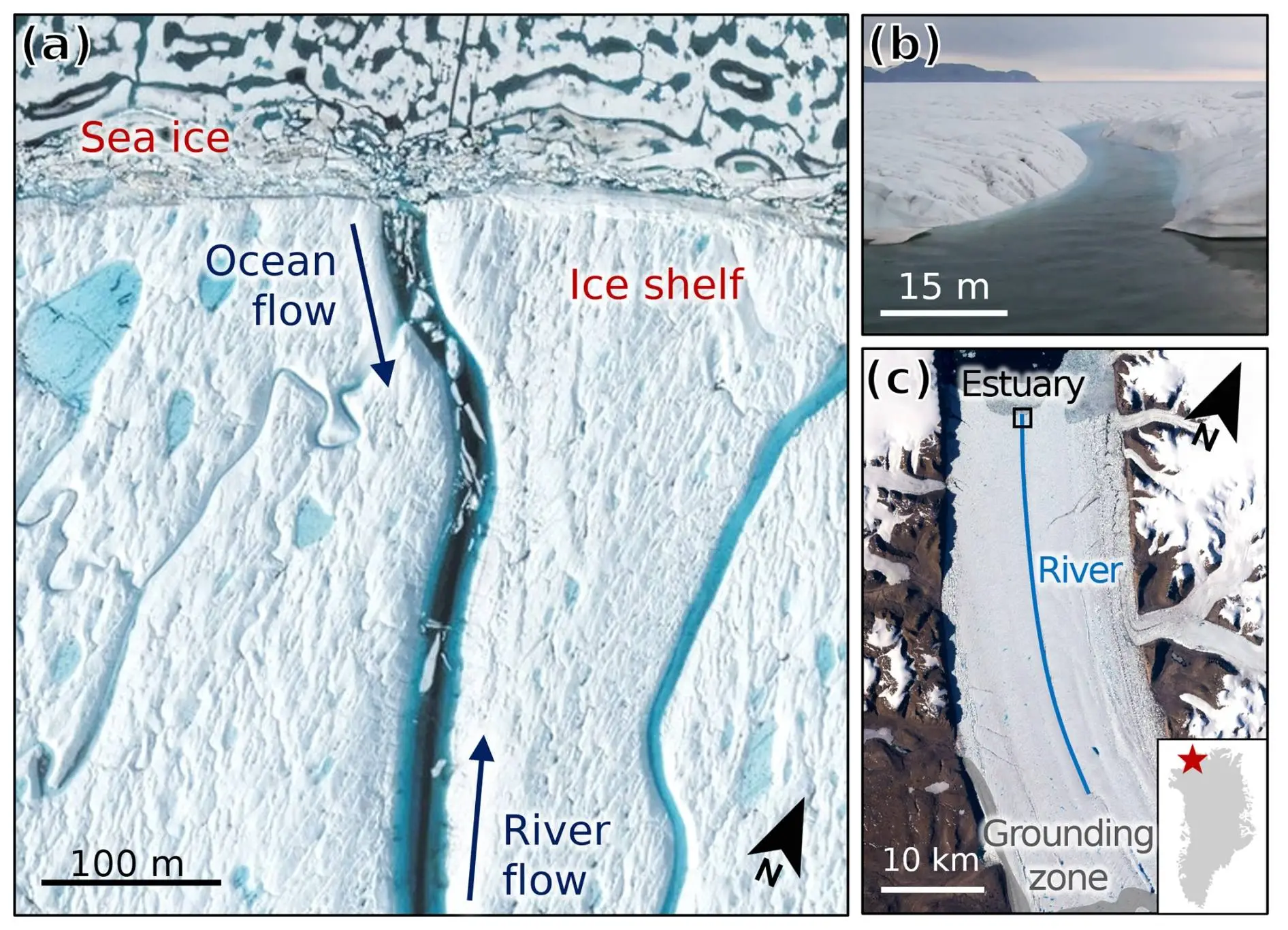
Following the last major calving event in 2021, a NASA-funded team unearthed an ice shelf estuary as the first of its kind in the entire world.
A study from back then suggested that these bodies of water promote fractures and calving, but in subsequent research led by the Cooperative Institute for Research in Environmental Sciences (CIRES) and published in The Cryosphere, a team of scientists has measured the results.
Lead author Michela Savignano explained: "For the first time, we were able to measure how quickly the river cut into the ice shelf to form the estuary, which revealed more complex estuary behaviour than was previously suggested. We did this using a new method for calculating elevation of the river channel above sea level during the melt season from satellite imagery.”
As air temperatures rise in the summer months, pools of water form on the surface of the ice shelf and are known to cause collapse, like a 2,717-square-kilometre section of the Larsen B Ice Shelf breaking off in 2002.
Whereas rivers can be beneficial to an ice shelf due to reducing pressure and the weight of pooling water by carrying it to the ocean, estuaries containing a mix of fresh surface water and salty seawater can be harmful.
Co-author Alison Banwell maintains that the process of the estuary forming and reforming over multiple melt seasons "weakened the ice shelf due to the loading and unloading of ocean water, and potentially contributed to the calving event that happened in August of this year."
Satellite imagery shows this in action, pinpointing the estuary's formation in 2014 and a cyclical pattern of disappearing and returning until a crack formed in 2018.
Looking further ahead, Savignano fears that this phenomenon will continue, as she concluded: "In Antarctica, estuaries could begin forming within 30 years, weakening ice shelves that currently play a substantial role in mitigating future sea level rise. Our research will help us to understand when and where that is most likely to happen."
Do we need to worry about the Petermann Ice Shelf's iceberg?
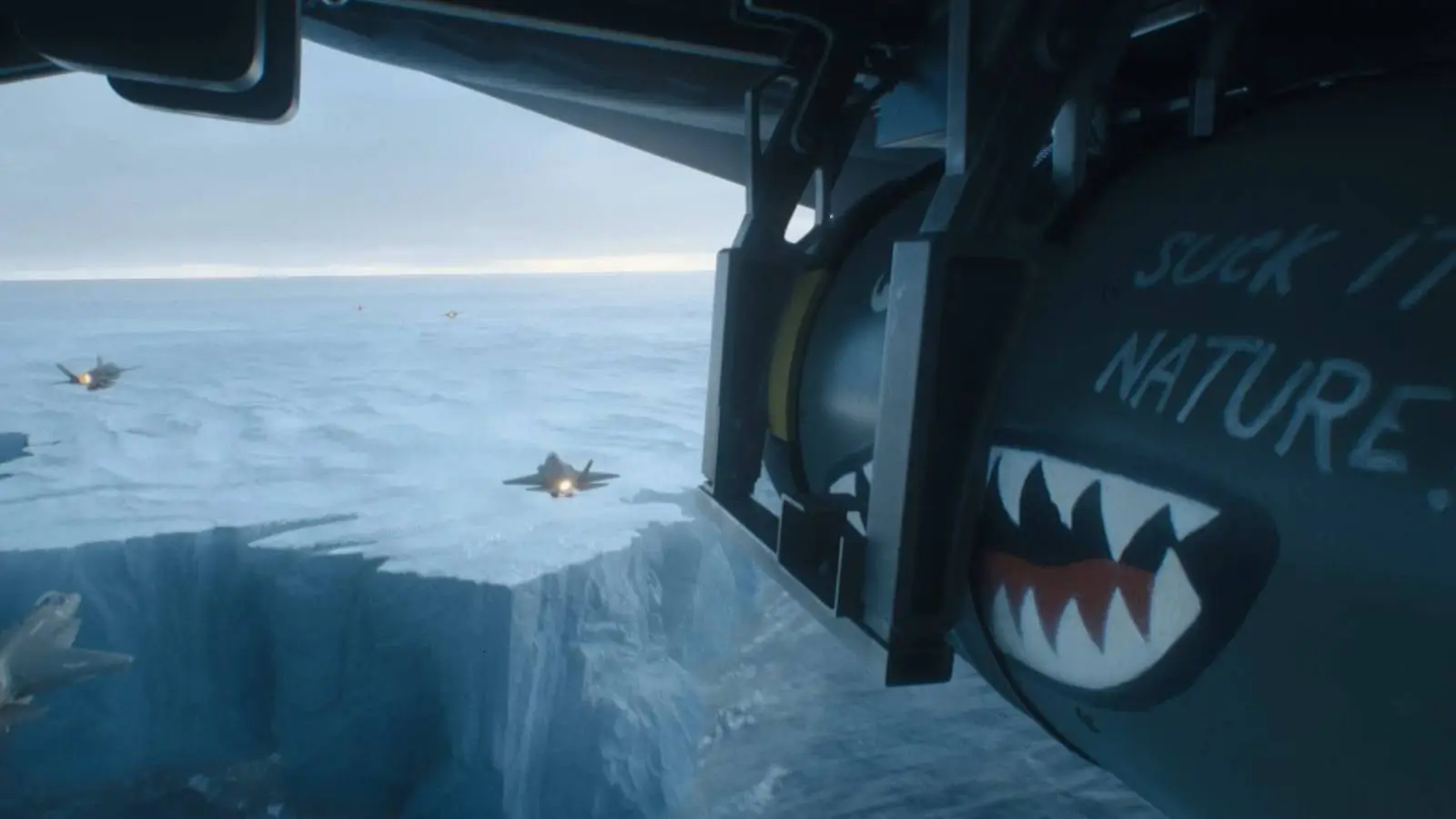
Over on Reddit, it was hard not to draw comparisons between the Petermann Ice Shelf's Manhattan-sized iceberg and the iceberg(s) faced in Digger.
Mocking Digger's reportedly massive marketing budget, one person joked: "Guess we know where the 100 million in marketing went to now!"
Another chuckled: "Iñárritu is gonna make sure that his movie is relevant."
A third asked if we couldn't simply bomb it. While we're sure nuking a Manhattan-sized iceberg would be great for the environment, we likely won't have to do anything at all.
As noted by the BBC, the Petermann iceberg is drifting through the Nares Strait after it survived a collision with Greenland's Joe Island. The whole 'Manhattan-sized' aspect might sound like cause for concern, but as it's only thought to be around 29 square miles, that's a fraction of what Digger's fictional 'Judy' iceberg (400 square miles) was.
The Petermann's largest-ever iceberg broke off in 2010 and was much bigger, at around a quarter of the size of Digger's Judy. The latest berg is expected to follow a similar route to the one from 2010, break off into smaller chunks, and eventually melt away entirely.
Phew, crisis averted.