Earth's 'Doomsday Vault' created to save life in apocalyptic event quietly updated by scientists

An alarming number of people appear to think the end is nigh, but then again, with Terminator-inspired AI takeovers, constant threats of World War III, and fears that zooming comets are actually alien motherships, are we really that surprised?
While Bulgarian mystic Baba Vanga has pencilled in 3797 for our ultimate extinction, there are rightful fears that it's coming much sooner. Exactly what kind of apocalyptic event will wipe us out is unclear, but if everything does go to hell in a handbasket, at least the world's plants will be safe.
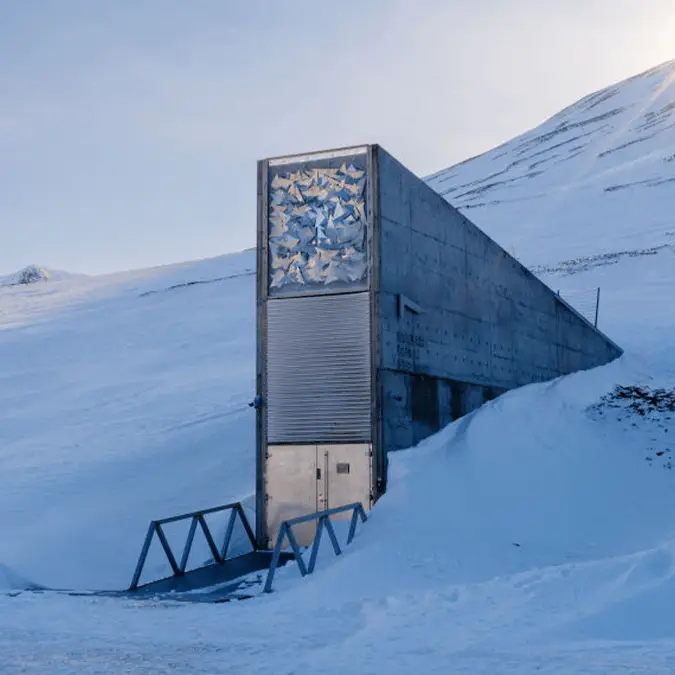
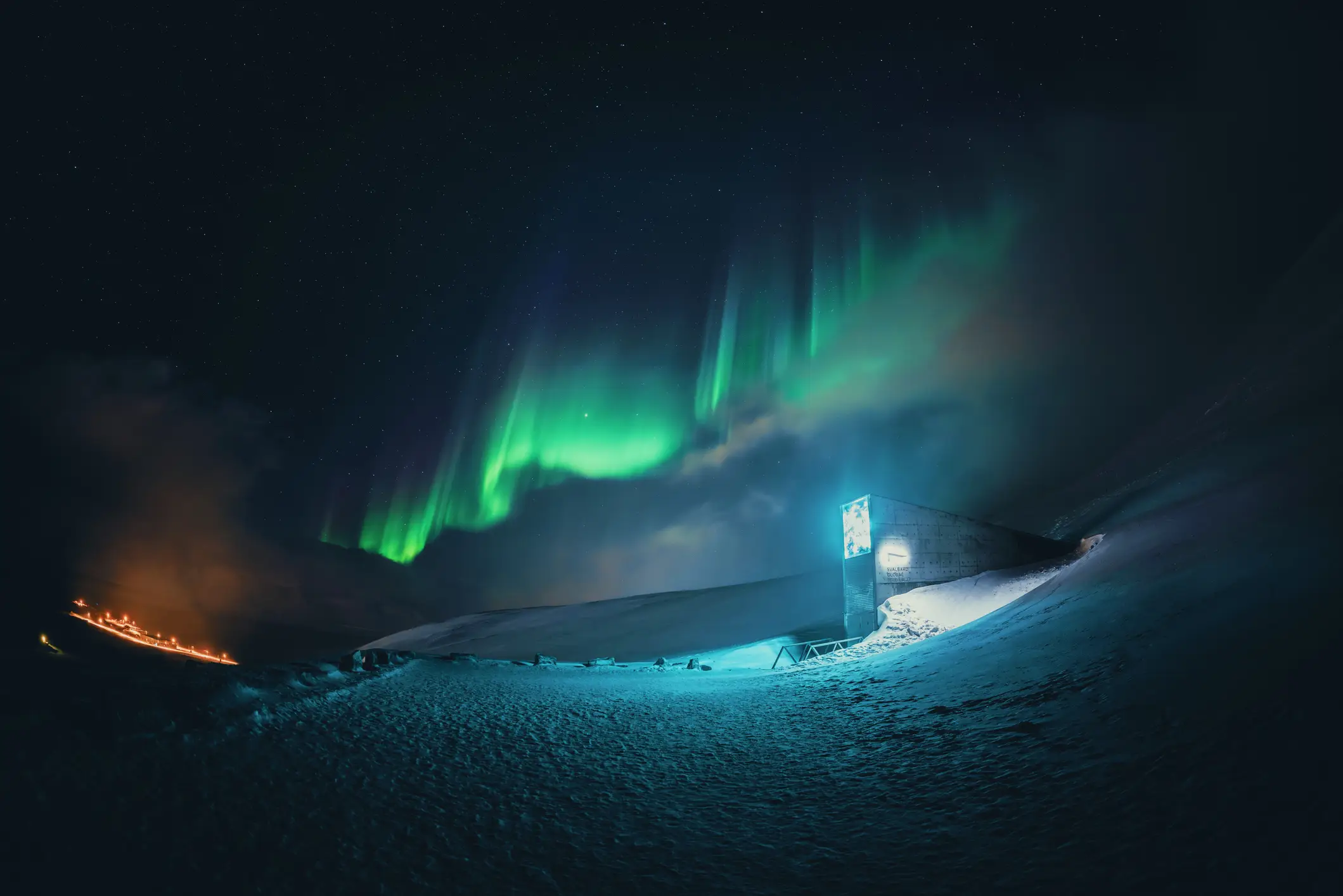
Enter the Svalbard Global Seed 'Doomsday' Vault, which is considered by many as the safest place on Earth, as it’s tucked away in the mountainside on Spitsbergen, in Norway's Svalbard archipelago. The Global Seed Vault can only be visited six times a year, and although you can take a virtual tour, it's largely a top-secret locale to protect the seed samples inside.
Advert
Founded in 2008, the Svalbard Global Seed Vault was a new alternative to the Nordic Gene Bank (now known as NordGen) storing frozen seeds in an abandoned coal mine. Spurred into action when the Aleppo Seed Bank was destroyed in the Syrian civil war, the Norwegian government stumped up the $8.8 million needed to construct the new vault.
After another 14,000 samples were added in February 2025 and further deposits came in June and October, scientists have confirmed another bumper batch has been put into preservation.
With 7,800 seed varieties, including olives from Spain and ancient crops from Guatemala, the grand total now sits at a whopping 1,386,102 samples.
Kept at a constant temperature of –0.4°F, these copies are supposed to be able to repopulate the Earth's crops if the original is somehow wiped out by a natural disaster or nuclear war.
Dr Stefan Schmitz, Executive Director of the Crop Trust, cheered the latest update and said: "Backing up seeds in Svalbard is one of the easiest and most effective steps the world can take to protect the foundation of agriculture."
Explaining the importance of the vault, Crop Trust's website adds: "Many of these are vulnerable, exposed not only to natural catastrophes and war, but also to avoidable disasters, such as lack of funding or poor management."
"Something as mundane as a poorly functioning freezer can ruin an entire collection."
A mix of permafrost and thick rock on the outside of the vault means that samples will remain frozen even if power fails, while seeds are sealed in custom-made three-ply foil packages. In turn, these are sealed inside boxes and placed on shelves in the vault, which benefits from low temperature and moisture levels that are said to ensure 'low metabolic activity' in the seeds.
It also operates with 'black-box conditions', meaning only the country that deposited a seed can withdraw it. Importantly, it's way above sea level and sit in a geologically stable region that should mean the vault can survive the worst that Mother Nature or warring countries throw at it.
Alongside the ancient grains, there are also African (Niger) grains that are both first-time additions to the vault for Niger and Guatemala.
With a total capacity of 2.5 billion seeds (500 from 4.5 million varieties), we're still a long way from the Svalbard Global Seed Vault reaching capacity.