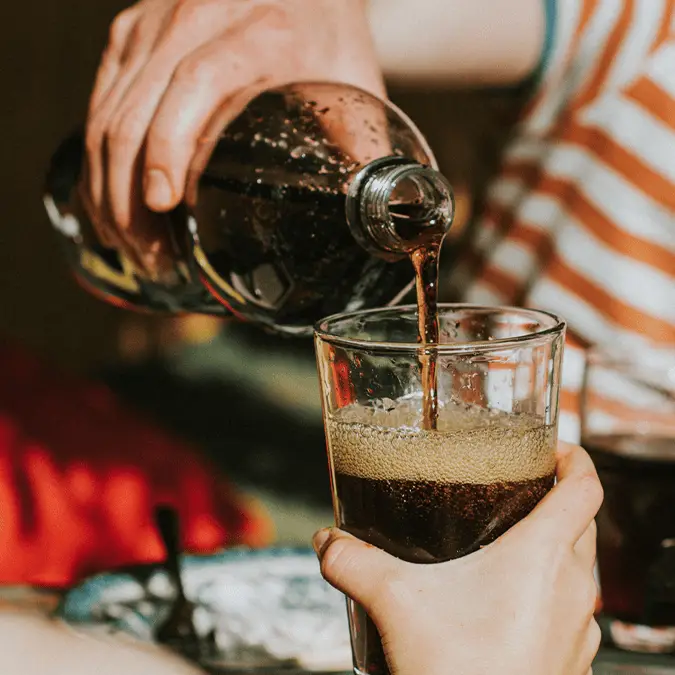
Simulation reveals what happens to your body after having drink consumed by half of Americans daily


We seem to be more health-conscious than ever these days, constantly hitting the gym, upgrading our health tech, and even jabbing ourselves with GLP-1s to shift a few extra pounds. Still, while many argue that their body is a temple, they're unknowingly filling themselves with poisons daily.
While the US Department of Agriculture has come under fire for its revamped dietary guidelines that put an emphasis on fats and red meat, it's at least been praised for its assault on ultra-processed foods.
On the USDA site, the organization claims the USA is facing an "epidemic of preventable diet-related chronic diseases" such as heart disease, type 2 diabetes, and obesity. Health research has pulled a link between ultra-processed foods and negative health outcomes, with 70% of the U.S. food supply said to come from this type of food. Even more worringly, it's said that children are getting over 60% of their calories from foods like sugary breakfast cereals, chips, biscuits, and fizzy drinks.
Why are fizzy drinks called 'liquid death'?

We recently covered how Dr Jeremy London referred to soft drinks as 'liquid death', with the heart surgeon listing them alongside smoking, alcohol, and refined flours and wheats as four things we should absolutely be avoiding to ensure our longevity.
Advert
Ultra-processed foods have also been tied to soaring cancer mortality rates, but still, it's said 50% of Americans are chugging back fizzy drinks every day. It's probably not helped when the president has his own secret Diet Coke button.
As well as UPFs typically being heavy in sugars, additives, artificial colours, flavourings and preservatives, and trans fats, they contain barely any whole foods and often add even more harmful substances during processing.
How are fizzy drinks processed by the body?
In a TikTok video from Science Vitals, we see what happens to our bodies as soon as we crack open a can and take a sip. In the graphic video, we see carbon bubbles 'scraping' down the throat before traveling to the stomach and causing even more gas. As acid reacts with the soda, dissolved sugars rush into our bloodstream and cause the pancreas to fire insulin to fight the sudden spike. With our bloodstreams flooding with glucose, neurons in our brain light up as it's met with dopamine.
Although you get a quick high from this sugar rush, your heart will now be beating faster, your kidneys struggle to filter a sugar and acid overload, and your liver turns excess fructose into fat deposits.
If all of this doesn't have you reaching for a glass of water instead of your usual meal deal choice of beverage, the video continues to explain how phosphoric acid drains calcium from your bones and the enamel of your teeth is dissolved.
In the background, your stomach contracts and bubbles expand while your kidneys pull water as the body begins to dry out. Giving a pretty shocking PSA, the video states: "One drink overstimulates the brain, heart, liver, and kidneys, leaving behind hidden residue. A simple sip, but no organ escapes its hit."
Many in the replies were asking how it's legal, while others claim they haven't touched fizzy drinks in years.
One person wrote: "When I tell ppl I only drink water, organic coconut water and make my own juice from fruits and vegetables, they think it's too much work."
Another added: "uhhhhhh.... I just chugged cherry coke... 😳."
A third concluded: "I quit sodas years ago, and now I can't drink one at all. If you quit when you go to drink one again, it will taste like sugar syrup. All you have to do is stop."