
World's largest iceberg turns blue in worrying move as NASA scientists issue sharp warning


It's no secret that the human race is hurting the planet, and you only have to look at how 99% of all species that have ever existed are now extinct to see how we're not exactly helping Mother Nature.
With AI guzzling water, billionaires being accused of destroying the atmosphere with tourist trips to space, and even the cosmos being cluttered with satellites, the idea that the human race will be wiped out might not be a bad thing.
The planet would likely thrive without humans, and proving the point, NASA scientists have given another warning about global warming. This time, the world's largest iceberg has turned blue.
The colossal A-23A separated from Antarctica's Filchner Ice Shelf in 1986, and with NASA keeping an eye on it ever since, it's been slowly drifting around the Southern Atlantic ever since. Its latest drift ended when A-23A was grounded around 73 km from South Georgia in March 2025, but before long, it was shuffling closer again.
Advert
In September, it was reported that A-23A was around half its original size, although measuring a ginormous 1,770 square kilometres by 60 km at its widest point, it's not exactly small.
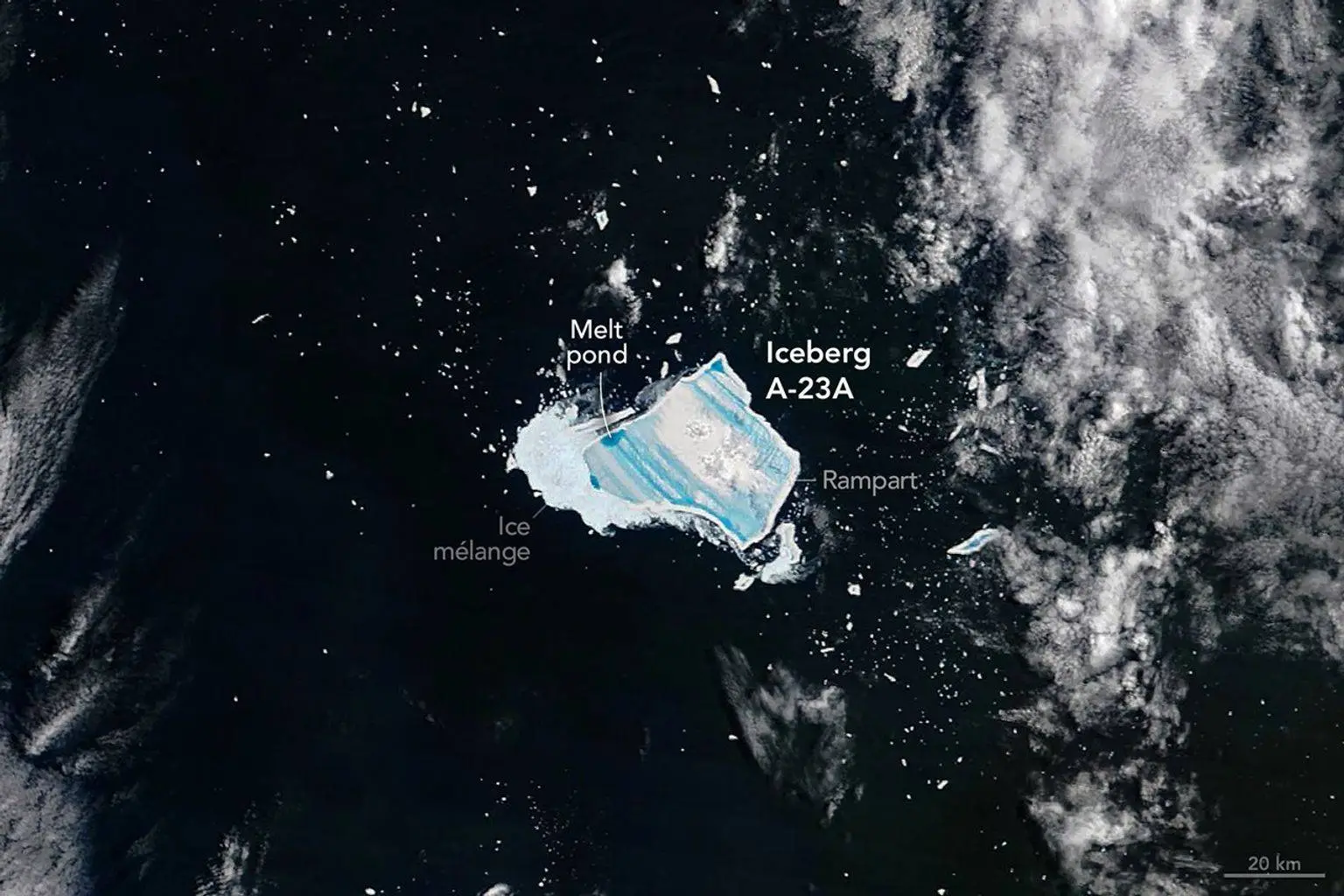
Sadly, it looks like A-23A is nearing the end of its life, as the so-called 'King of the Seas' has continued to break into smaller bergs. Added to this, the main body has been photographed being covered with meltwater and blue slush.
Whereas the world's biggest iceberg once spanned 4,000 km squared, it could now have just weeks left to live as it continues to break apart. NASA explains how the MODIS (Moderate Resolution Imaging Spectroradiometer) on its Terra satellite snapped the waterlogged iceberg on December 26 – now measuring just 1,182 square kilometers in January 2026.
Ted Scambos, a senior research scientist at the University of Colorado Boulder, confirms that the blue coloring is a result of 'ongoing disintegration events', adding: "You have the weight of the water sitting inside cracks in the ice and forcing them open."
The white line around the edge is said to be a 'rampart-moat' pattern that's holding in the blue meltwater.
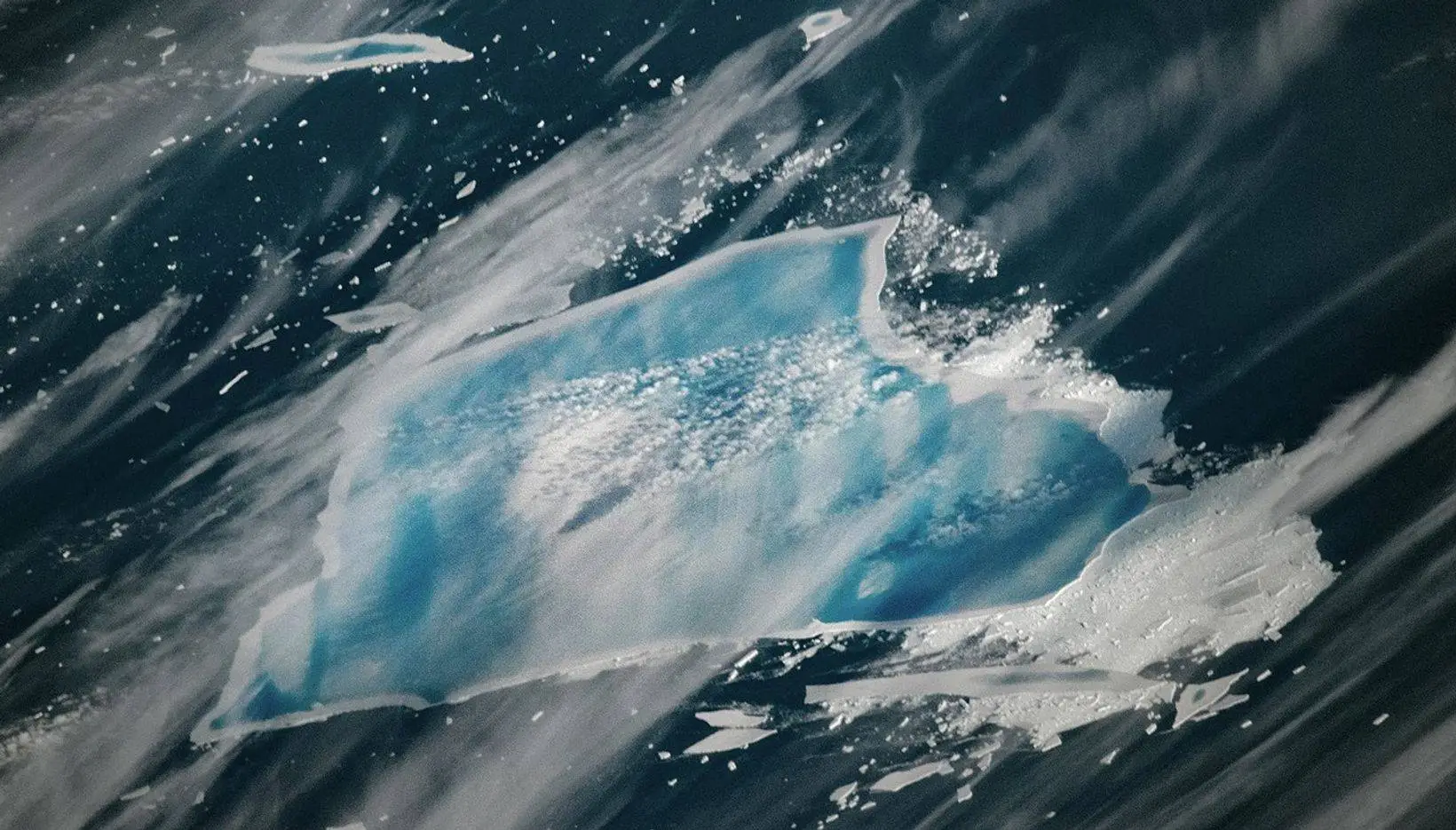
Fearing that the end is near, retired University of Maryland Baltimore County scientist Chris Shuman mused: "I certainly don't expect A-23A to last through the austral summer."
Heading toward even warmer waters, and with typically clearer skies and warmer weather on the way, the big berg is now in a 'graveyard' state.
Given that some of these people have spent their entire careers tracking A-23A, Shuman reflects on this bittersweet moment: “I'm incredibly grateful that we've had the satellite resources in place that have allowed us to track it and document its evolution so closely.
"A-23A faces the same fate as other Antarctic bergs, but its path has been remarkably long and eventful. It's hard to believe it won't be with us much longer."
Thankfully, with megabergs like A-81, B22A, and D15A all measuring over 1,500 square kilometers and being parked or drifting along the Antarctic shoreline, there are plenty of others to keep an eye on.