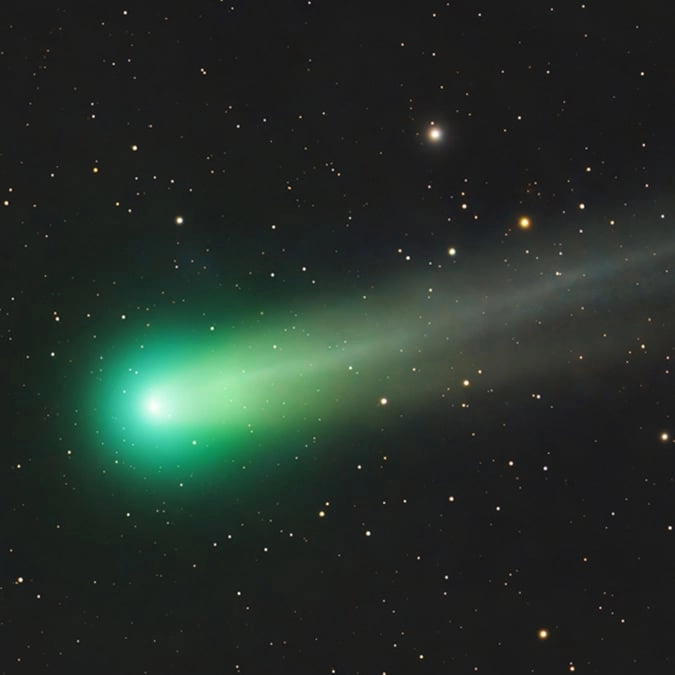
Brightest comet of the year is passing Earth this week, make sure you don't miss it


The brightest comet of the year will be passing by Earth in the next few days, and here is everything you need to know to make sure you don’t miss it.
The newly discovered comet is likely to be a one-time visitor to our solar system, as it is believed that the comet orbits the Sun approximately once every 170,000 years, so this is a once-in-a-lifetime opportunity. We're used to hearing about supposed city-killing asteroids and fears that 3I/ATLAS is an alien mothership, but now, we're looking to the skies once again for our latest space phenomenon.
What is C/2025 R3 (PanSTARRS)?
The celestial body’s official name is C/2025 R3 (PanSTARRS) and is a long-period comet, meaning it likely formed billions of years ago and has spent the majority of its time far beyond the outskirts of our solar system.
It was first discovered in September 2025 and is expected to make its closest approach to Earth this week, passing our planet at a distance of 45.5 million miles.
Advert
According to NASA, the comet has been “slowly brightening and extending an ion tail since its discovery last year.”
It will be visible during mid-April before sunrise, although the “future brightness of any comet is hard to predict.” NASA notes that R3’s brightness makes it a good ‘camera comet’ that should become visible to the naked eye in the next week
The space agency continued: “Comet R3's physical future is also unknown because, like Comet A1 (MAPS) earlier this month, it may disintegrate when it passes its closest to the Sun. Or it may live to leave the Solar System.”
How easy is C/2025 R3 (PanSTARRS) to spot?
The comet has already reached about magnitude 5, which means it is barely visible to the naked eye under dark skies.
However, it could be set to brighten to a point where it is clearly visible without equipment in good conditions.
It is best spotted before sunrise and is visible low on the eastern horizon.
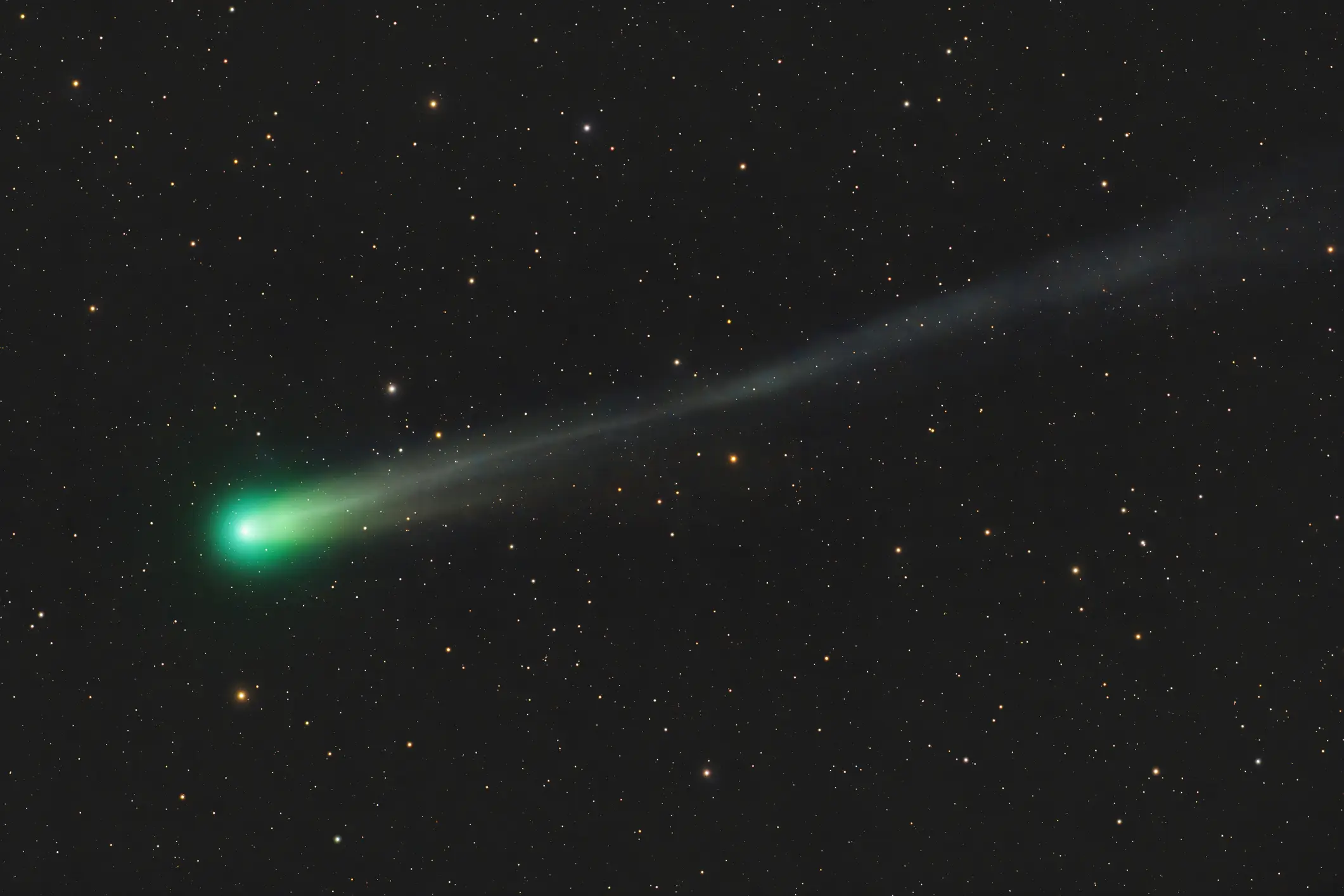
The comet is passing through the constellation Pegasus, so if you’re a keen stargazer, then you know where to look for it. Binoculars will also make this a much easier spot.
And don’t wait too long because it is best spotted between now and April 20.
However, if you’re not able to catch a glimpse of C/2025 R3, then fear not, because there are two more celestial events expected to happen this spring.
First off is the Lyrid meteor showers, which will be active from April 17 to 26, with its activity peaking from April 21 to 22.
The second event is the Eta Aquariid meteor showers from April 15 to May 27.