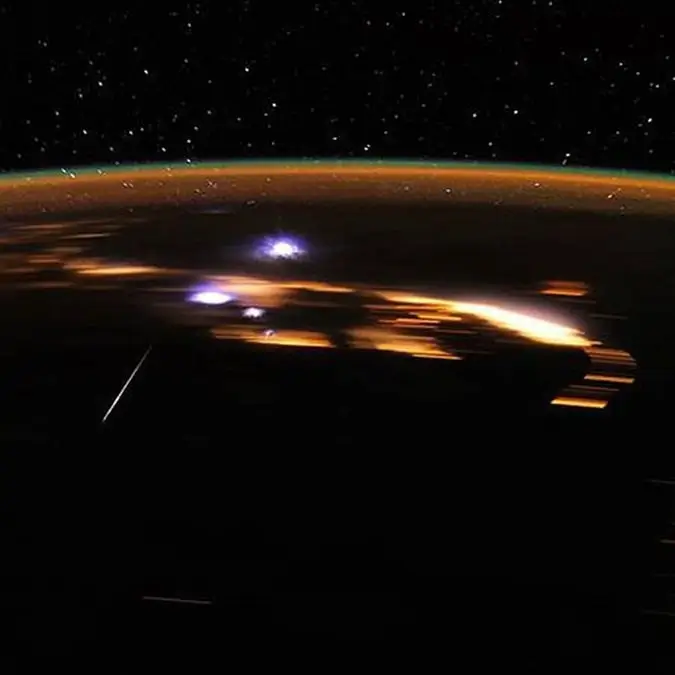
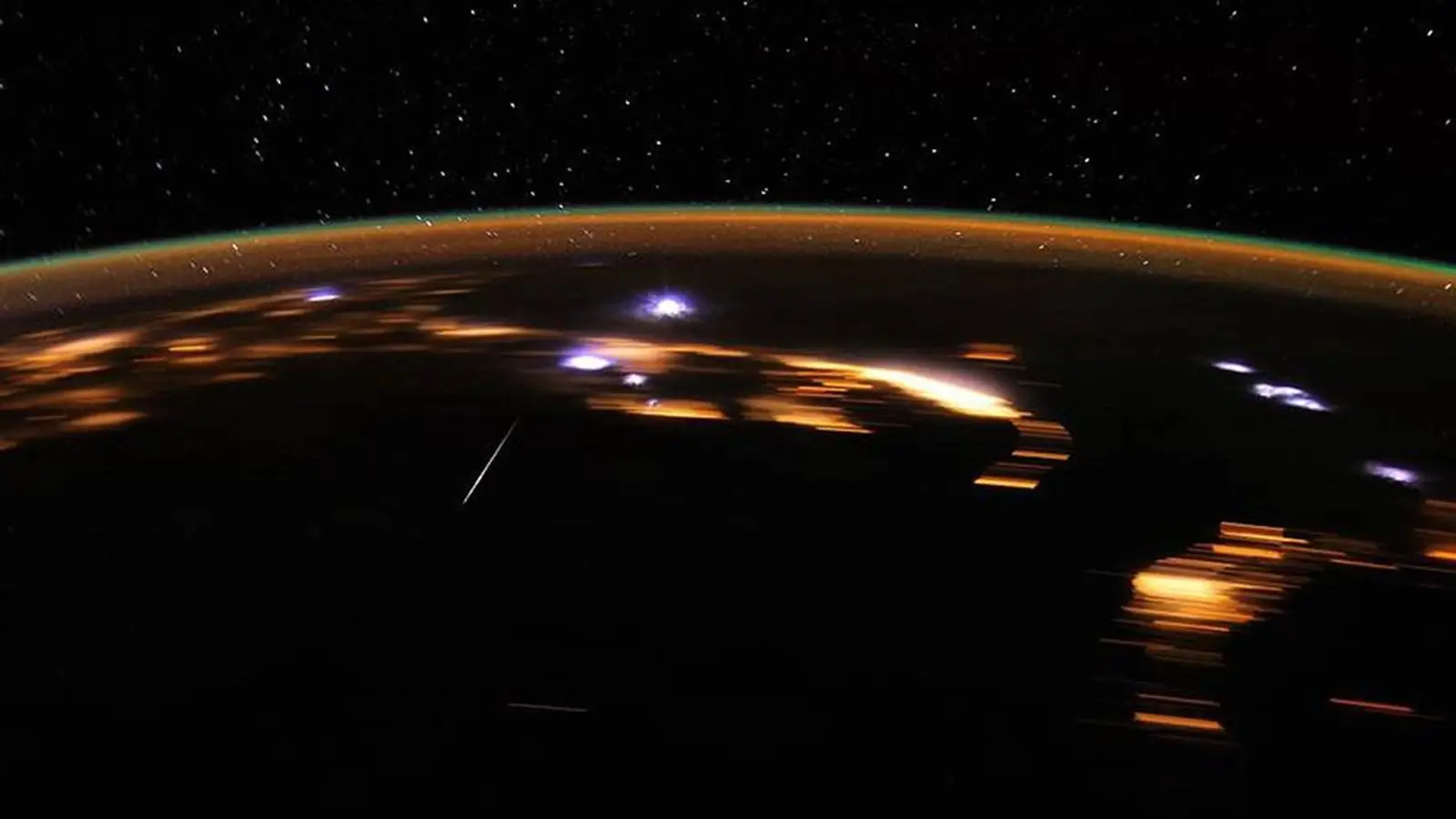
Featured Image Credit: NASA/JSC/D. Pettit
A spectacular meteor shower is set to light up the sky with it bringing a whopping 20 shooting stars per hour this week.
The Lyrid meteor shower occurs every year in April, lasting from around April 15 to 29.
The radiant of the meteor shower is located close to constellations Lyra and Hercules, and is near the bright star Vega.
The event, which is one of the oldest known meteor showers, is expected to peak in activity on Wednesday (April 22).
Advert
This particular meteor shower has been observed by humans for the last 2,700 years, with the first ever recorded sighting of a Lyrid meteor shower dating as far back as 687 BCE in China.
The show is made up of debris left behind by a comet called Comet C/1861 G1 (Thatcher).
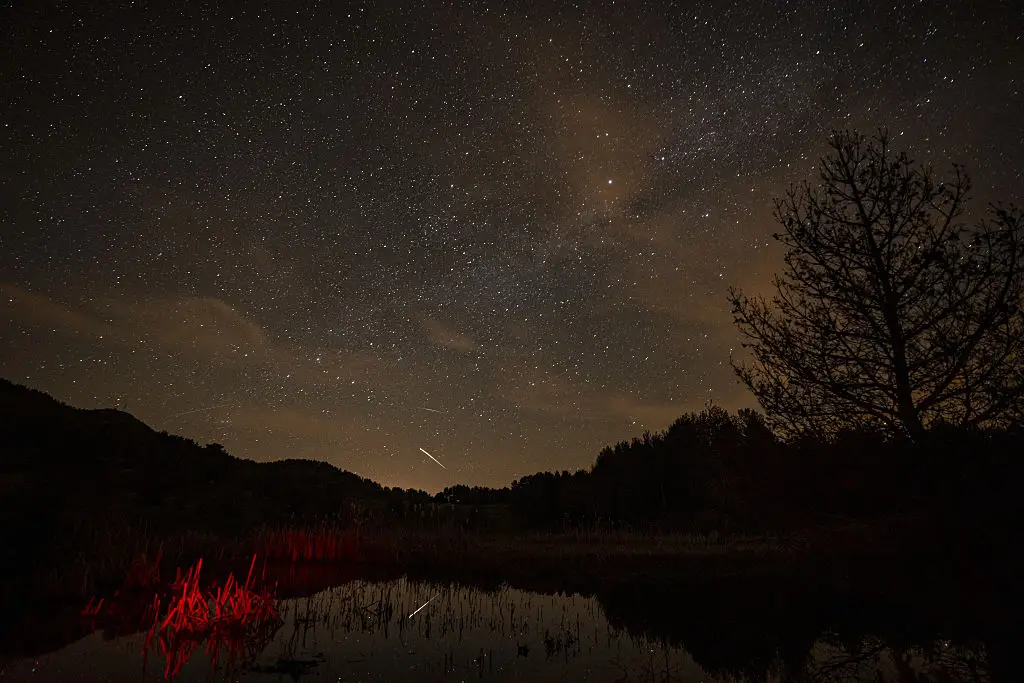
NASA explained: “The Lyrids are known for their fast and bright meteors. Though not as fast or as plentiful as the famous Perseids in August, Lyrids can surprise watchers with as many as 100 meteors seen per hour. Sightings of these heavier showers occurred in 1803 (Virginia), 1922 (Greece), 1945 (Japan), and 1982 (U.S.). In general, 10-20 Lyrid meteors can be seen per hour during their peak.
“Lyrids don’t tend to leave long, glowing dust trains behind them as they streak through the Earth's atmosphere, but they can produce the occasional bright flash called a fireball.”
According to NASA, the Lyrid meteor showers are best viewed in the Northern Hemisphere during the dark hours, which means after the moon has set and before dawn.
The space agency advises the public to locate an area that isn’t subject to light pollution from city lights or street lights.
The organization continued: “Come prepared with a sleeping bag, blanket, or lawn chair. Lie flat on your back with your feet facing east and look up, taking in as much of the sky as possible.
“After about 30 minutes in the dark, your eyes will adapt and you will begin to see meteors. Be patient - the show will last until dawn, so you have plenty of time to catch a glimpse.”
Once your eyes have adjusted to the darkness, be sure to protect it by using night mode on your phone.
It is also not advised to use binoculars as this will only limit your field of vision so instead, it’s best to lie on your back, staring up at the open sky.