Space agency boss explains why new mission could unlock 70-year-old secrets and protect Earth from disaster


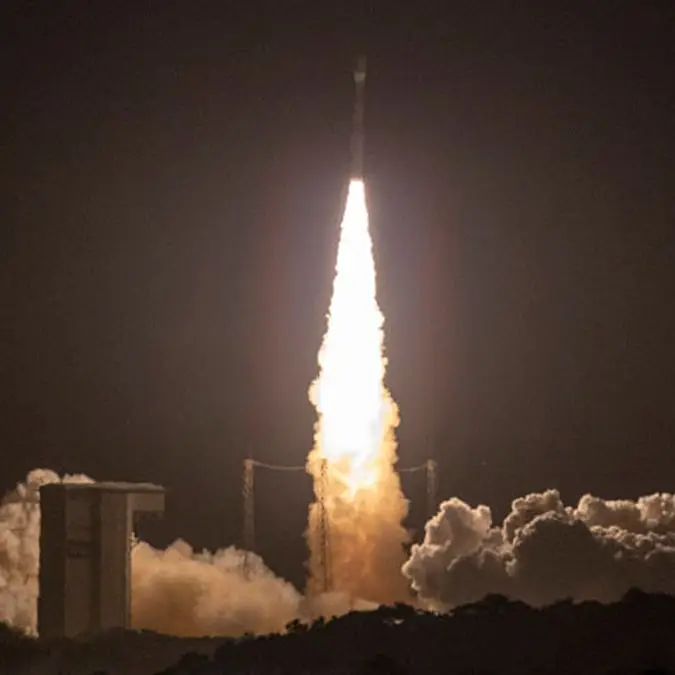
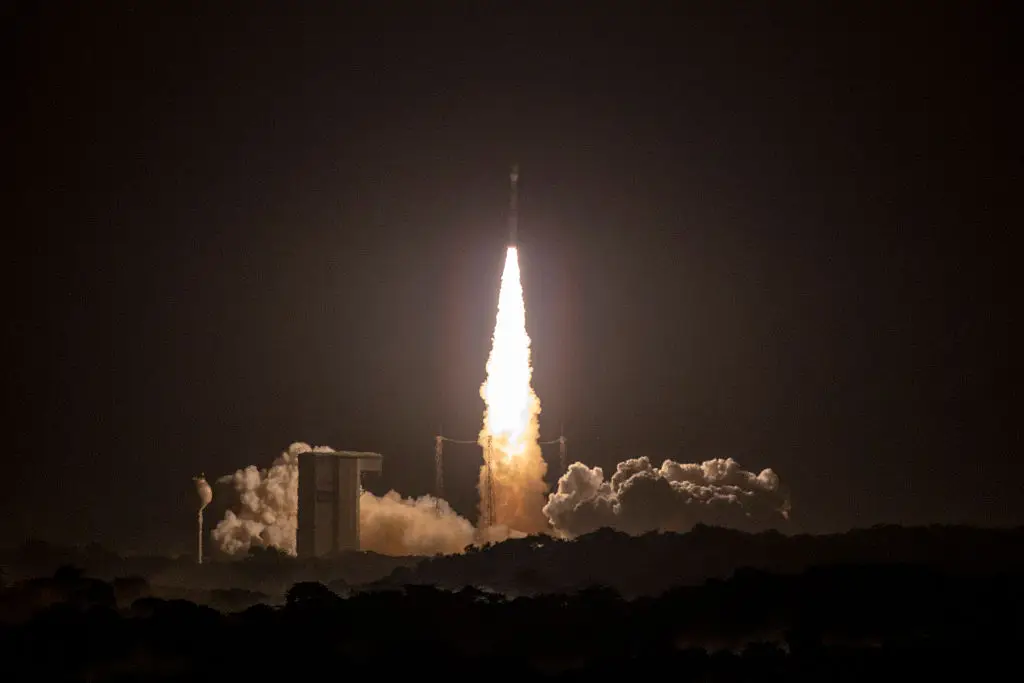
The new Smile mission was successfully launched aboard a Vega-C rocket from French Guiana on Tuesday (May 19), and it has already been described as one of the most ambitious space weather projects in history.
In fact, it also has the potential to protect the Earth from dangerous solar storms that threaten satellites, astronauts and modern technology.
Scientists have known for decades that our planet sits inside a gigantic magnetic bubble known as the magnetosphere, which acts like a protective shield against the solar wind.
Without this layer of protection, experts believe that the Earth would become a lifeless wasteland after being beaten with charged particles entering from outer space.
Advert
However, even though the phenomenon was discovered over 70 years ago, experts still do not fully understand exactly how the shield reacts to solar storms.
Enter the Smile space mission, which is a collaboration between the European Space Agency (ESA) and the Chinese Academy of Sciences (CAS).
The mission will reveal how our planet responds to the streams of particles and bursts of radiation from the Sun, using an X-ray camera to make the world’s first X-ray observations of Earth’s magnetic shield.
And it can now collect sunlight to power its systems and science instruments.
Josef Aschbacher, who is the director of ESA, stated: “We are about to witness something we’ve never seen before - Earth’s invisible armour in action. With Smile, we are pushing the boundaries of science in an effort to answer big questions that have remained a mystery since we discovered, over 70 years ago, that Earth sits safely within a giant magnetic bubble.
“ESA and China have a long-standing record of cooperation spanning 25 years, from early data-sharing arrangements in the 1990s to the co-developed Smile mission. This mission stands as a testament to ESA’s commitment to international collaboration, advancing scientific knowledge and promoting the peaceful use of space.”
ESA Smile Project Scientist Philippe Escoubet said: “The evidence that Smile collects will help us better understand planet Earth and our Solar System as a whole, and the science it uncovers will improve our models of Earth’s magnetic environment, which could ultimately help keep our astronauts and space technologies safe for decades to come.”
The mission, which is expected to go on for around three years, will help scientists to better understand the Earth’s magnetic shield, meaning weather forecasting systems could be improved to better protect modern infrastructure.
Professor Carole Mundell, who is ESA’s director of science added: “Smile is the newest member of ESA’s space science mission fleet. It builds on ground-breaking scientific and technological heritage from previous missions, including Cluster and XMM-Newton, taking tried-and-tested technologies and applying them in a new way to reveal Earth’s magnetic environment like never before.
“The trusted collaboration between our engineering and science teams in Europe and China has endured through global challenges such as pandemic travel restrictions and geographically distributed teams. It’s exciting to see this all come together today and I’m looking forward to the new scientific discoveries Smile will deliver.”