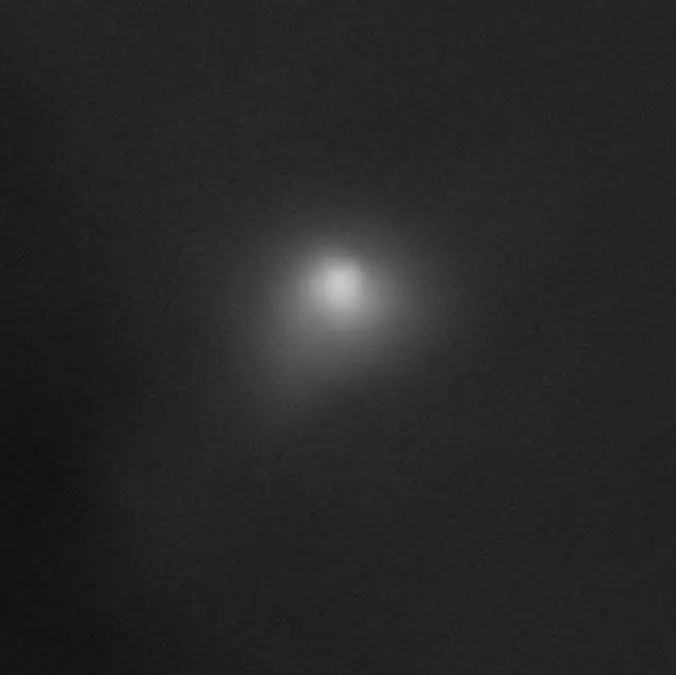
NASA speaks out with new images of bizarre comet 3I/ATLAS heading towards Earth at 250,000 kmp/h


New images have finally been revealed of the mysterious comet currently soaring through our solar system, as NASA has spoken out with a fresh update on the progress of 3I/ATLAS following its reemergence from behind the Sun.
Much of the space world has had its attention tuned to a mysterious object known as 3I/ATLAS for the past few months, as there remains plenty of speculation and debate regarding its form and origin.
While many scientists, including those from NASA, believe that it's merely a comet that's came into our solar system from elsewhere, a select few believe that it could have a link to aliens, and might even pose the threat of an invasion.
There's little we can do at the moment though unfortunately as its current position relative to Earth makes close analysis incredibly difficult, but certain telescopes have managed to capture stunning new images of the comet after it has now passed behind the Sun.
Advert
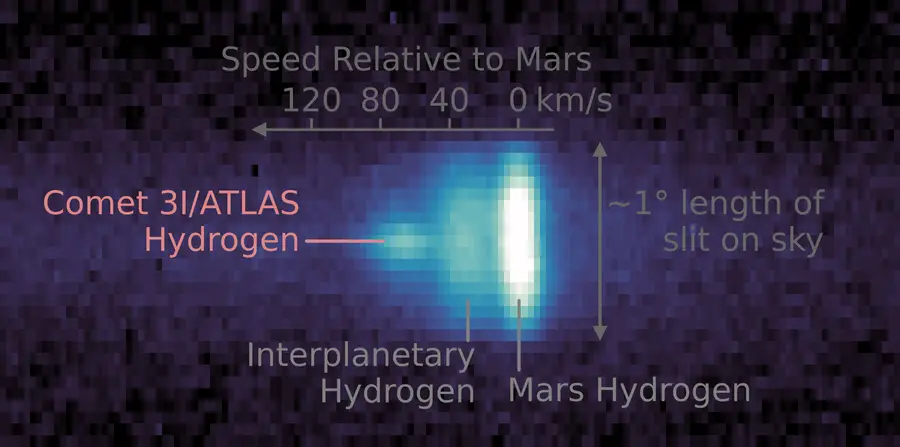
As reported by the Independent, NASA has now released new images of the comet, captured both by its Mars Reconnaissance Mission spacecraft and the MAVEN (Mars Atmosphere and Volatile EvolutioN) orbiter.
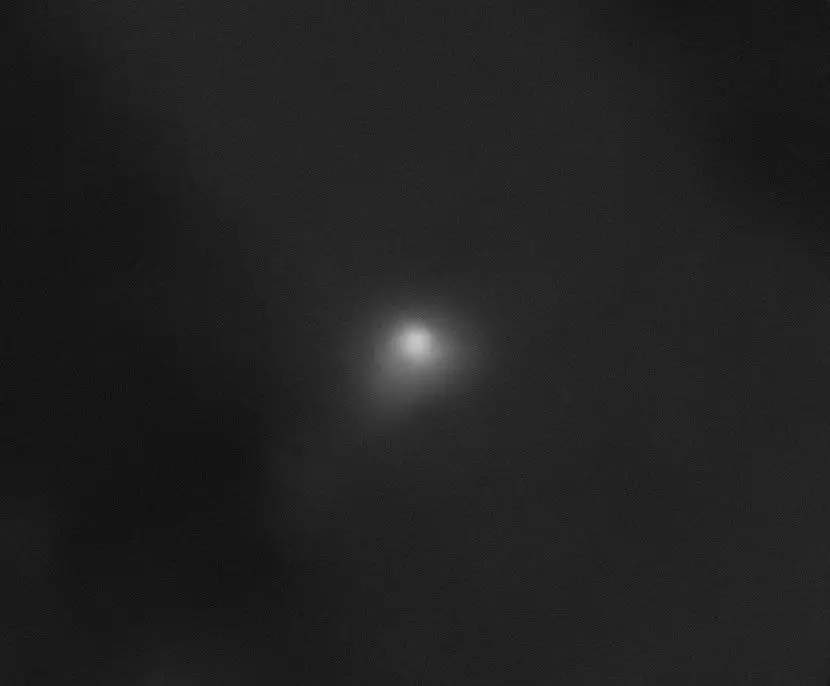
"NASA is in the midst of an unprecedented solar system-wide observation campaign, turning its spacecraft and space telescopes to follow comet 3I/ATLAS, the third known interstellar object to pass through our solar system," the space agency illustrated in a new statement.
"Twelve NASA assets have captured and processed imagery of the comet since it was first discovered on July 1, and several others will have opportunities to capture more images as the comet continues to pass through our solar system."
One of the main challenges right now is that the object's close proximity to the Sun makes it extremely difficult for any telescopes or orbiters to capture detailed imagery or analysis of the mysterious object.
The European Space Agency's (ESA) 'Juice' spacecraft is one of the best placed to do this, but it's currently having to use its main primary antenna as a heat shield from the Sun, severely limiting the flow of data to scientists back on Earth. It's estimated that it won't be until February that a full capture will be received.
3I/ATLAS is currently set to fly closest to Earth at around the middle of next month, with NASA predicting December 19 to be the day that it comes within 170 million miles (274 million kilometers) from our planet, and it will pass by Jupiter during the spring of next year.
Those skeptical of its status and purpose have warned astronomers to practice caution ahead of its close proximity with our planet though, urging people that it's better to stay safe and be wrong than remain 'naive' and leave Earth exposed to an attack or invasion.