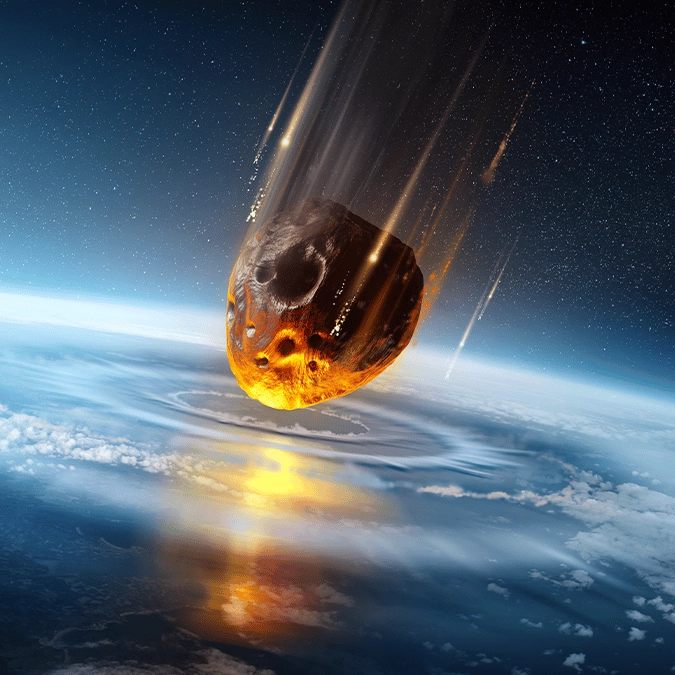
NASA reveals 100,000,000 people are living in a risk zone for asteroid with 500 times the power of an atomic bomb


The end days could be upon us.
When we're not worrying about an artificial intelligence uprising that will wipe out the human race, it's whoever has their finger on the nuclear button or whether climate change will even leave us with a planet to live on.
None of that really matters, as an unexpected threat from outer space is also one to add to the list of potential reasons we won’t be sleeping tonight.
NASA recently warned us about the supposed city-killer asteroid known as 2024 YR 4, and despite it currently being 27 million miles away, the 300-foot Goliath could be on a collision course with Earth in less than a decade.
Advert
Odds have recently risen from just a 1% chance of hitting Earth to 2.3%, and while that not might seem like much, double the chances don't sound too good to us.
According to NASA, there are currently no other asteroids that have an impact probability over 1%.
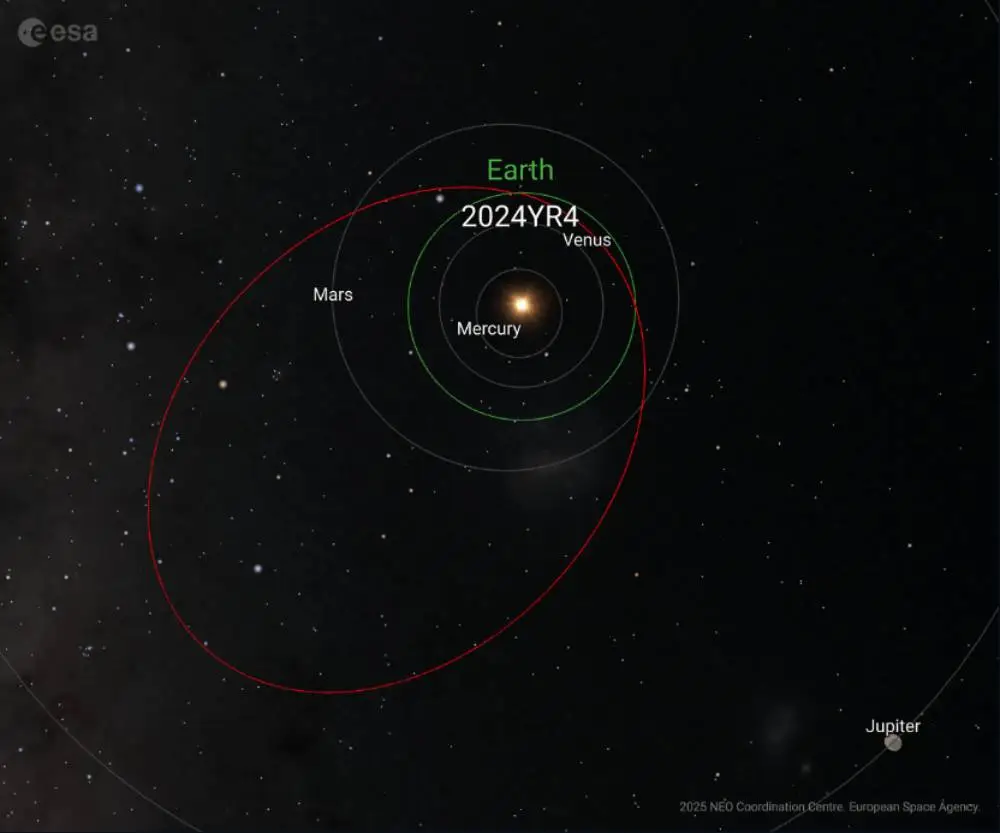
As for the impact risk corridor of 2024 YR4, the Independent shows off a projected path that sees the asteroid head eastwards from the Pacific Ocean, roaring over South America, the Atlantic Ocean, Africa, and the Middle East before potentially putting Asia in its sights.
2024 YR4 could actually strike at any of these points, and with its mapped trajectory taking it over eight of the top 100 most populated cities in the world, the urban areas of these cities have a combined population of over 110 million.
Bogotá, Abidjan, Lagos, Khartoum, Mumbai, Kolkata, and Dhaka are all in the firing line.
With 2024 YR4 having a destructive power that's said to be 500 times more powerful than the atomic bomb dropped on Hiroshima, we're right to be concerned.
After all, the Tunguska asteroid was a similar size to 2024 YR4 and destroyed 830 square miles of forest when it struck Siberia in 1908.
Even though there are hopes that we can intercept the asteroid if it's actually on course to collide with Earth, NASA has also been warned of the devastating consequences of doing so.
The good news is that while NASA and other space agencies suggest it would have an impact radius of 50 kilometers, they don't think it poses a serious threat to our planet.
2024 YR 4 was first discovered by Chile's Asteroid Terrestial-impact Last Alert System station in December 2024. NASA and other organizations have been keeping a close eye on it and will continue to monitor its movements as they try to work out exactly how big this flying time bomb actually is.
A European Space Agency spokesperson told the Daily Mail: "Astronomers around the world are using powerful telescopes to measure the asteroid’s orbit as accurately as possible.
“But knowing its orbit will only tell us the asteroid could impact Earth, not how significant an impact could be.
"It is very important that we improve our size estimate for 2024 YR4: the hazard represented by a 40 m asteroid is very different from that of a 90 m asteroid."