NASA delivers 11,000,000lbs rocket ready for history-making Moon mission


A mammoth 11,000,000lbs rocket has been delivered by NASA ready for a history-making Moon mission.
NASA is gearing up for a 10-day manned mission to orbit the moon for the first time in decades. The countdown officially began on Saturday (17 January) and is set to launch as early as 6 February, marking the first manned mission to leave low Earth orbit since Apollo 17 in 1972.
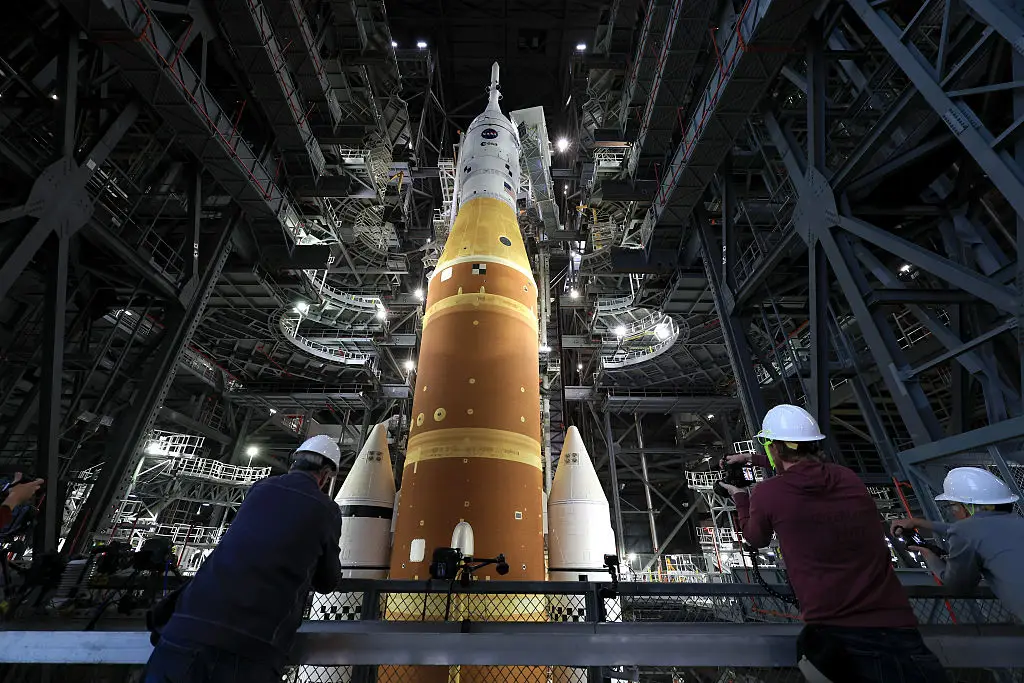
Weighing 11 million pounds, the Artemis II rocket arrived at Kennedy Space Center's launch pad in Cape Canaveral, Florida. The journey took nearly 12 hours from NASA's Vehicle Assembly Building.
According to the US space agency, Artemis II will not land on the moon and the subsequent Artemis III mission in 2027 will return humans to the lunar surface.
Advert
During the mission, NASA said Artemis will 'send astronauts to explore the Moon for scientific discovery, economic benefits, and to build the foundation for the first crewed missions to Mars.'
On their return, the moon's gravity will help propel the spacecraft back to Earth, which is expected to take an additional 3 to 4 days.
At the launch pad, engineers will dedicate the next few days to readying SLS and Orion for a 'wet rehearsal' test that loads all the propellants needed to blast the rocket into space.
It's hoped that the mission will fulfil 'a promise to the American people that we will return to the moon,' NASA Administrator Jared Isaacman said.
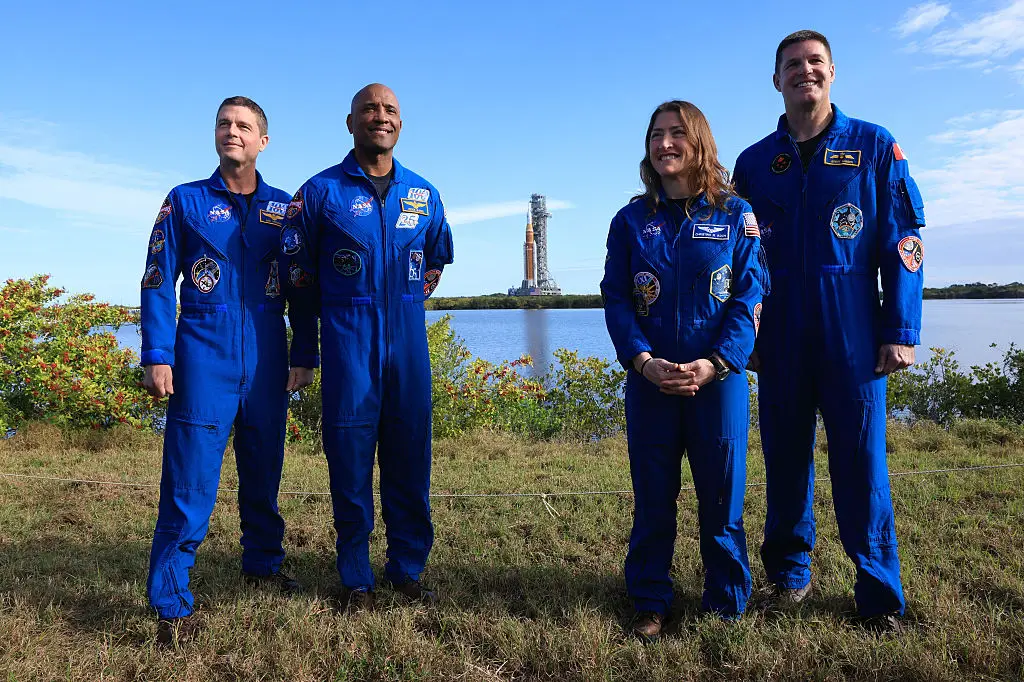
NASA astronauts Reid Wiseman, Victor Glover, and Christina Koch, and Canadian Space Agency astronaut Jeremy Hansen will complete a brief orbit of Earth after detaching the Orion spacecraft from its rockets and then heading towards their lunar mission.
Now that Artemis II is at the launch site, NASA will soon fill the SLS rocket with over 700,000 gallons of super-cold liquid hydrogen and oxygen, ready for the vehicle to launch into space.
The team will also run through a practice launch countdown, rehearse holds and restart protocols and safely drain all fuel from the tanks ahead of the real launch.
7, 8, 10 and 11 February have been scheduled as alternative launch dates if problems or weather issues delay the original launch. Should February launches become impossible altogether, NASA has identified other potential dates in early March and April.
Last September, former NASA Administrator Sean Duffy revealed that 'about a year and a half' following Artemis II, the Artemis III astronaut mission would 'land and establish a long-term presence of life on the moon led by America'.
He added that the knowledge gained from the renewed lunar missions will help in future efforts to 'put American boots on Mars'.
In the first 24 to 48 hours after lift-off while circling Earth, the team will perform evaluations of the Orion spacecraft's life support infrastructure, guidance and navigation systems and communications before attempting the moon mission.