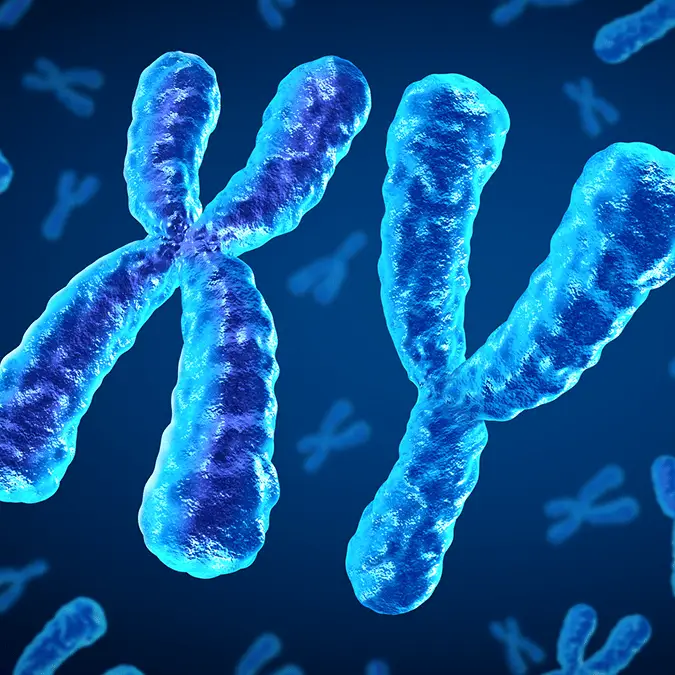
Scientists warn men are losing their Y chromosomes and it could turn deadly


Evolution remains one of science's most fascinating puzzles, with researchers constantly uncovering new insights about how our bodies change over time.
A few years ago, we covered that the human Y chromosome is evolving much faster than the X chromosome, with some experts fearing it could be heading towards extinction in mammals.
With environmental factors like microplastics and pollution taking a toll on our health, it's perhaps unsurprising that these impacts are now affecting our genetic makeup.
Are men losing their Y chromosome?
According to a report by The Conversation, the loss of Y chromosomes in ageing men is becoming increasingly common and is being linked to serious health problems.
Advert
The Y chromosome is the smallest human chromosome and reportedly contains only 51 protein-coding genes, compared with the thousands found on others. Its role is primarily determining male biological sex and sperm production.
But as men get older, some of their cells gradually lose the Y chromosome entirely. Over recent years, multiple studies have connected this chromosomal loss to various severe diseases and an increased risk of early death.
How common is Y chromosome loss?
Using advanced genetic tools, researchers discovered that about 40% of men at age 60 show signs of Y-loss, jumping to 57% by age 90. The report showed that environmental factors also increase the chances of this loss, such as smoking and exposure to carcinogens.

Why some cells are affected and others aren't
Only certain cells lose their Y chromosome, which means it doesn't happen uniformly across the body. Once the cells lose it, all the new cells that develop from it will also lack the chromosome. Over time, this creates a 'mosaic' pattern in which some cells retain their Y chromosome and others don't.
The Y chromosome can sometimes get lost in a membrane pocket during cell division, which means tissues with rapidly dividing cells are more likely to suffer Y chromosome loss.
The health consequences of Y chromosome loss
Mounting evidence reveals that loss of Y is associated with severe health conditions, including cardiovascular and neurodegenerative diseases, cancer and kidney disease, as per The Conversation.
Some studies discovered that men over 60 with high rates of Y chromosome loss had an increased risk of heart attacks. Similarly, Alzheimer's disease patients show ten times higher rates of Y chromosome loss than healthy individuals, while the loss has also been linked to a higher mortality rate from COVID in men.
Other research identified connections between Y chromosome loss and various cancers in men, with worse outcomes for those who develop cancer.
That said, it's important to note that these are associations, not direct causes. The connection with kidney or heart disease might result from rapid cell division during organ repair processes, while cancer associations might reflect underlying genetic vulnerabilities.
Further research could help scientists identify common risk factors that accelerate this chromosomal loss and potentially discover lifestyle changes that could slow its progression.