uniladtech homepage
  • News
    • Tech News
    • AI
  • Gadgets
    • Apple
    • iPhone
  • Gaming
    • Playstation
    • Xbox
  • Science
    • News
    • Space
  • Streaming
    • Netflix
  • Vehicles
    • Car News
  • Social Media
    • WhatsApp
    • YouTube
  • Advertise
  • Terms
  • Privacy & Cookies
  • LADbible Group
  • LADbible
  • UNILAD
  • SPORTbible
  • GAMINGbible
  • Tyla
  • FOODbible
  • License Our Content
  • About Us & Contact
  • Jobs
  • Latest
  • Archive
  • Topics A-Z
  • Authors
Facebook
Instagram
X
TikTok
Snapchat
WhatsApp
Submit Your Content
Scientists cannot explain why the universe is expanding too fast and it could change how we understand reality

Home> Science> News

Published 09:45 16 Apr 2026 GMT+1

Scientists cannot explain why the universe is expanding too fast and it could change how we understand reality

The experts say it could point to 'new physics'

Rebekah Jordan

Rebekah Jordan

google discoverFollow us on Google Discover
Featured Image Credit: bymuratdeniz / Getty
Space
Science

Advert

Advert

Advert

We know the universe is expanding. What we do not know is why it appears to be doing so considerably faster than our best models predict. And it seems one study suggests the gap in our understanding could be more dramatic than we thought.

An international team of 40 astronomers, including researchers from NSF NOIRLab and the Space Telescope Science Institute, combined different methods of measuring the universe's expansion rate for an accurate reading.

Known as the Local Distance Network, the team studied red giant stars of known brightness, analysing exploding stars and examining different galaxies.
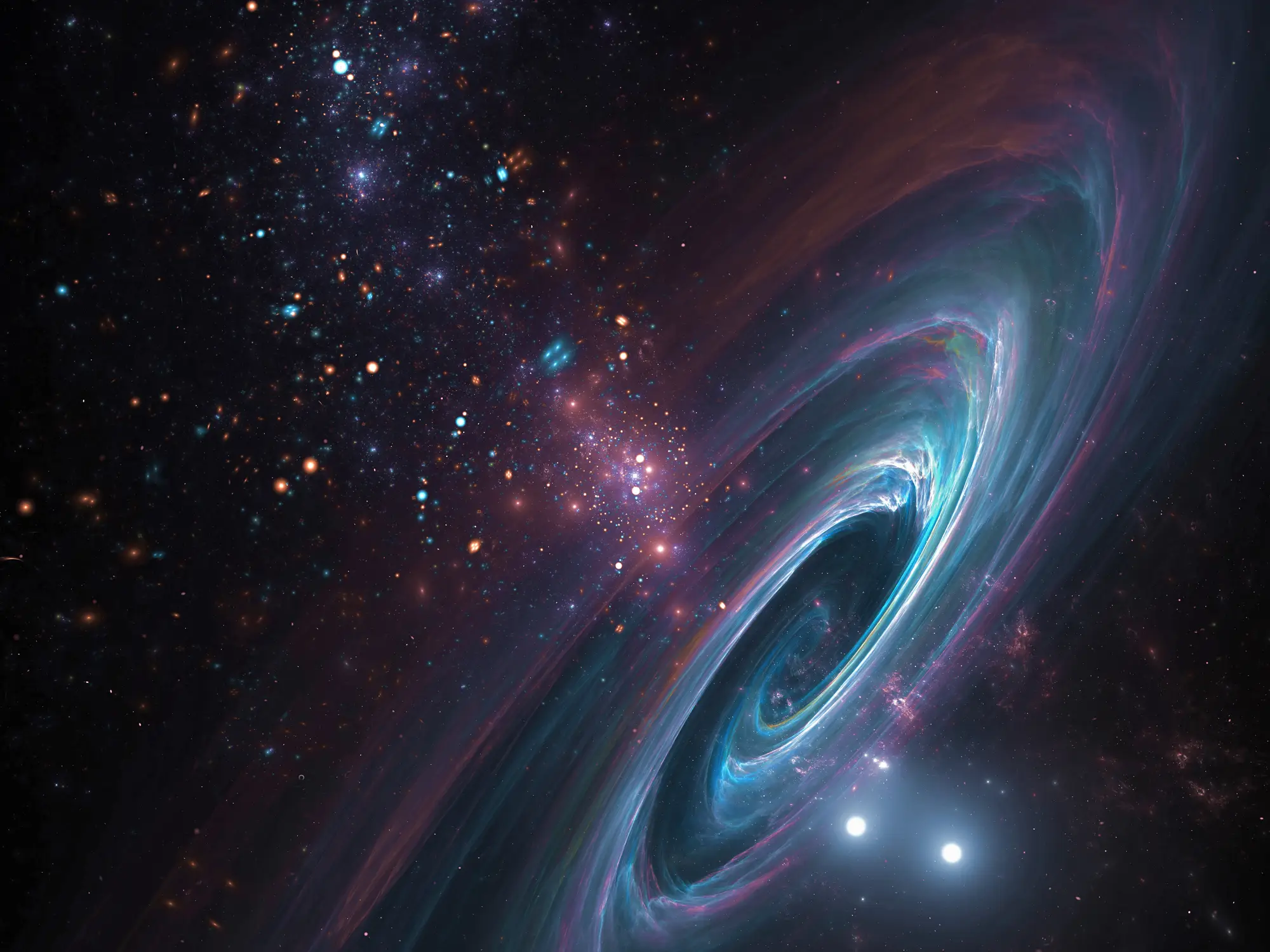
Scientists found a consistent universe expansion rate of 73.5 kilometres per second per megaparsec (Lothar Knopp/Getty)

Advert

Across all these methods, they found a consistent universe expansion rate of 73.5 kilometres per second per megaparsec (roughly 3.26 million light-years).

However, this is much faster than early universe predictions, which say the universe is expanding at about 67 or 68 kilometres per second per megaparsec. The team say this marks a 'significant shift in perspective' and claims there is a need for a 'deeper reassessment' of the early universe.

The findings were published in the journal Astronomy & Astrophysics.

Although the difference between the values appears small, it exceeds statistical uncertainty and is known as the 'Hubble tension.'

"This work effectively rules out explanations of the Hubble tension that rely on a single overlooked error in local distance measurements," the authors wrote in the paper. "If the tension is real, as the growing body of evidence suggests, it may point to new physics beyond the standard cosmological model."

According to the researchers, the current models might fail to account for the influence of dark energy, new particles, or changes in gravity.
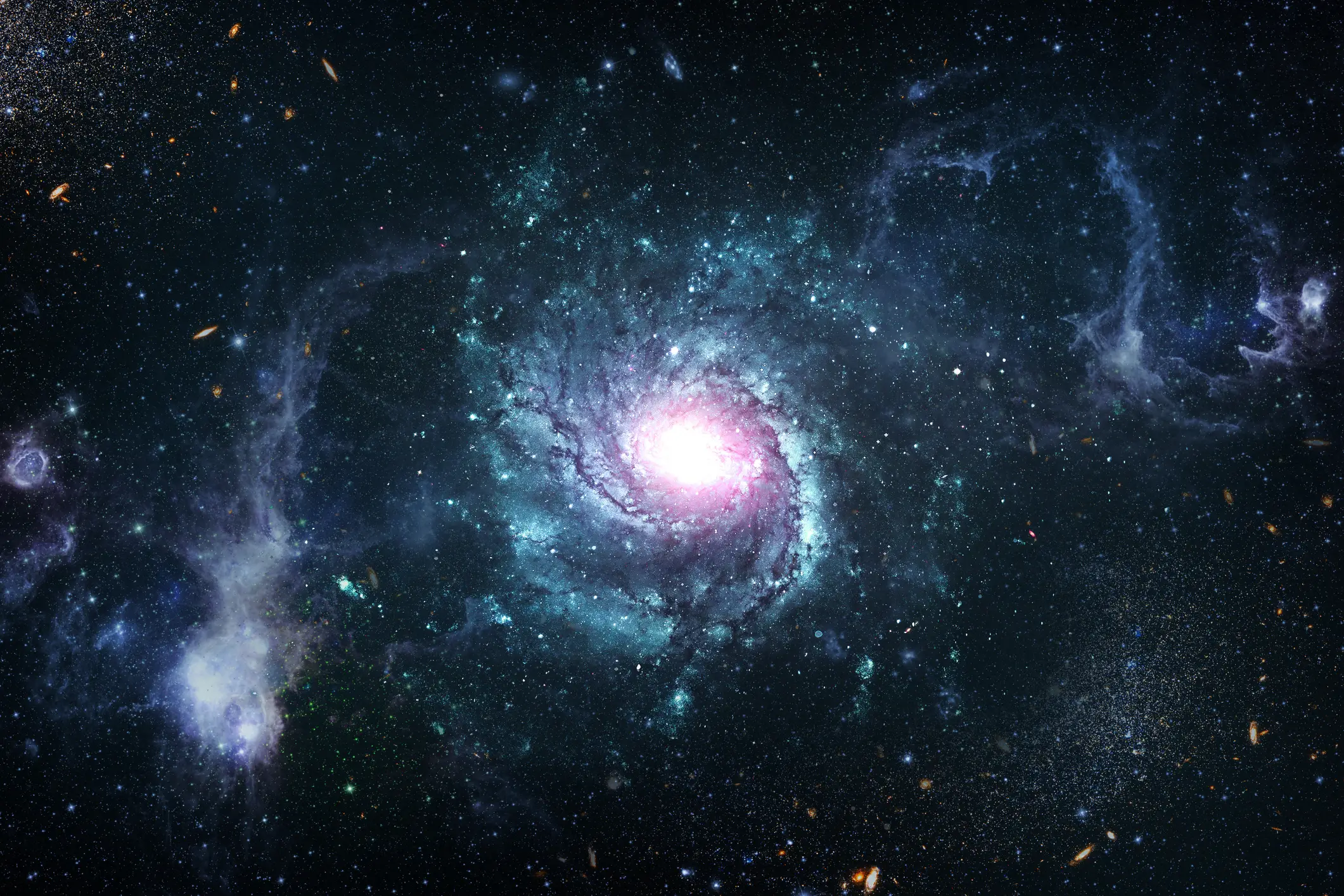
'Dark energy' could cause the universe to collapse in on itself (bymuratdeniz/Getty)

"The Hubble tension may not be the result of measurement error, but rather evidence that the current model of the universe is missing a key component," the researchers added. "With next-generation observatories expected to provide even more precise measurements, astronomers aim to determine whether this discrepancy will ultimately be resolved or continue to point toward new physics."

If accurate, this increasing 'dark energy' could cause the universe to expand so far that the overwhelming gravity causes it to collapse in on itself.

Scientists refer to it as the 'Big Crunch' theory and it means the collision of stars and galaxies would compress into a scorching, dense core, and ultimately all of space, time, and existence would be consumed in a single catastrophic implosion.

Choose your content:

2 hours ago
a day ago
  • Catherine Falls Commercial / Getty
    2 hours ago

    Woman who grew and injected cancer-killing viruses into her tumour saw life-changing results

    She decided to pursue an 'unconventional' treatment

    Science
  • Narumon Bowonkitwanchai / Getty
    2 hours ago

    Researchers warn of severe long-term damage to the brain after Covid following new study

    Scientists say the effects could show up years later

    Science
  • Anton Petrus / Getty
    a day ago

    Fresh 'evidence' could finally solve mystery of how The Great Pyramid was built

    Ancient Egyptians used complex architectural methods hidden by time until now

    Science
  • SCIEPRO/SCIENCE PHOTO LIBRARY/Getty Images
    a day ago

    NASA officially kills Mars mission leaving goal wide open for China

    The mission would be the first time ever Martian samples are brought back to Earth

    Science
  • Scientists reveal when terrifying 'Big Crunch' could bring entire universe to the end
  • Worrying study suggests 'the end of the universe' could be approaching 'much sooner' than scientists thought
  • Scientists building ground-breaking nuclear device that could finally expose invisible universe
  • Scientists explain shocking reality of what your brain sees right before you die