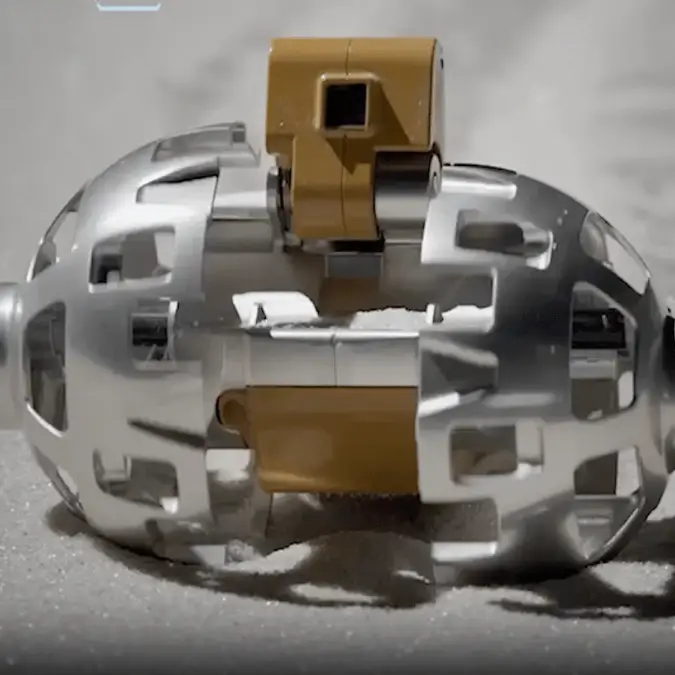
Japanese scientists actually sent real-life 'transformers' to the Moon - here's how


Robots have long held a presence in space, bridging the gaps where humans can't yet reach, yet Japanese scientists have taken things to a whole new level by sending a real-life 'transformer' to the Moon.
Named SORA-Q after the Japanese words for space and sphere, this autonomous robot made its historic journey to the Moon back in December 2023, and was able to communicate with nearby landers and carry out its mission autonomously.
Taking part in the Japanese Aerospace Exploration Agency's (JAXA) Smart Lander for Investigation Moon (SLIM) mission, as per Space, the robot is little more than the size of a tennis ball yet is capable of transforming into something far more impressive.
This allows it to carry a far greater number of tools than its size appears to permit while also acting autonomously on Earth's nearest satellite, and it could pave the way for advancements and evolution in the near future.
How does SORA-Q transform?
Despite starting out as a small sphere, SORA-Q can deploy a camera by flipping a module from between its wheels, joining that with a tail that's key to stabilizing the robot as it carries out its vital work.
Advert
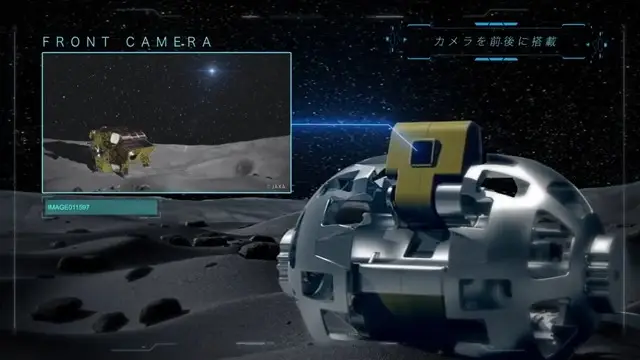
The importance of this transformable small package is the money and space saving affordances that emerge, as a larger rover – while perhaps offering more to JAXA's overall mission – would have been more prohibitive to execute.
Additionally, SORA-Q's small size also allows it to reach areas that a traditional rover's shape would not allow, providing a greater potential for exploration within some of the Moon's more cramped spaces.
What did SORA-Q find during its mission?
The destination for the SLIM lander saw the SORA-Q rover move out onto a crater named Shioli, which stretches roughly 270 meters (885 feet) across, and that's within a larger crater spanning roughly 61 miles (98 kilometers) in total.
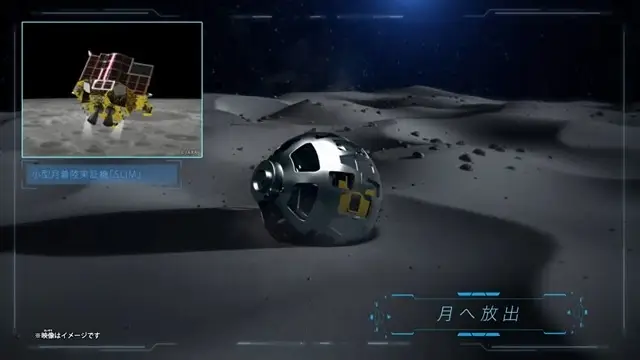
It was here that the transforming rover was able to deploy its camera, taking vital color images of the surrounding environment and helping scientists learn as much as possible about the Moon going forward.
While JAXA isn't the national space agency in the driving seat for human Moon exploration – as that's where NASA has currently invested around $20 billion alongside plans for a permanent base – the wider world is striving to understand everything they can about our nearby space neighbor as plans for travel to the planets beyond increasingly becomes a possibility.