NASA’s official safety guidance warns photographing the solar eclipse could break your iPhone


You might be tempted to point your iPhone towards the jaw-dropping total solar eclipse next week to snap a picture, yet official safety guidance from NASA advises otherwise, as it could end up frying the device.
Most people are aware that you shouldn't look directly at a solar eclipse, as doing so would burn the cells inside your retina, putting the health of your eyes at risk and potentially even leading to permanent sight damage.
What you might not be aware of, however, is the damage that can equally be caused to your 'digital eye', with cameras suffering from some of the same issues when pointed directly at the Sun.
With a total solar eclipse set to take place next week, many will have their phones or digital cameras at the read to take a picture — but NASA has revealed vital safety guidance to protect your gadgets when observing the event.
How to best take a photo of the solar eclipse
Detailed both on NASA's website and through a reply to popular tech YouTuber Marques Brownlee, NASA advises placing the same eclipse protective lenses in front of your camera that you would your eyes, as they will stop the sensor from being fried.
Advert
Experts at the space agency illustrated that the sensor would suffer a similar fate to your eyes if pointed directly at the eclipse without any protection, and "this is especially true if you're using any sort of magnifying lens attachment on the phone," which is certainly a tempting prospect to get the best shot possible.
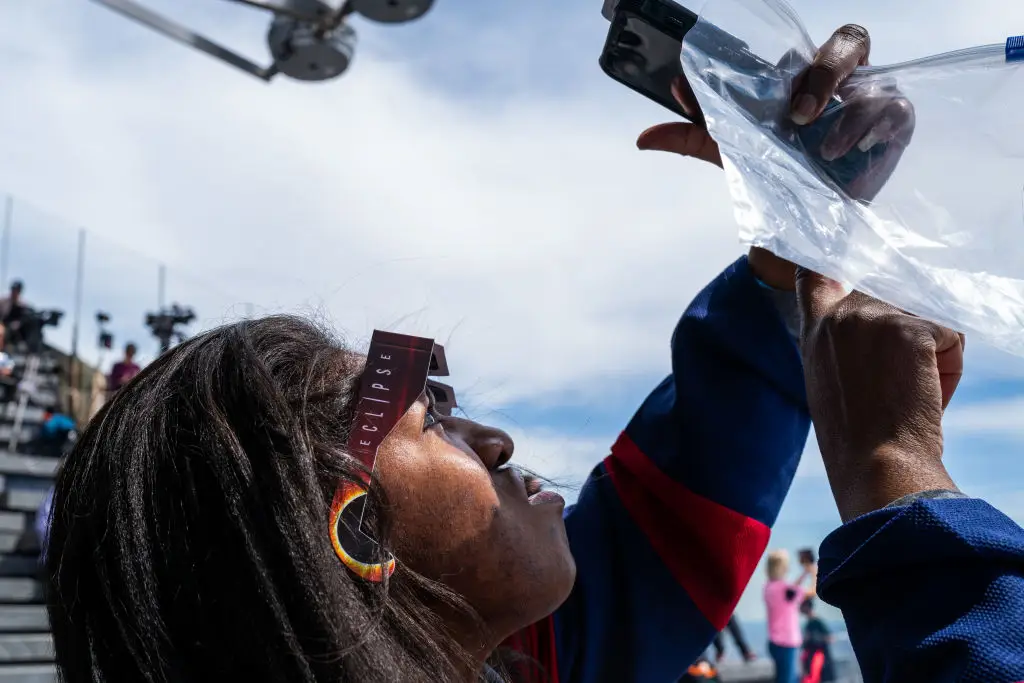
"The best practice would be to hold a pair of eclipse glasses in front of your phone's lenses when photographing the Sun at any point other than totality," NASA advises, although you'll want to also make sure that your eyes are equally protected at the same time. You can always buy a new phone after all, but getting your sight back is far more difficult.
As the advice mentions, you can remove the protection when viewing the solar eclipse's totality – the point at which the Moon completely blocks the Sun from view – as that allows you to see the outer atmosphere of our solar system's central star, otherwise referred to as the corona.
Beyond protecting the sensor, NASA also advises using tools like a sensor and a delayed shutter release to achieve a stable image, especially at larger zoom levels or when using a telephoto lens.
When will the solar eclipse happen?
The upcoming solar eclipse is scheduled to occur on August 12, giving you a week to prepare for the event and make sure you've got everything you need to take a great picture while remaining safe.
Finding the timing for the eclipse can very depending on where you are in the world, but for areas like Greenland, Iceland, Portugal, and Spain who are able to experience the totality, the start time will range from 16:19 to 19:39 in each country's respective local time.
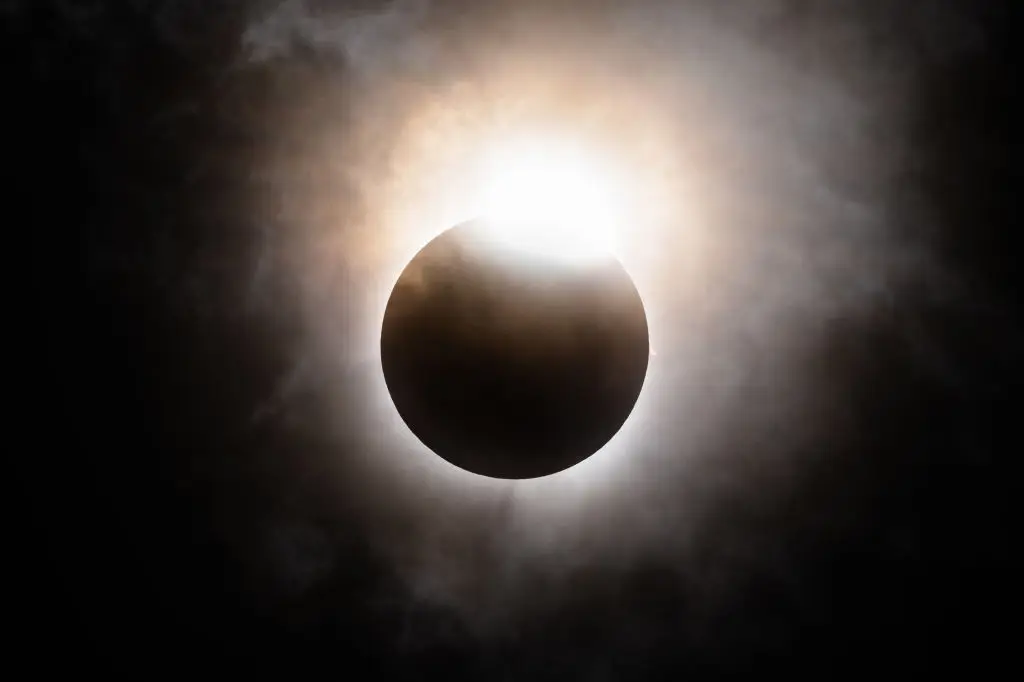
Most places will experience at least a partial eclipse for a period of around two hours, although the totality will last no longer than a couple of minutes, with Látrabjarg in Iceland being the place you'll want to head to see it for the longest period.
What you'll also be able to see too on that very same day is two other astronomical events, as this extremely rare alignment is definitely something you won't want to miss, even if some people think that it's the sign of an impending apocalypse.