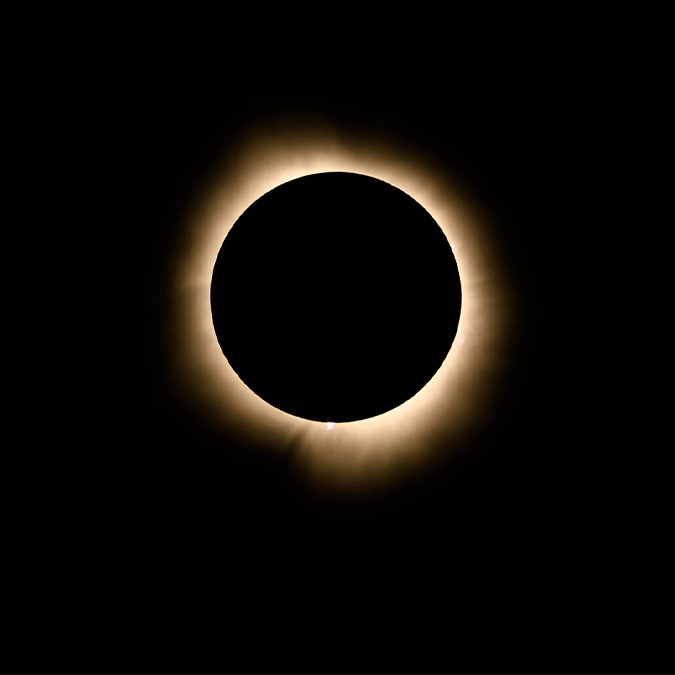
These countries will go completely dark during the next major solar eclipse


We're looking to the skies in anticipation of the next full solar eclipse, with the lights due to be turned out in countries around the world.
While the last full solar eclipse occurred in April 2024, Europe hasn't experienced one since way back in 1999.
That's all due to change on August 12, with July 14's new moon being the last ahead of the next solar eclipse. A summer of stargazing is ahead of us, and while the USA is only due for a partial solar eclipse, other countries are turning to space as they're ready to watch the skies go dark.
What causes a solar eclipse?
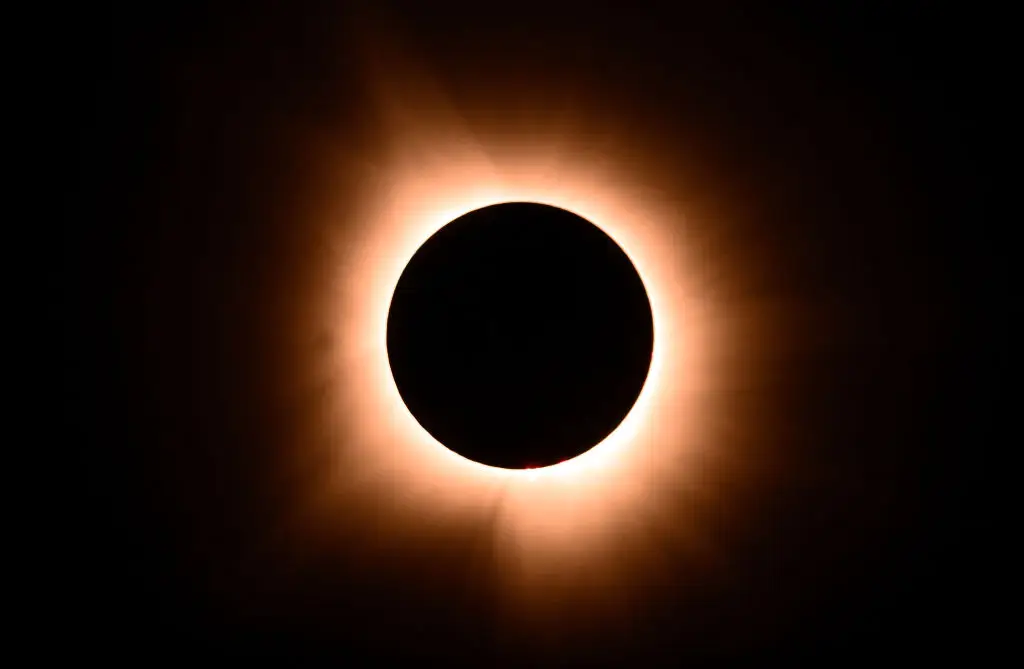
Solar eclipses occur when the Moon moves between the Earth and the Sun, blocking either some or all of its light. How much of the eclipse you witness depends on where in the world you are, with total eclipses being especially rare.
Advert
Most new moons don't cause solar eclipses because the Moon's orbit is typically tilted at around five degrees to Earth’s orbit around the Sun. New moons tend to pass just above or below the Sun, although an eclipse can happen during a specific eclipse season, which is a short window of 34 or 35 days of the year.
This is when the Sun appears close to one of the two lunar nodes, where the Moon's orbit crosses the Earth’s orbital plane.
August 12 is the perfect melting pot, with the Earth's alignment between the Moon and the Sun being just precise enough to cast a shadow on us and briefly reveal the Sun's corona.
The Sun's corona is the outermost part of its atmosphere, which is comprised of superheated, low-density plasma that's usually hidden by the star's glare. For the brief period of a total solar eclipse, the corona will become visible to the naked eye.
Still, we're reminded to take precautions when watching solar eclipses to ensure we don't cause temporary or permanent damage to our eyes.
What countries can experience a total solar eclipse?

People in the United Kingdom can expect up to 90% of the Sun to be blotted out, while the total eclipse's path will sweep across Greenland, Iceland, northern Russia, Spain, and a sliver of Portugal.
In terms of highlights, Greenland’s Scoresby Sund is said to give you the best vantage point. Still, with expedition cruise ships being chartered there, things could get pretty crowded. Elsewhere, the Icelandic capital of Reykjavik and northern Spain will experience a total eclipse in the low sky near sunset.
Partial eclipses will be visible across Europe, Canada, and north-western Africa. The UK's last total eclipse happened on August 11, 1999, although only those in Cornwall and Devon got to experience the full spectacle.
Solar eclipses are characterized by the 'first contact' event as the Moon starts to cross in front of the Sun – cue dramatic music.
This time, those in the UK will see what looks like a giant bite being taken out of the Sun, before the Moon continues to move away and the skies return to their normal (hopefully sunny) look.
In the United Kingdom, London is projected to get 90% coverage, Cornwall rises to 95%, and the south-western tip of Ireland might get up to 97.7%.
North America's best views come from Canada's St. John's, as well as the province of Newfoundland and Labrador. Even then, you might only get 53% coverage. Anyone looking up from Halifax will get 31% coverage, 28% in Saint John, and 24% in Québec City.
Bostonians will get 16%, while New Yorkers can expect a pretty bright 10% coverage.
More than this, the Perseid meteor shower is set to peak just after sunset in the Northern Hemisphere, meaning stargazers will get to view two amazing celestial events in a single day.