We’re one step closer to Mars after astronauts successfully perform historic medical first


We’re one step closer to putting humans on Mars after astronauts successfully perform a historic medical first in space.
Break a bone on the way to Mars and there is no ambulance and no nearby doctor to help. That has long been one of the quiet problems lurking behind the grand plans for deep space, from Elon Musk's vision of a self-sustaining human city on Mars to NASA's Artemis II crew, who looped the Moon and made it home on a mission widely seen as laying the groundwork for eventual Mars travel.
Getting humans that far is only half the battle. Keeping them healthy once they are out there is the other, and a medical first in orbit has just moved that problem forward.
For the first time, astronauts have taken diagnostic-quality X-rays of their own bodies in space, the result of years of work now published in the journal Radiology.
Advert
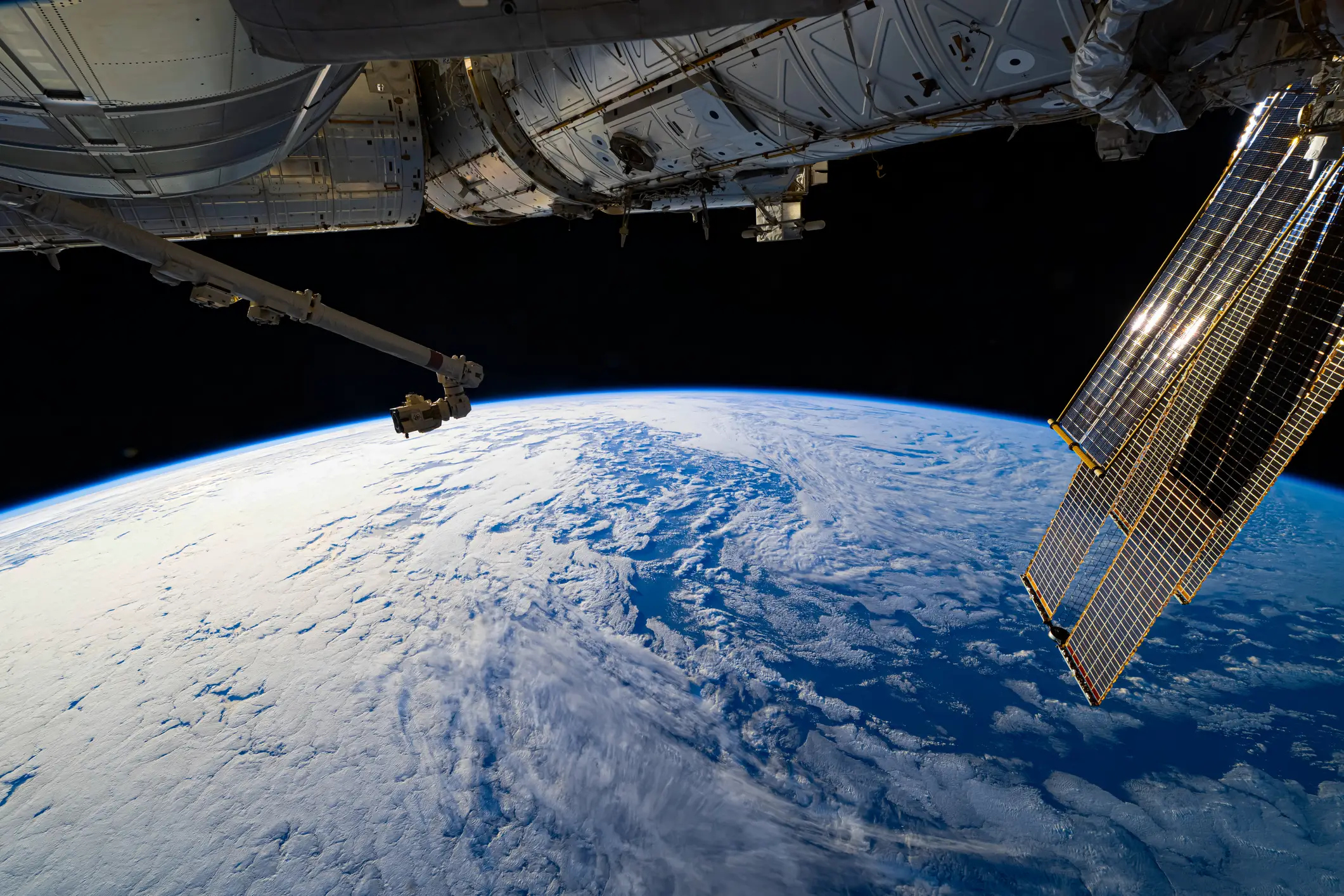
Speaking to Science Alert, aerospace medicine researcher Sheyna Gifford said: "It felt historic in a number of ways. The fact that it happened changed the future of space medicine and space missions. In an instant, what had previously been impossible was made possible."
For more than four decades, ultrasound was the only practical imaging tool available to astronauts. It is portable and safe, and its transducer presses straight against the body, which suits a microgravity cabin where loose equipment would float away. The catch is that an X-ray does a job ultrasound cannot.
"The change would be significant: A faster, more accurate, painless diagnosis. An X-ray is one of the most powerful diagnostic tools in modern medicine because of its speed, accuracy, and ability to be operated by a broad range of people," Gifford explained. "X-ray in space has the power to upgrade a suspected fracture to a confirmed fracture in a fraction of a minute."
As the technology shrank into small, battery-powered units, orbital imaging finally looked achievable.
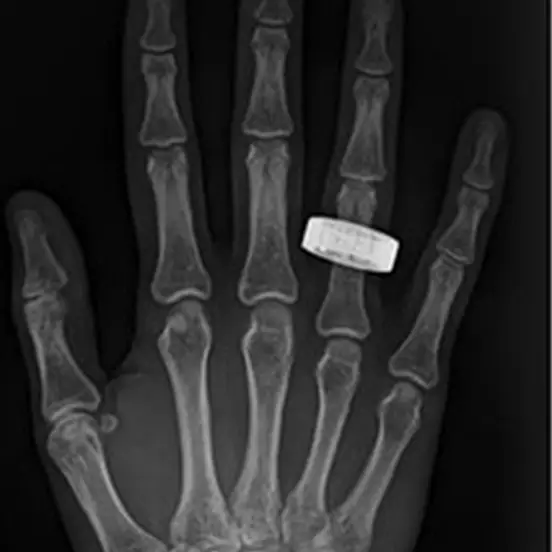
The test came aboard SpaceX's Fram2, an all-civilian mission that spent 3.5 days in polar orbit on the spacecraft Resilience. After just four hours of training, the crew used an ultraportable wireless X-ray generator to image themselves before and during the flight, capturing their hands, forearms, chests, abdomens, and pelvises, as well as a smartwatch and a phantom control object. Radiologists back on Earth judged every scan good enough for diagnosis.
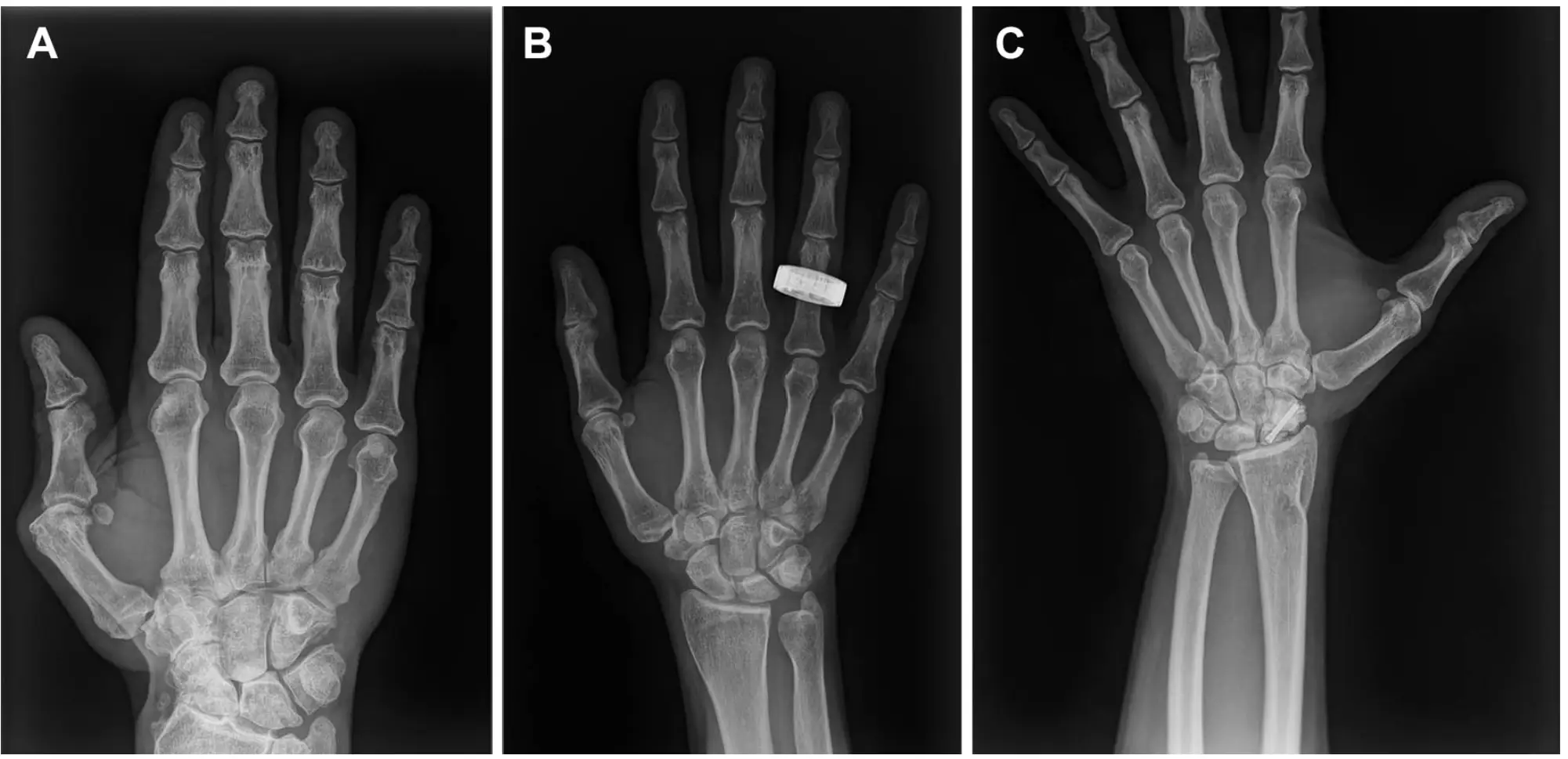
"For decades, scientists were turned off by the daunting number of degrees of freedom (the multiple directions an object can freely drift, shake, or rotate in microgravity, which usually causes intense motion blur) in the belief that it would result in a blurry image. Our solution? Take the picture really, really fast," Gifford added.
The uses even stretch beyond medicine. The smartwatch scan showed a portable X-ray could inspect spacecraft parts for hidden damage, a technique the researchers call 'non-destructive testing,' already familiar from airport security here on Earth, Gifford noted.
On a multi-year journey to Mars, where every ounce of payload counts, this dual-use capability is a massive breakthrough. Instead of packing separate, heavy diagnostic systems for the crew and the ship, a single portable device can do both. An astronaut could use the exact same scanner to check a teammate's fractured collarbone, inspect a spacesuit's pressurized seals, or scan the spacecraft's hull for microscopic cracks caused by high-speed space debris.
She continued: "While this team was the first to attempt spectral X-ray in space, one of the many reasons to do so is because it brings to the mission powerful tools that function far beyond the medical bay."
However, plenty of hurdles remain if the scientists are to advance the technology. The team suggests AI-assisted analysis could one day help astronauts check image quality themselves when Earth is too far for immediate support.
"On Earth, we consider this system tremendously compact and portable," Gifford said.
"In space, this system is considered massive. For X-rays in space to become routine and for the mass and volume the system takes up to be justified, it would need to be a fraction of the volume it is now."