
How to watch NASA's historic Artemis 2 mission as astronauts head for the Moon for first time in decades


The countdown is well and truly on. In just a matter of days, humanity will return to the Moon for the first time since 1972 as Artemis II prepares to launch.
What is Artemis II?
Artemis II is NASA's first crewed mission to travel beyond low Earth orbit in over 50 years, and the first crewed flight around the Moon since the Apollo 17 mission brought the original lunar programme to a close.
The four-person crew consists of NASA astronauts Reid Wiseman, Victor Glover and Christina Koch, alongside Canadian Space Agency astronaut Jeremy Hansen. The 10-day voyage will take the crew around the Moon's orbit before splashing down in the Pacific Ocean.
Advert
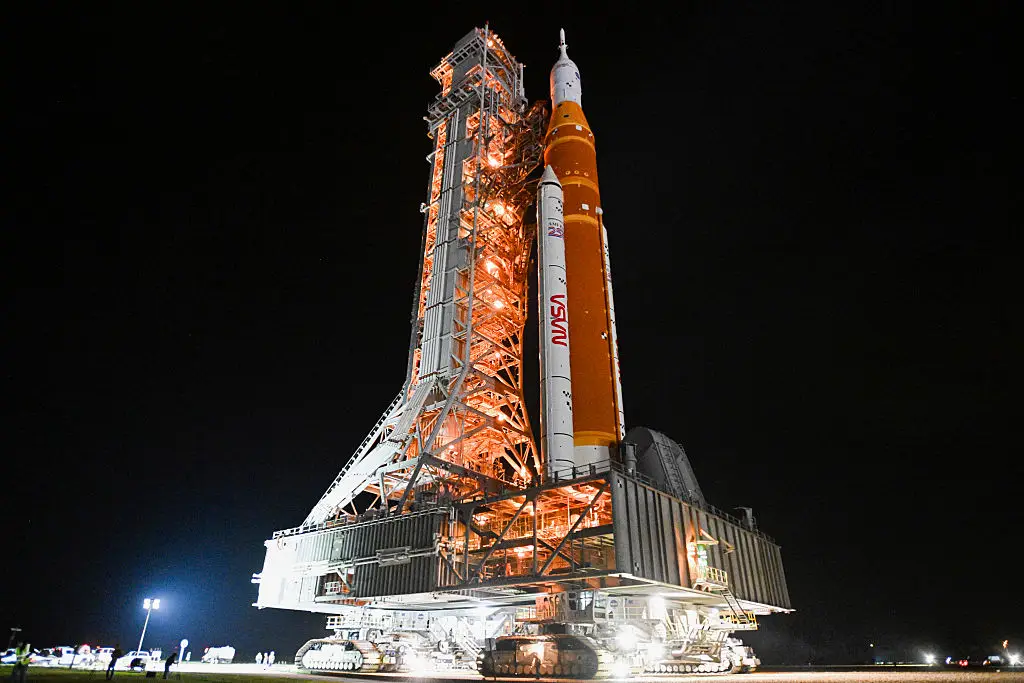
The journey to launch day has been a long one. Originally targeting late 2024, the mission was pushed back repeatedly - first to early 2025, then to March, and finally to April.
The wet dress rehearsals experienced a series of technical setbacks, including poor weather conditions, heat-shield concerns, a hydrogen leak during testing, and a helium flow issue that required the rocket to be rolled back to the Vehicle Assembly Building for repairs.
When does Artemis II launch?
The Artemis II rocket is scheduled to launch from the Kennedy Space Center in Cape Canaveral, Florida on Wednesday evening (1 April) at 6:24 pm EDT (10:24pm GMT). The launch has a two-hour window, NASA revealed.

Ground teams are currently putting the finishing touches on the 322-foot-tall rocket ahead of its departure.
How can I watch the Artemis II launch?
For an event this historic, NASA is making sure as many people as possible can watch it unfold in real time.
According to NASA, live coverage of the launch, lunar flyby and splashdown will be available on NASA+ several streaming services including Amazon Prime Video, Apple TV, Hulu, Netflix and Roku.
For those who prefer to follow along on social media, the US space agency will also be streaming across its official YouTube, Facebook, X and Twitch channels, with dedicated streams for each key event going live closer to the time.
Furthermore, NASA has developed a tracking app called the Artemis Real-time Orbit Website (AROW) that lets people follow the spacecraft's journey in real time. The tracker, available on NASA's website or its official app, will display the crew's distance from Earth and the Moon, as well as the total mission duration.