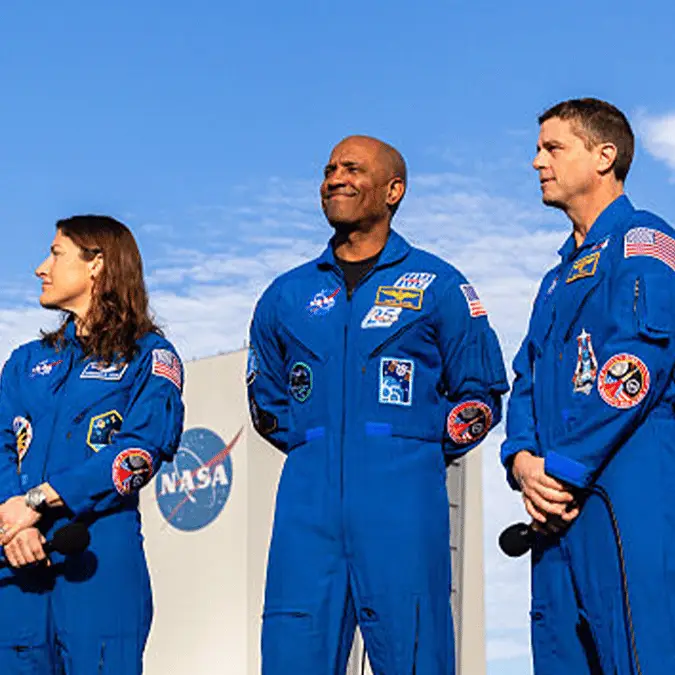
Worst case scenario for NASA's historic Artemis II mission revealed as astronauts prepare to launch


For the first time since 1972, NASA is preparing its crew for its Artemis II mission to the Moon.
Already pushed back due to poor weather conditions, the US space agency had originally scheduled a wet dress rehearsal for 2 February, but the launch has now been delayed until no earlier than 8 February.
Earlier this month, NASA conducted the first-ever emergency evacuation of the International Space Station after a crew member experienced an undisclosed medical issue.
So, preparing for every scenario is more important than ever.
Advert
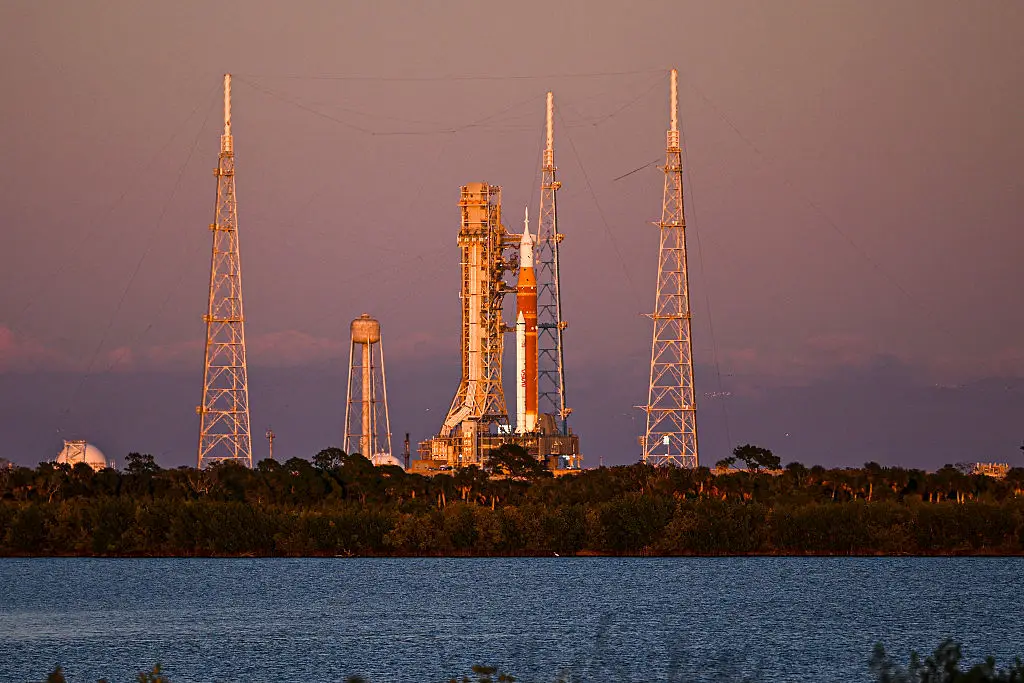
To keep the crew safe for this mission, Artemis II has been designed with advanced systems for evacuation and escape at any stage of the journey.
While crewmates Reid Wiseman, Victor Glover, Christina Koch, and Jeremy Hansen prepare for the historic launch, experts have outlined the worst-case scenario for the mission.
Speaking to the Daily Mail, Chris Bosquillon, co–chair of the Moon Village Association's working group for Disruptive Technology & Lunar Governance, noted that the Orion spacecraft has only flown once before during Artemis I and has 'never been flown with a crew before.'
Fortunately, if something goes awry on the first day while Orion remains in low Earth orbit, the crew can simply fire the engines and make an emergency return to Earth. However, if problems occur once the spacecraft has begun its journey towards the Moon, the situation becomes more worrying.
The worst case would involve multiple system failures, including the propulsion system, leaving Orion without control over where it's headed.
"During the lunar flyby, Artemis II is dependent on onboard systems; contrary to orbital space stations, there is no option for rapid crew rescue," said Bosquillon.
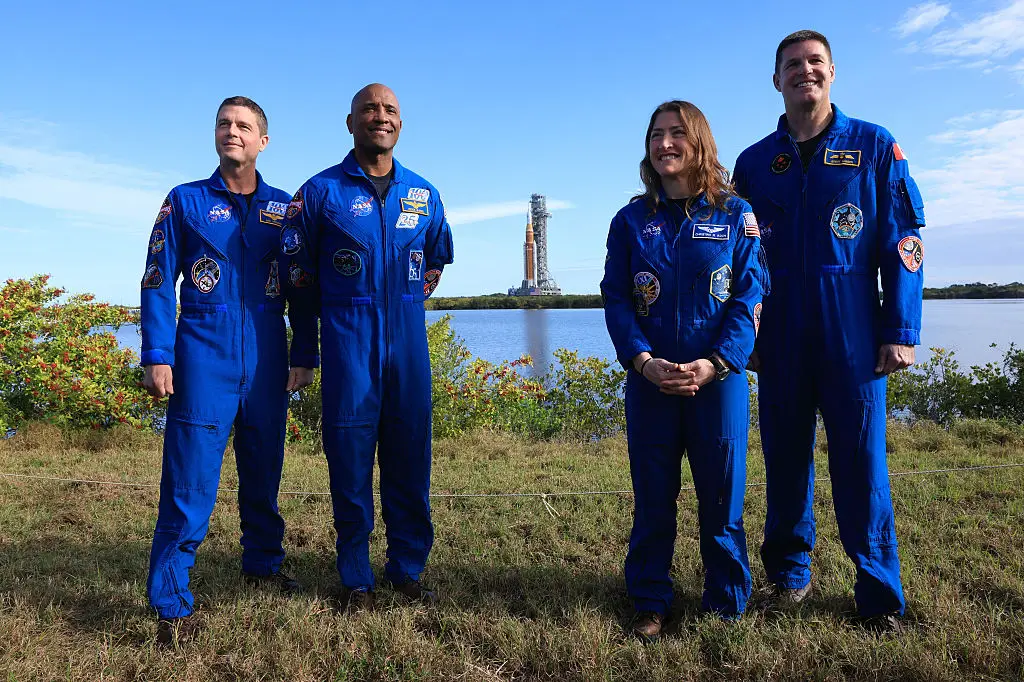
As a precaution, NASA will place Orion on a 'free return trajectory'.
This means the spacecraft will naturally loop around the Moon and be catapulted back towards our planet by lunar gravity.
"This is the solution that provides a built–in safe return baseline if major propulsion fails," Bosquillon added.
Orion is also stocked with more food, water and air than required for the planned 10-day mission and hosts multiple backup systems designed to maintain the crew long enough to get home.
However, propulsion failures aren't the only potential hazards the crew faces.
On launch day, there are potential dangers of propellant leaks, structural collapses, system malfunctions, or even fires. If any of these were to happen, the crew might have only minutes to evacuate from the 83–metre–tall (247–foot) launch tower.
There's also the risk of launch failure during ascent.
"During launch and ascent, the SLS large rocket engines, cryogenic fuels, and complex systems must work perfectly," Bosquillon noted, adding that this launch carries more risk than a flight to the ISS and equivalent to previous Apollo missions.
Luckily for the Artemis II crew, the Launch Abort System (LAS) serves as a last-ditch escape option if things go south.
For now, it's all about rehearsing every scenario perfectly so the crew is ready for anything as they travel further into space than any human has in the past 50 years.