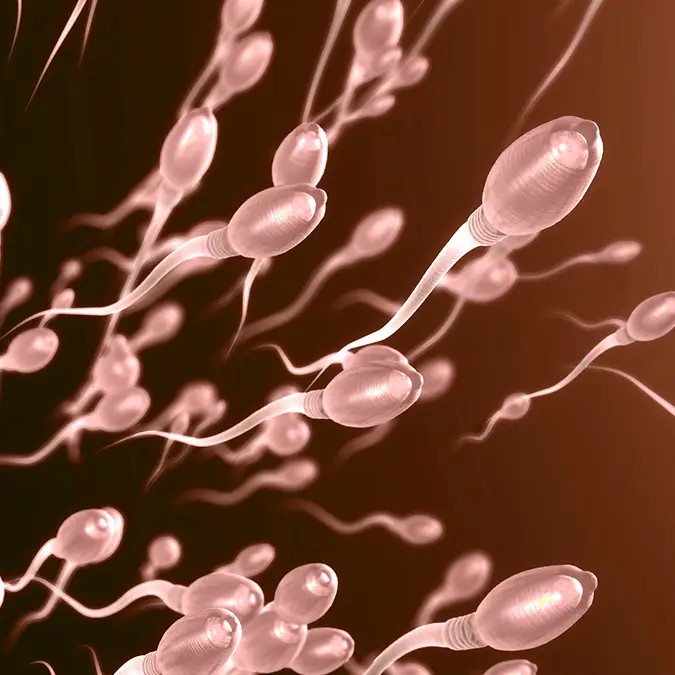
Groundbreaking fertility trial sees man regain viable sperm from tissue frozen as a child in world first


Many necessary medical treatments can actually be harmful to other parts of the body, yet new research presented by scientists in Brussels has restored a vital bodily function within an adult for the first time in history after it was taken away during his childhood.
Radiotherapy and chemotherapy are both vital forms of healthcare for individuals suffering from conditions such as cancer, as they can completely eradicate the disease within the body.
Unfortunately this often comes with a number of other unpleasant and unavoidable side effects as the radiation inevitably damages other parts of the body, leading people to grow ill, lose their hair, and suffer other ailments.
One of the most common impacts of radiation exposure within children is the risk of infertility later on in life, and around a third of all men receiving this treatment during childhood become 'azoospermic', referring to the lack of any visible sperm within their ejaculate.
Advert
Groundbreaking new research conducted by scientists at both the University Hospital Brussels and the Free University of Brussels has managed to 'cure' an azoospermic individual through by using an unexpected method.
The patient in question suffered from sickle cell anemia from birth, and at age 10 underwent a procedure that saw one of his testicles removed and preserved through freezing.
This, in combination with small doses of chemotherapy, left him with no viable sperm in his single remaining testicle, prompting researchers to wonder if it was possible to transplant tissue from the frozen testicle onto his remaining one which would subsequently allow him to have children.
Conducting the historic procedure during a clinical trial last year, the man successfully received four tissue grafts each within both his scrotum and testicle from the frozen body part, and one year on it's successfully producing viable sperm in a result that could prove vital for further research.

It's not completely solved, however, as these sperm are still not able to reach his sperm duct and therefore aren't making their way into his semen, but it does give him the option for laboratory-based treatments that combine the sperm and egg cells outside of the human womb.
This might not be a perfect solution, but providing the potential of parenthood for a man who previously thought it to be impossible is genuinely life-changing, and there's no indication that this wouldn't also work for individuals suffering from similar issues stemming from early-life treatments.