• News
    • Tech News
    • AI
  • Gadgets
    • Apple
    • iPhone
  • Gaming
    • Playstation
    • Xbox
  • Science
    • News
    • Space
  • Streaming
    • Netflix
  • Vehicles
    • Car News
  • Social Media
    • WhatsApp
    • YouTube
  • Advertise
  • Terms
  • Privacy & Cookies
  • LADbible Group
  • LADbible
  • UNILAD
  • SPORTbible
  • GAMINGbible
  • Tyla
  • FOODbible
  • License Our Content
  • About Us & Contact
  • Jobs
  • Latest
  • Topics A-Z
  • Authors
Facebook
Instagram
X
TikTok
Snapchat
WhatsApp
Submit Your Content
Astronomers discover a possible 'future earth' 8,000,000,000 years into its future

Home> Science> Space

Published 10:19 30 Sep 2024 GMT+1

Astronomers discover a possible 'future earth' 8,000,000,000 years into its future

The planet gives us a rare glimpse to what Earth will look like billions of years from now

Rikki Loftus

Rikki Loftus

Astronomers have discovered a possible ‘future earth’ eight billion years into the future.

The uncovering of a far-off planet has given us a glimpse of what Earth could look like billions of years from now.

The planet in question, which is around twice the size of Earth, is called KMT-2020-BLG-0414 and orbits a white dwarf star 4,000 light years away from our planet.
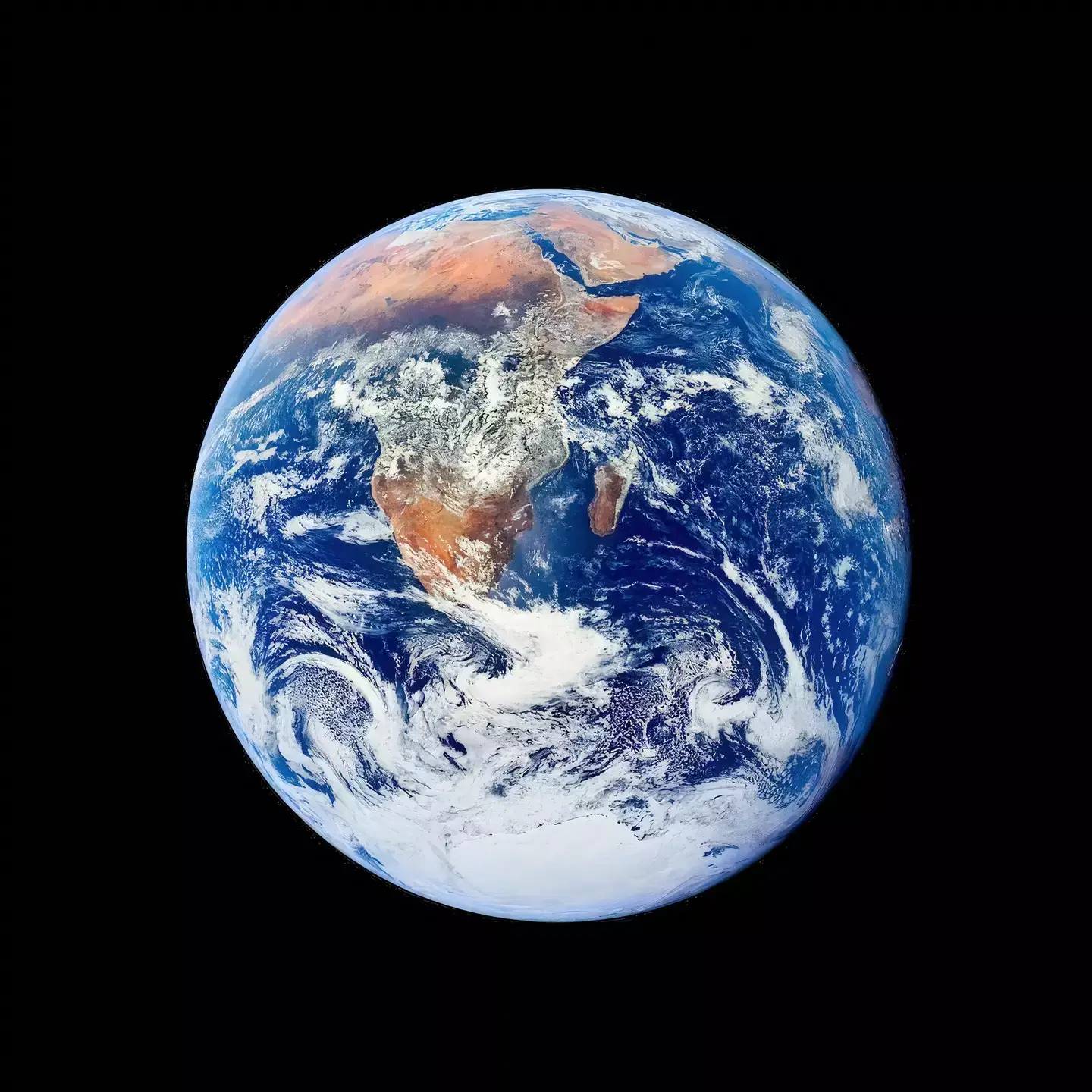
The world will look very different in the future (Roberto Machado Noa/Getty Images)

Advert

Earth could one day look very similar to this planet as our sun is predicted to turn into a white dwarf in five billion years.

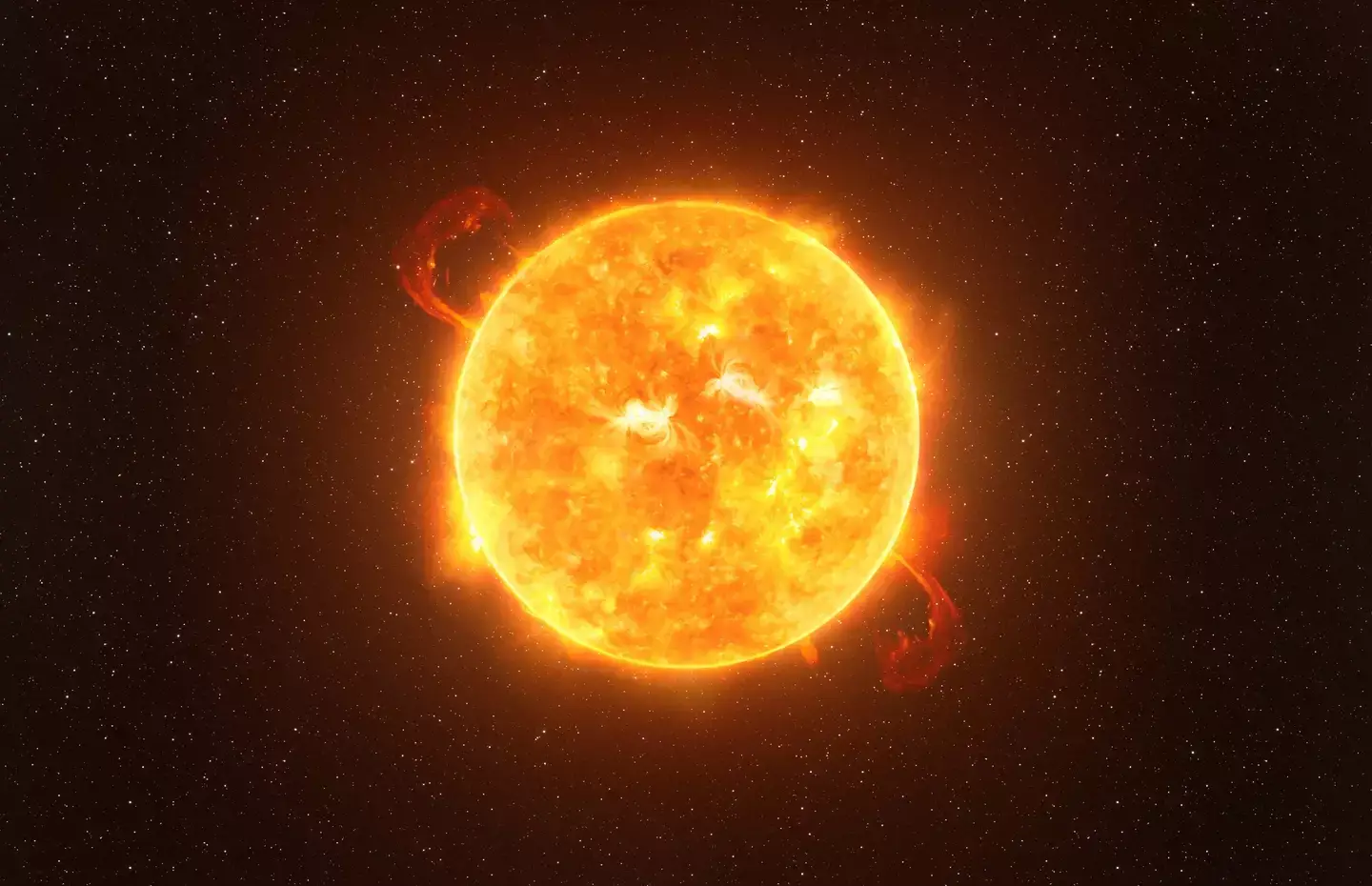
Beforehand, the sun will turn into a red giant, which is one of the final stages of stellar evolution.

As a red giant, the sun will consume Mercury and Venus, and possibly Earth and Mars too.

However, if our planet survives then it’s likely that it’ll look a lot like the rocky planet in the distance.

Advert

In a statement, Keming Zhang, a lead author of the study and an astronomer at University of California San Diego, said: “We do not currently have a consensus whether Earth could avoid being engulfed by the red giant sun in 6 billion years.

“In any case, planet Earth will only be habitable for around another billion years, at which point Earth’s oceans would be vaporized by runaway greenhouse effect — long before the risk of getting swallowed by the red giant.”

The distant planet was first found by astronomers in 2020 near the center of the Milky Way.

It became visible when it moved in front of the light of an even further star 25,000 light years away.
Advert

The sun will one day turn into a red giant (dzika_mrowka/Getty Images)

Zhang went on to add: “As the sun becomes a red giant, the habitable zone will move to around Jupiter and Saturn's orbit, and many of these moons will become ocean planets. I think, in that case, humanity could migrate out there.”

Scientists are still unsure as to whether humans would survive the red giant stage of the sun.

In fact, we might not even live to see it happen.

Advert

It’s thought that humans are likely to go extinct in the next billion years, unable to survive the global warming that will boil the oceans.

But if we somehow find a way to continue as a civilization, there might be hope for survival in other parts of our solar system.

The moons Europa and Enceladus orbit Jupiter and Saturn and their icy environment makes them inhabitable, but that could all change in the future.

When the sun becomes a red giant, they will turn into water worlds so, if we can reach them, humans might be able to turn them into new homes.

Featured Image Credit: Roberto Machado Noa/dzika_mrowka/Getty Images
Space
Science
Earth
Climate change
Sun

Advert

Advert

Advert

Choose your content:

8 hours ago
12 hours ago
13 hours ago
3 days ago
  • BBC Universal / Getty
    8 hours ago

    Archaeologists unseal 40,000-year-old cave revealing a discovery that 'rewrites history'

    The cave was first recorded in 1907

    Science
  • Anadolu / Contributor / Getty
    12 hours ago

    Experts reveal what could have gone wrong as NASA evacuates astronauts on ISS for first time in history

    Chief Medical Officer Dr James Polk confirmed the mission was being cut short

    Science
  • Munro / Getty
    13 hours ago

    Woman who took weight loss injection for one year reveals how it ‘ruined her stomach’ in horrifying turn of events

    It involved multiple trips to the ER

    Science
  • @_mohamed247 via X
    3 days ago

    People mind-blown as dystopian bright pink sky takes over major city

    The Wicked: For Good marketing has gone too far

    Science
  • Giant ‘space umbrella’ will soon orbit Earth to complete important job but it's not stopping the rain
  • Scientists think they've uncovered an untapped energy source that could power Earth for 170,000 years
  • Controversial experiment to dim the Sun expected to be approved within weeks
  • NASA astronomers release rare images of huge asteroid that threatens to hit Earth in 7 years