Scientists claim ‘strongest evidence’ so far for alien life following shocking James Webb Telescope discovery


We might be closer than ever to finding signs of life beyond Earth after astronomers think they’ve found the strongest clue yet for extra-terrestrial life.
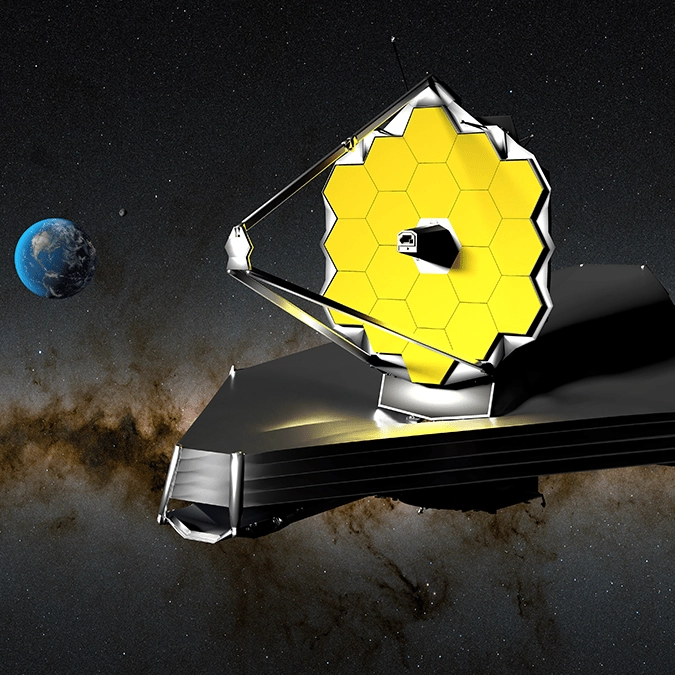
Scientists using the James Webb Space Telescope (JWST) discovered that a planet called K2-18 b appears to contain the chemical fingerprints of two compounds that - at least, on Earth - are only known to be produced by life.
“These are the first hints we are seeing of an alien world that is possibly inhabited,” said Nikku Madhusudhan at the University of Cambridge at a press conference on 15 March.
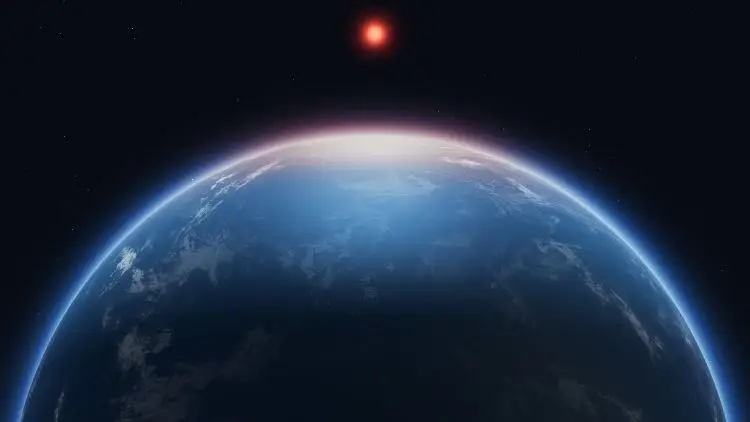
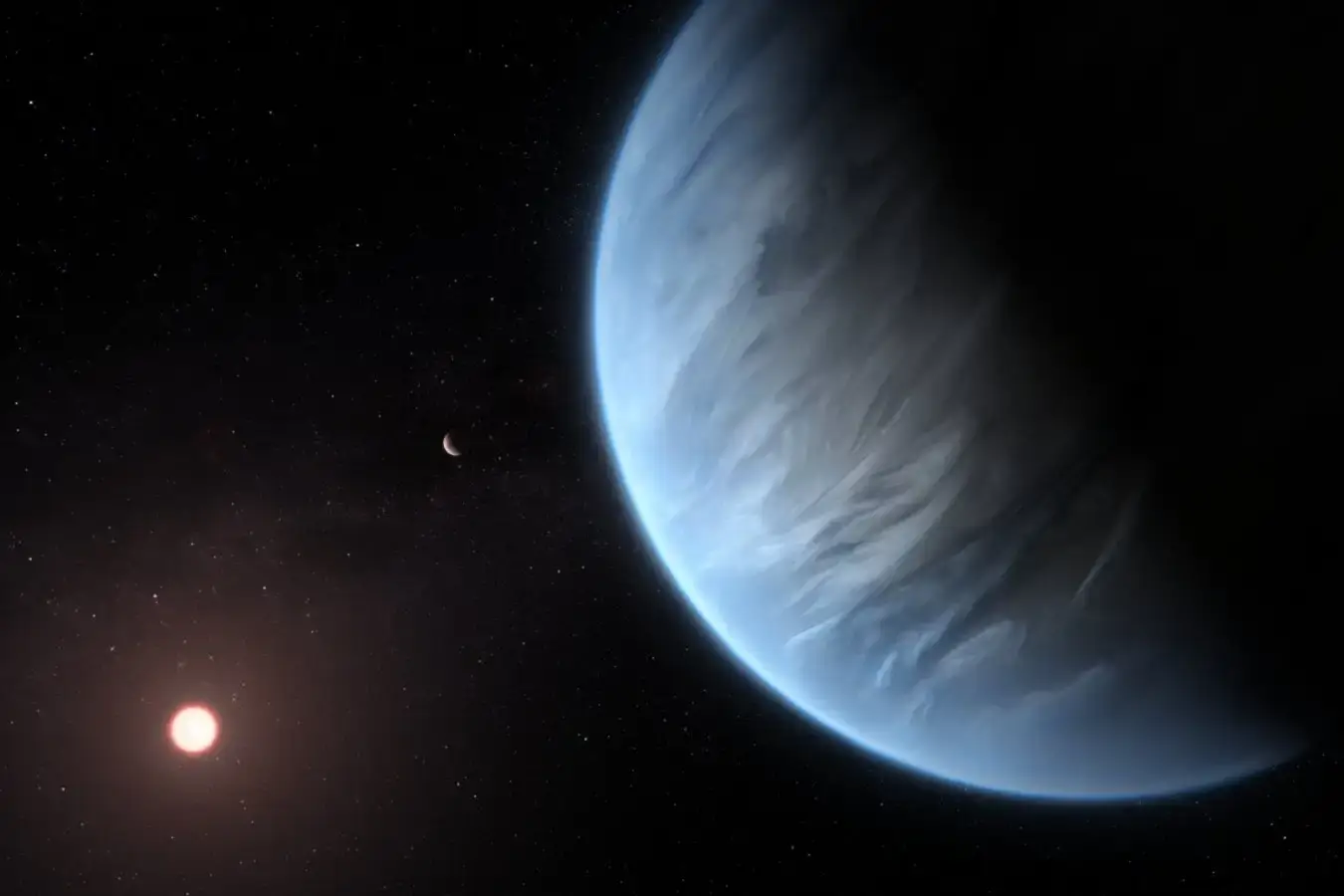
K2-18 b was first uncovered in 2015 and, immediately, it became the strongest source to search for life. It’s about eight times heavier than planet Earth and orbits a star 124 light years away from us in a habitable zone where liquid water can exist. In 2019, astronomers found signs of water vapour in the planet’s atmosphere, planting theories that it could have oceans sitting beneath a hydrogen-rich sky. Whilst not everyone agreed at the time, the idea stuck.
Advert
Then, in 2023, Madhusudhan and his team took a closer look using JWST in infrared light and found signs of water vapour, methane and carbon dioxide. Moreover, they found a faint hint of dimethyl sulphide (DMS) - a molecule that is produced almost exclusively by marine life like phytoplankton.
Now, using the mid-infrared camera on the JWST, the team found a much stronger signal for DMS. They also came across possible signs of dimethyl disulphide (DMDS), which allegedly only comes from living things.
“What we are finding is an independent line of evidence in a different wavelength range with a different instrument of possible biological activity on the planet,” Madhusudhan explained.
Right now, the results are at a 'three-sigma confidence level,' which means there’s about a 3 in 1,000 chance the data is a fluke. Physicists tend to aim for the 'five sigma' (a 1 in 3.5 million possibility of chance occurrence) before calling something a true discovery. Nicholas Wogan at the NASA Ames Research Center in California says the evidence is more convincing than those in 2023, but it still needs peer review.
The JWST data will be made public next week, but it could take weeks or months to verify. “It’s not just like you download the data and you see if there’s DMS – it’s this super complicated process,” described Wogan.
Madhusudhan’s team believes they need around 16 to 24 more hours of further observations with JWST to reach the five sigma level and achieve the clarity they need. But due to how tricky it is to measure the planet’s atmosphere, even that might not be enough.
“The relative size of the atmosphere compared to the size of the planet is pretty close to the thickness of an apple skin on top of an apple. That’s what we’re trying to measure,” added Thomas Beatty at the University of Wisconsin-Madison, who was not part of the study team.
Still, if this turns out to be real, it would be a 'tremendous advance,' according to Beatty. “Ignoring whether or not it actually is produced by life for a second, it’s something that, a decade ago, people said would be evidence for life in the atmosphere of a planet that could feasibly host it,” he concluded.